What Are the Signs Your Circulation May Need Support?
If your feet are cold before anyone else's in the room, if your legs feel heavier than they used to by the end of the day, or if you've quietly given up an activity you love because your feet or hands just don't cooperate anymore, you're not imagining it. And you're probably not just "getting older." In almost thirty years of practice, I've learned that circulation problems rarely announce themselves. They whisper first, in small daily details most people explain away.
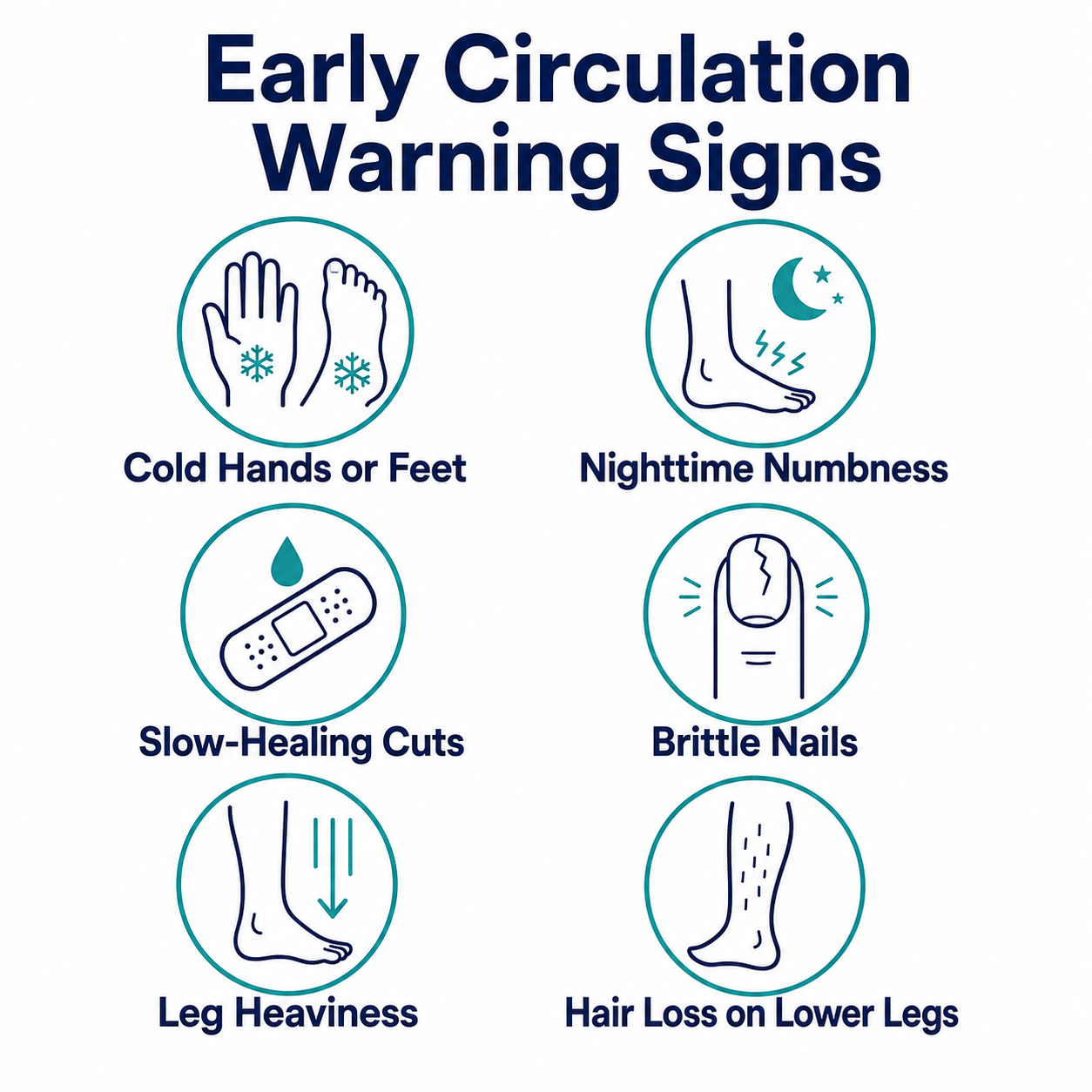
Quick Answer: Early signs of poor circulation include cold hands or feet, numbness or tingling (especially at night), slow-healing cuts, brittle nails, hair loss on the lower legs, and unusual fatigue or heaviness in the legs. These signs often show up years before anyone calls it a "circulation problem," and they're worth paying attention to at the first sign, not the tenth.
Key Takeaways
Cold hands and feet, nighttime numbness, and slow wound healing are among the earliest and most overlooked circulation signals.
Sudden, one-sided, or severe circulation symptoms need same-day medical evaluation, not home remedies.
Movement, hydration, targeted nutrition, and in some cases nitric oxide support can meaningfully improve day-to-day circulation.
The Early Signs Most People Miss
Cold hands and feet, even in a warm room, are usually the first thing people notice and the first thing they dismiss. Right behind that is a kind of low-grade heaviness, legs that feel tired after a completely normal day, or getting winded on the same stairs you've climbed for years without issue. People tell themselves it's aging, or that they're out of shape. Sometimes it's neither. Sometimes it's blood flow asking for attention long before it becomes a diagnosis.
The complaint I hear dismissed most often is numbness or tingling in the feet at night. "I just slept on it wrong" is the explanation almost every time. Occasionally that's true. But when it's happening several nights a week, especially alongside cold feet or a cut that's taking its time healing, that combination is circulation trying to get your attention.
What Poor Circulation Actually Looks Like on the Body
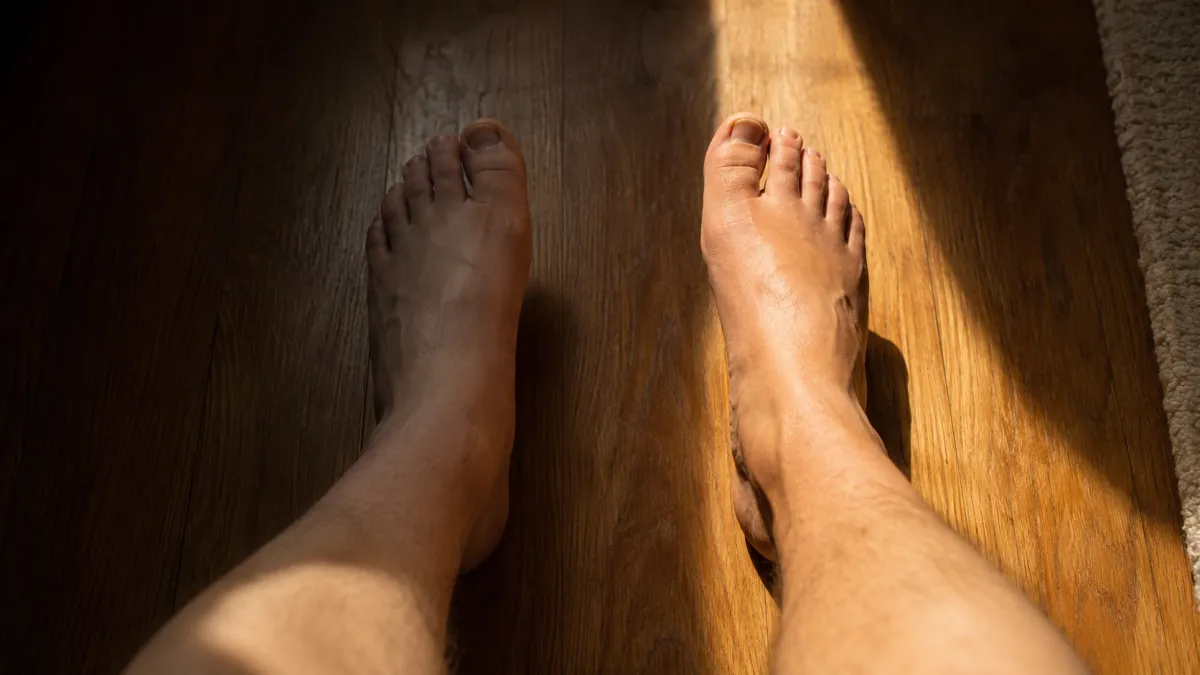
Skin tells a lot of the story if you know how to read it. Dry, shiny, or discolored skin on the lower legs. Hair loss on the toes or shins, which sounds like an odd detail but makes physical sense, since hair follicles depend on adequate blood supply to function. Peripheral blood flow problems can cause leg pain when walking, along with a cluster of related symptoms, and stagnation of blood flow due to immobility is one of the well-documented contributors to venous disease, which is part of why people who sit for long stretches at work notice these signs more than they expect to. Mayo ClinicJohns Hopkins Medicine
Brittle nails, slow healing on minor scrapes, and even brain fog can all trace back to circulation, because oxygen delivery through the blood affects far more than your hands and feet. It affects how clearly your brain runs, too.
A Patient Story That Stuck With Me
I had a gentleman in his sixties, an avid golfer, who had quietly stopped walking the course because his feet went numb by the back nine. He assumed it was just age catching up with him. We looked at his overall vascular health and daily habits, brought in some targeted nitric oxide support alongside changes to his activity and hydration, and within about six weeks he was walking all eighteen holes again without stopping to shake out his feet. That's the kind of win that reminds me why this work matters. He didn't need a dramatic intervention. He needed someone to take his "small" complaint seriously.

Why Nitric Oxide Matters More As We Age
Nitric oxide is the signal that tells blood vessels to relax and widen, which is how blood actually reaches where it needs to go efficiently. Aging is associated with a decline in nitric oxide levels and bioavailability, largely driven by decreased nitric oxide production in the cardiovascular system, and this decline is linked to reduced leg blood flow, increased arterial stiffness, and endothelial dysfunction as we get older. That's a big part of why circulation issues become more common in your forties, fifties, and beyond, even in people who feel otherwise healthy.
The encouraging part is that this pathway responds to support. Research on healthy older men found that dietary nitrate supplementation, in this case from concentrated beetroot juice, improved flow-mediated dilation and vascular function measures in the legs. That's the same basic mechanism behind why we recommend Nitric Boost by ChiroNutraceutical, which combines S7 nitric oxide booster technology with beet extract to support the body's own nitric oxide production rather than just delivering a temporary nitrate load.
The Lifestyle Habits That Undermine Circulation Most
Sitting, hands down, is the biggest one I see. Excessive time spent sitting and the resulting reduction in leg blood flow-induced shear stress can cause endothelial cell dysfunction, and prolonged sitting has consistently been shown to increase calf circumference relative to lying down, a sign of blood pooling in the venous system. After sitting, dehydration is next on the list. Blood is thicker than most people realize when they're chronically underhydrated. Then there's a diet low in the nutrients that support vessel health, smoking for the patients who still do it, and chronic stress, which keeps the nervous system in a state that constricts blood vessels over time. PubMedPubMed Central.
Where Chiropractic Care and Class 4 Laser Therapy Fit In
Proper spinal alignment supports healthy nerve function, and your nervous system and circulatory system work hand in hand. When there's nerve interference, you can see downstream effects on blood flow to the areas that nerve serves. Class 4 laser therapy takes this a step further. Research measuring blood flow after Class 4 laser therapy found that a specific treatment dose significantly increased blood flow to soft tissue, an effect that persisted for several minutes after treatment. That improved local circulation is part of why we use laser therapy for so many soft tissue and inflammatory conditions in the clinic. Better blood flow means more oxygen and nutrients reaching the tissue that needs it, and faster, more complete healing. PubMed
For patients already receiving Class 4 laser therapy or regular chiropractic care for an injury or chronic inflammation, there's often a gap between visits where the body is still doing repair work on its own. That's where a regenerative complement like RECOVER by AgeRecode can help. It combines BPC-157, GHK-Cu, and carnosine in a multi-phase release designed to support tissue regeneration, collagen synthesis, and healthy inflammation response between sessions. It isn't a replacement for hands-on care. Think of it as support that keeps the healing process moving after you've left the office.
What I Recommend First, Naturally
Movement first, even just standing and walking for a few minutes every hour. Hydration, since most people are chronically underhydrated without realizing it. Nutrition rich in leafy greens and foods that naturally support nitric oxide production, like beets and citrus. For patients who need more targeted support, I'll often recommend Nitric Boost alongside those foundational changes, since food alone doesn't always close the gap once nitric oxide production has already declined with age.
When to Stop Home Remedies and See a Doctor
If one leg or foot is suddenly more swollen, discolored, or painful than the other, that needs same-day medical attention, not a home remedy. The same goes for wounds on the feet or lower legs that aren't healing, or chest pain, shortness of breath, or sudden severe leg pain. Circulation support is for the everyday, gradual signs. Sudden, one-sided, or severe symptoms are a different category entirely, and they deserve immediate medical evaluation. If you're ever unsure which category you're in, err on the side of getting seen. That instinct has never once been wrong in my experience.
The One Thing to Do This Week
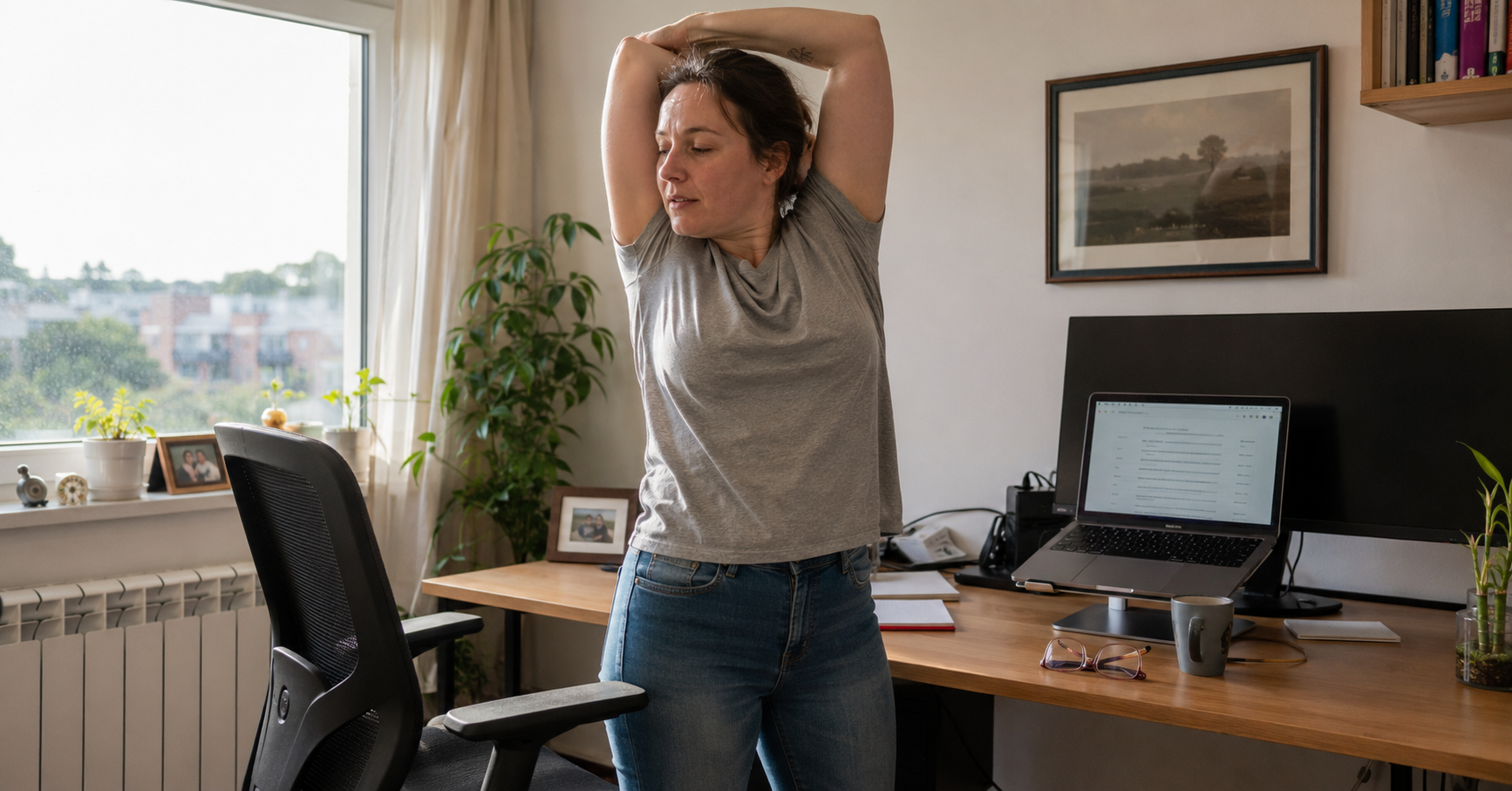
Get up and move every hour, even if it's just two minutes. That single habit change does more for circulation than most people expect, and it costs nothing. Even short bouts of movement disrupting long sitting periods have been shown to reduce the inflammatory and swelling effects that build up in the legs. Then come see us so we can look at the full picture, because circulation issues rarely have just one cause, and they deserve more than a guess.
If you recognize two or three of these signs in yourself, don't wait for them to get worse before you take them seriously. Come see us at Optimal Health Members in Henderson so we can look at your full picture, not just one symptom in isolation. And if weight and metabolic health are part of what's driving your circulation concerns, our team at OptimalHealthMembers can help you address that piece too.