Why Weight Loss Is the Side Effect, Not the Goal
If you have spent years chasing a number on the scale, only to watch it climb back up every time, you already know the truth nobody wants to say out loud. The diet worked, for a while. Then your body fought back. That is not a willpower problem. That is a biology problem, and after nearly 30 years in practice, I can tell you the fix is almost never "try harder."
Quick Answer: Weight loss lasts when it happens as a result of improved metabolic health, not as the direct target of a diet. Programs like GLP THREE work by restoring insulin sensitivity, appetite signaling, and blood sugar stability. Once those systems function correctly, weight loss follows naturally and tends to stay off, because the underlying cause was addressed instead of just the symptom.
Key Takeaways
Sustainable weight loss is a downstream result of metabolic repair, not a direct target, according to research on GLP-1 receptor pathways and metabolic regulation.
Chasing the scale alone can mask real progress, since normal weight fluctuation from water retention and other factors is expected and does not reflect metabolic status.
Insulin resistance and unstable blood sugar are common root drivers of weight gain, and improving insulin sensitivity changes appetite and cravings, not just weight.
Physician-supervised programs that track sleep, energy, and inflammation alongside weight tend to produce results patients can actually sustain.
A natural-solutions-first approach, combining metabolic support with chiropractic and other restorative care, targets the body's underlying function rather than treating weight as an isolated issue.
What I Actually Mean When I Say Weight Loss Is a Side Effect
I mean it literally. Weight loss is what happens when the underlying system starts working again. It is not what I am chasing when I sit down with a patient.
Early in my career, like most people, I thought about weight the way everybody does, as the target. But almost 30 years of watching people lose weight the hard way, keep it off for a while, then watch it come back, taught me something important. You can hit the number on the scale and still be metabolically broken. Blood sugar still unstable. Inflammation still high. Energy still gone. The weight comes back because the thing that caused it to show up in the first place was never fixed.
Somewhere in the last decade, working with patients on GLP THREE and watching what actually changes when insulin resistance improves, I stopped leading with pounds. I start with function. The pounds follow.
The Real Goal Is Never the Number
The real goal is metabolic health. Real energy. Sleep that actually restores you. Inflammation low enough that your joints do not ache walking up the stairs. Blood sugar steady enough that you are not crashing at 3pm every day. Hormones working the way they are supposed to.
When those things are true, your body finds its way back to a weight it can hold onto without a fight. I tell patients, I am not trying to shrink you, I am trying to fix the machine. A well-running machine tends to run at the right size on its own.
What Is Actually Happening Metabolically
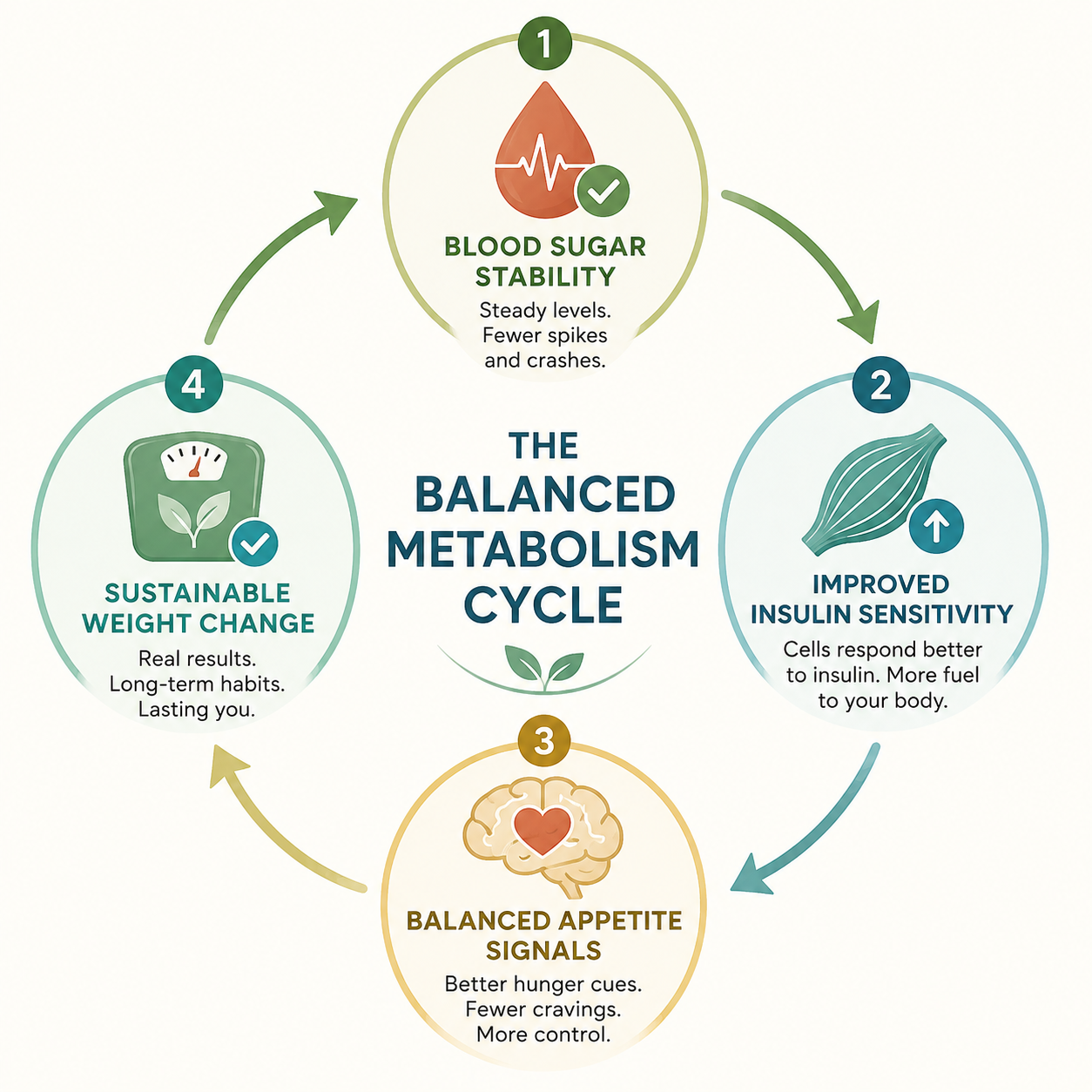
GLP THREE works with the body's own GLP-1 pathway, the same signaling system that regulates appetite, blood sugar, and how the body processes food. Research on GLP-1 receptor agonists shows that when this pathway functions well, several things happen together.
Insulin sensitivity improves. Blood sugar stops spiking and crashing. Appetite signals start working the way they are supposed to instead of running on constant hunger or constant cravings. Digestion slows in a healthy way so a person feels satisfied on less food.
None of that is weight loss. That is metabolic repair. The weight loss is simply what the body does once those systems are no longer working against it. This is not a shortcut. It is closer to giving the body permission to do what it was already trying to do.
Where Chasing the Scale Goes Wrong
Patients who focus only on the scale number get discouraged by normal biology. Weight does not move in a straight line for anyone. Weight fluctuates naturally day to day and week to week from water retention, hormones, and a dozen other factors that have nothing to do with whether a program is working.
If the scale is the only measure of success, a totally normal plateau or a two pound fluctuation feels like failure. I have watched people quit programs that were actually working because the scale did not move for ten days, even while their energy was up and their labs were improving. They were winning and felt like they were losing, because they were only looking at one data point. That is the danger of making the scale the whole goal. It can lie to you about your own progress.
A Patient Who Came In for a Dress Size and Left With Her Mornings Back
I had a woman come in, mid-50s, who told me flat out she wanted to lose 30 pounds before her daughter's wedding in four months. That was the whole conversation at first.
We started GLP THREE, and about six weeks in she came back and the first thing she said was not about the scale. She said she forgot what it felt like to wake up without her hands aching. She had some early inflammatory joint symptoms she had never even mentioned to me because she did not think it was related.
By month three she had lost weight, yes, but what she actually talked about was sleeping through the night for the first time in years and not needing her afternoon coffee to function. The wedding came and went. She looked great in the pictures. But when I ask her now what changed her life, she does not say the dress size. She says she got her mornings back.

How This Shapes the Way I Structure the GLP THREE Program
We do not just hand someone a prescription and check back at 30 days for a weigh-in. Physician supervision means tracking blood sugar trends, energy, sleep, digestion, and inflammation markers where relevant. The scale is one line on a much bigger chart.
When someone tells me they feel more even-keeled emotionally, or their joint pain from carrying extra weight has eased, or they are not white-knuckling their way past the bakery case anymore, that goes in the win column just as much as a number does. I want patients tracking how they feel and function, not just what they weigh, because that is what actually predicts whether this sticks in year two and year five. If you want a closer look at how the program is structured, you can learn more at OHM's GLP THREE program.
Where Chiropractic Fits Into This Same Philosophy
Chiropractic care and GLP THREE come from the same place in my thinking. Chiropractic care is not about cracking a joint for its own sake, it is about restoring proper function to the nervous system and the musculoskeletal system so the body can do what it is designed to do. GLP THREE is not about the protocol for its own sake either. Both are tools to remove obstruction and let the body's own systems work correctly.
I have built my whole practice at Optimal Health Members around that idea. Class 4 laser, SoftWave, Webster Technique, and GLP THREE are all different tools aimed at the same target, a body that functions the way it was built to function. Weight loss, pain relief, and better mobility are all just evidence the tool worked.
Addressing the Skeptics
I understand the skepticism, because a lot of marketing in this industry says "it's not about the number" and then still only shows before and after photos. I am not avoiding the number. Weight matters, especially when excess weight is driving joint stress, blood sugar problems, or cardiovascular risk. According to the CDC's data on obesity and chronic disease risk, excess weight is closely tied to conditions like type 2 diabetes and heart disease, so this is not something I ignore. I track it every visit.
What I am saying is different. The number is a result, not a strategy. If the strategy is eat less, want less, use willpower, a person is fighting their own biology and will probably lose that fight long term. If the strategy is fix the metabolic signaling that is broken, the number moves as a natural consequence, and it tends to stay moved. I am not avoiding weight. I am just refusing to pretend the scale is the whole story.
How I Actually Measure Success
Energy levels through the day. Quality of sleep. Cravings, especially the sugar and carb cravings that come from blood sugar swings. Joint pain and mobility. Mood stability. Clothing fit, which honestly tells you more than the scale most weeks. And yes, weight and body composition too, just not as the only marker.
When four or five of those are moving in the right direction together, I know we are onto something real, regardless of what any single week's scale reading says.
What I Want You to Understand Before You Close This Page
You are not broken, and you are not lacking willpower. Diet culture has trained people to believe that if the diet did not work, it is their fault. Almost always, it is that the approach never addressed the actual biology driving the weight gain in the first place.
When you fix the system instead of fighting your body, weight loss stops being an exhausting daily battle and starts being something that just happens as a result of you feeling better. That is the whole point. Chase the health. Let the weight loss follow you home.

If you are exhausted by diet culture and ready to address what is actually driving your weight instead of fighting it one more time, I would love to talk with you. You can learn more about our approach and see if GLP THREE is a fit for you at Optimal Health Members or directly at glpthreevegas.com.