Swollen Ankles: When Is It a Circulation Problem?
By the end of most days, I have at least one patient tell me the same thing. Their ankles are puffy, their socks are leaving deep marks in their skin, and they are not sure if it is nothing or something. After nearly 30 years in practice, I can tell you it is usually nothing serious. But sometimes swollen ankles are your circulation asking for help, and knowing the difference matters more than most people realize.
Quick Answer
Swollen ankles are usually harmless, caused by sitting, salt, or medication. It becomes a circulation problem when swelling is one sided, worsens through the day, improves after elevation, or comes with skin discoloration and heaviness. Sudden one sided swelling with pain, warmth, or redness needs same day medical evaluation to rule out a blood clot.
Key Takeaways
Chronic venous insufficiency happens when the valves in your leg veins weaken and stop moving blood efficiently back toward your heart.
Swelling that is worse by evening, better after a night of elevation, and paired with heaviness or aching in the calves points toward a circulation cause rather than diet or injury.
Sudden, one sided leg swelling with pain, warmth, or redness can signal a blood clot and needs medical attention the same day.
Elevating your legs above heart level and wearing graduated compression stockings are well supported ways to reduce venous swelling.
Healthy nitric oxide levels help your blood vessels relax and maintain proper tone, which plays a real role in how well your circulation functions.
When Swollen Ankles Are Nothing to Worry About, and When They Are
In almost 30 years of practice, I have learned to read swollen ankles like a story, because the pattern usually tells you what is going on before you even touch the skin.
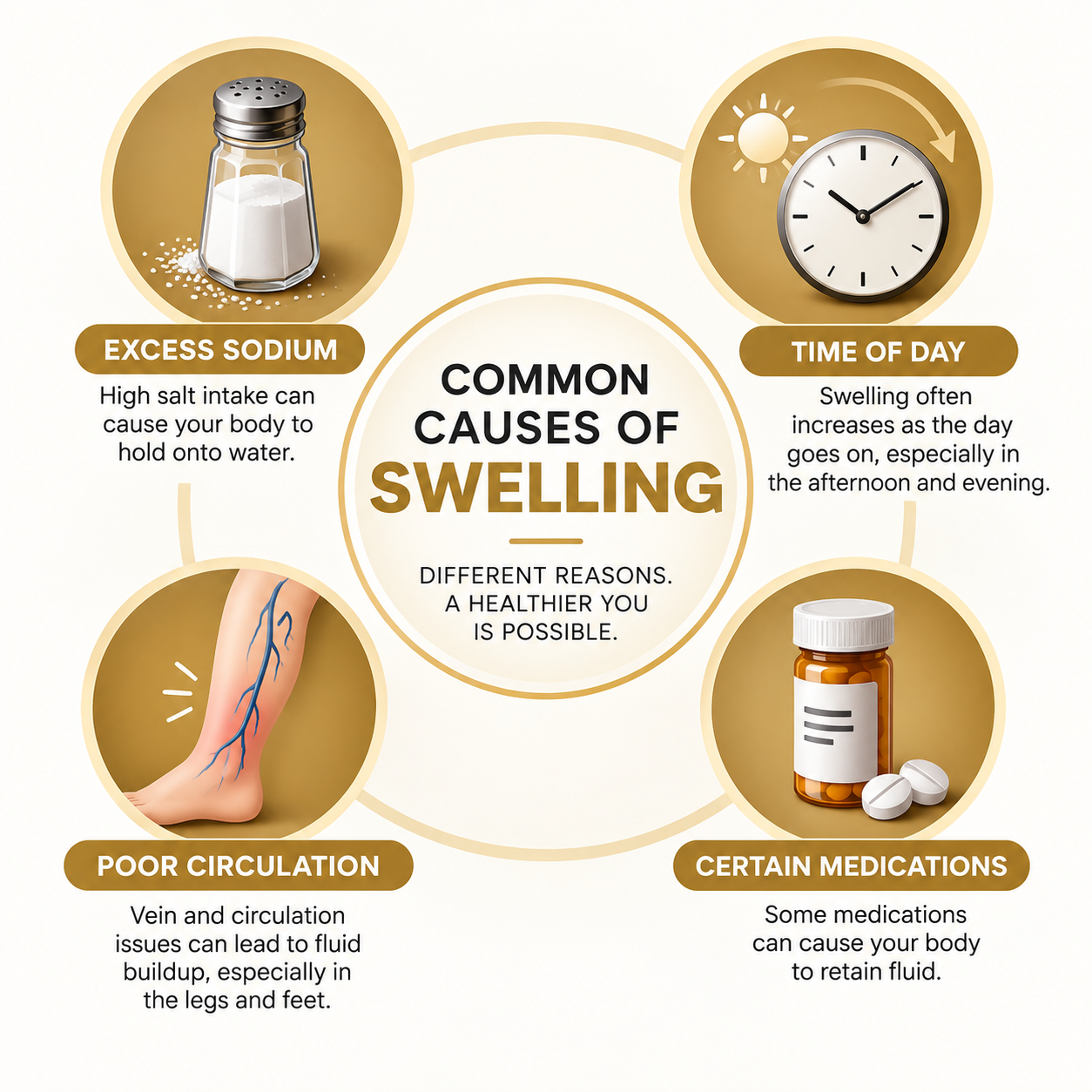
An injury is typically one sided, shows up fast, and comes with bruising or pain when you press on it. A medication reaction, blood pressure medications are a common culprit, tends to affect both ankles, builds gradually, and lines up with when a new prescription started. Too much sodium in the diet shows up as puffiness that comes and goes with meals and usually improves within a day or two of eating cleaner and drinking more water. According to Mayo Clinic, edema like this happens when fluid leaks out of small blood vessels and collects in the surrounding tissue, and it is often tied to sitting or standing for long stretches, pregnancy, certain medications, or an underlying condition.
Circulation related swelling has its own signature. It is worse by the end of the day, it improves after a night of sleep with the legs elevated, and it often comes with a heavy, achy feeling in the calves rather than sharp pain. Skin discoloration or a leathery texture near the ankle bone is another tell. Johns Hopkins Medicine describes this as chronic venous insufficiency, a condition where damaged vein valves allow blood to flow backward and pool in the legs instead of returning efficiently to the heart. I am not diagnosing venous disease in my office. That is not my lane. But I know what questions to ask and what patterns to look for so I can point someone in the right direction quickly.
The Patient Who Almost Ignored Her Ankles
I had a patient, a woman in her early sixties who worked retail and was on her feet nearly her entire shift, come in complaining about low back tightness. Almost as an aside, she mentioned her ankles had been swelling every evening for months and she figured it was just from standing all day.
When I looked closer, the swelling was worse on her right side, her skin had a slight brownish discoloration near the ankle bone, and she described a heaviness in her calf that eased once she put her feet up. That pattern did not sit right with me. I referred her to a vascular specialist for a duplex ultrasound, and it confirmed early chronic venous insufficiency, meaning the valves in her leg veins were no longer moving blood efficiently.
Once she had a real diagnosis, we built a plan together. Her vascular doctor handled the medical side, and in my office we worked on her gait and pelvic alignment, since how a person walks affects how well the calf muscles pump blood back up toward the heart. We used Class 4 laser therapy to support the surrounding tissue and reduce local inflammation, and she started using a nitric oxide support supplement along with graduated compression socks. Six weeks in, she told me her legs felt like they belonged to someone ten years younger by the end of her shift. That case is exactly why I never brush off a passing comment about swollen ankles.

When Swollen Ankles Are a Medical Emergency
This is the part I want people to take seriously, because it can be life threatening if missed.
If one ankle or calf suddenly swells, especially with pain, warmth, and redness, that can be a sign of a blood clot deep in the vein, known as deep vein thrombosis. Mayo Clinic notes that this needs prompt medical evaluation, and if the clot breaks loose and travels to the lungs, it can cause a pulmonary embolism, a life threatening complication with warning signs that include sudden shortness of breath, chest pain that worsens with breathing or coughing, a rapid pulse, or feeling faint. Any of those symptoms call for emergency care immediately, not a wait and see approach.
Swelling paired with sudden weight gain, difficulty breathing while lying flat, or a rapid heartbeat can point toward heart or kidney involvement and needs a physician right away. Any skin that is breaking down, developing an open sore, or turning a dusky, dark color near the ankle needs medical attention quickly as well. I tell every patient the same thing. If it is new, it is one sided, and it is painful, do not wait for your next scheduled visit anywhere. Go get it checked.
Why Age and a Sedentary Day Work Against Your Circulation
Your veins have tiny one way valves whose entire job is fighting gravity, pushing blood back up toward your heart. As we age, those valves can weaken and stretch, and if you are not moving your legs regularly, your calf muscles, which act like a second heart, are not helping pump blood the way they should.
Add in a desk job, a long commute, or hours on your feet without a real break, and you have the perfect setup for blood and fluid to pool in the lower legs. A systematic review published on NCBI noted that physical activity, weight management, and leg elevation all help reduce symptoms and slow the progression of venous insufficiency, alongside compression when needed.
I tell patients the fix does not have to be complicated. Get up and move for a couple of minutes every thirty to sixty minutes, do simple calf raises at your desk, and if you are on a long flight or road trip, flex your ankles periodically instead of letting your legs sit still for hours. It is not about becoming an athlete. It is about not letting your legs sit idle all day.
How We Support Circulation In My Office
None of what we do here is a cure for a vascular condition, and I am always upfront about that with patients. What our therapies do well is support the tissue and the mechanics around it.
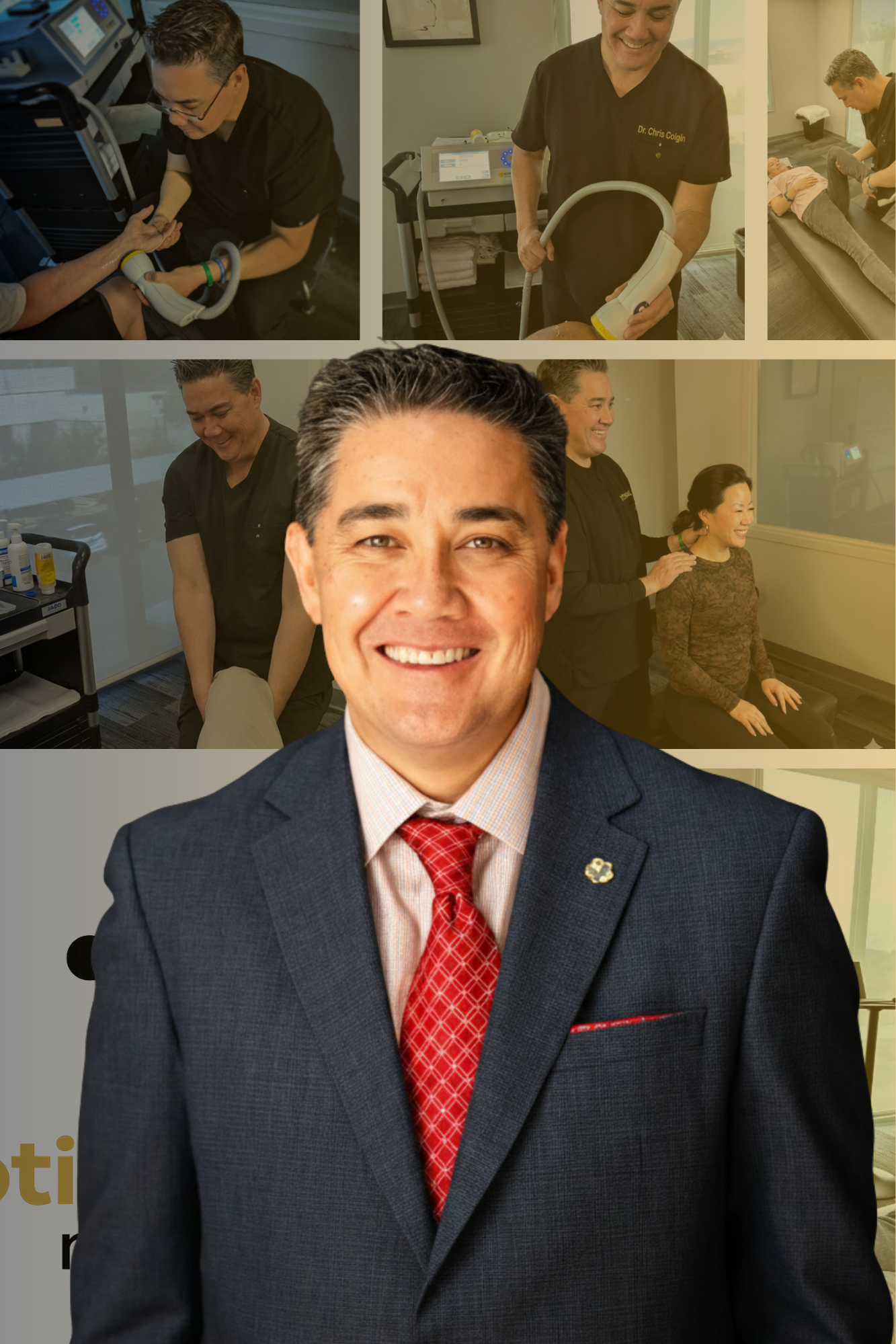
Class 4 laser therapy delivers light energy deep into the tissue to help reduce local inflammation and support cellular repair, which can help with the achy, congested feeling patients describe in their lower legs. SoftWave therapy helps stimulate the body's own regenerative response in soft tissue, which matters when swelling has been present long enough to affect the skin and connective tissue around the ankle. And addressing gait and alignment through chiropractic care is not a small thing here, because if someone's walking pattern is off due to a hip or pelvic misalignment, their calf muscle pump is not firing the way it should with every step, and that directly affects how well fluid moves back up the leg.
If you are dealing with ankle swelling that has not improved with simple home care, our team at Optimal Health Members can take a real look at what is contributing to it and build a plan around your specific situation, not a generic one.
Natural Ways to Support Healthy Circulation
I lean toward supporting the body's own systems rather than masking a symptom. Nitric oxide plays a major role in healthy circulation, since it is what allows blood vessels to relax and dilate properly. Research on nitric oxide and vascular function shows that when nitric oxide production declines, blood vessels lose some of that healthy tone and flexibility, which can affect circulation over time. For patients dealing with sluggish circulation, I often recommend a nitric oxide support supplement like Nitric Boost, aimed at supporting that natural vascular tone rather than just pushing fluid around.
Magnesium and vitamin C also come up often in my conversations with patients, since both play a role in vein and vessel health. And hydration matters more than people think. It sounds backwards, but when you are dehydrated your body tends to hold onto fluid, so drinking enough water actually helps reduce swelling rather than add to it.
Simple Things You Can Start Tonight
Elevate your feet above heart level for fifteen to twenty minutes a few times a day, especially in the evening. Wear graduated compression socks if you will be standing or sitting for long stretches. A review of clinical trials on air travel and compression stockings found high quality evidence that graduated compression reduces swelling during long periods of sitting, along with moderate evidence for reducing clot risk.
Watch your sodium intake, especially with restaurant food, since that is a hidden source for a lot of people. Stay hydrated. Avoid crossing your legs for long periods, since it can restrict blood flow at the knee. And do simple ankle pumps, just flexing your foot up and down, whenever you have been sitting still for a while. If someone tries these consistently for a couple of weeks and the swelling is not improving, or it is getting worse, that is when I want to see them or get them to the right specialist.
Who I See This In Most Often
Frequent travelers dealing with long flights are a classic case, and I tell them to move every hour and wear compression socks on any flight over three or four hours. People on their feet all day, nurses, servers, retail workers, tend to develop that end of shift heaviness, and supportive footwear plus scheduled movement breaks make a real difference. Older adults are dealing with naturally weakening vein valves, so consistency with movement and elevation becomes even more important as a daily habit rather than an occasional fix.
I am also seeing more of this lately in patients going through significant weight loss, including some of our GLP THREE members. As the body changes quickly, fluid shifts can happen, and improved metabolic health tends to support better circulation over time, but in the early stages of a big transformation I still want those patients paying attention to hydration, movement, and how their legs feel by the end of the day.
The Misconception I Want You to Let Go Of
The biggest one is that people assume swollen ankles are just a normal part of getting older, so they never mention it to anyone, not their doctor, not me, nobody. They just buy bigger shoes and move on. Swelling is your body communicating something, and while it is often benign, it is not something to quietly accept without asking why it is happening.
The second misconception is thinking a compression sock alone fixes the underlying issue. It helps manage the symptom, but if there is a real vascular cause, that still needs to be properly evaluated.
What I Want You to Walk Away Understanding
I want you to walk away with a clear sense of when to relax and when to act. Occasional mild swelling after a long day on your feet, especially if it improves overnight, is common and usually not a cause for alarm. But swelling that is persistent, one sided, painful, or paired with any of the warning signs mentioned above deserves real attention, not a shrug.
The good news is that a natural, conservative approach, movement, hydration, proper support, and therapies that support your body's own healing, works beautifully alongside proper medical care when it is needed. You do not have to choose between ignoring it and panicking about it. There is a smart middle path, and that is exactly what I want to help you find.
Ready to Get Your Legs Feeling Like Yours Again?
If your ankles have been telling you something for a while now and you have been putting off listening, I would love to help you figure out what is really going on. Our team at Optimal Health Members in Henderson combines a real clinical evaluation with therapies built to support your body's own ability to heal and circulate well. You do not have to keep guessing.