Stem Cell Therapy vs SoftWave: What’s the Difference?
If you’re reading this, there’s a good chance a knee, shoulder, hip, or heel has been bothering you for a year or more. You’ve probably tried cortisone shots and physical therapy, and someone has started using the word “surgery.” Then a friend, an ad, or a seminar mentions stem cells, and it sounds like the last natural option before the operating room.
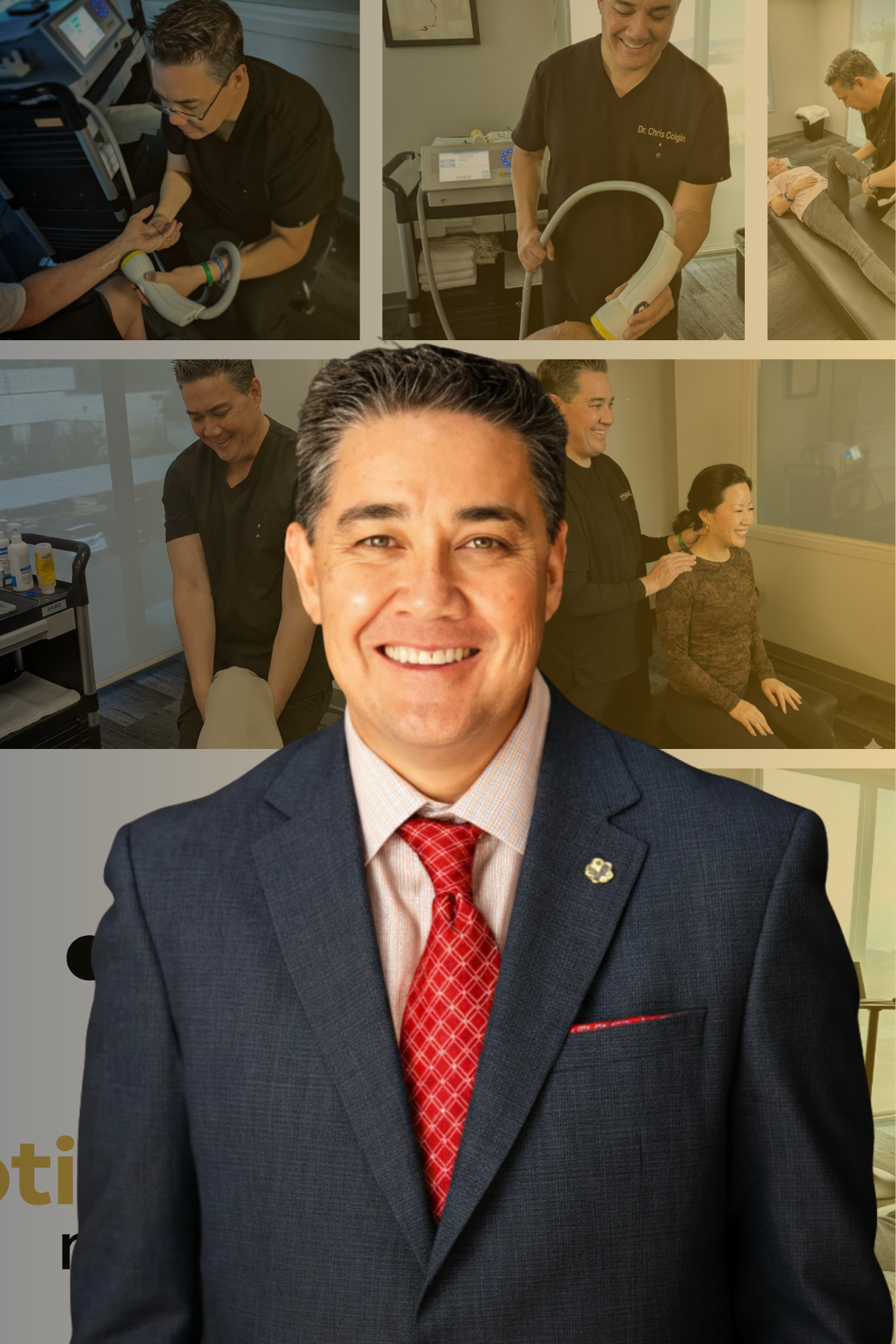
I’ve been in practice since 1996. When a patient asks me whether they should get stem cells or SoftWave, the question underneath is almost always the same: “Is there anything left that can fix this without surgery?” That’s the question I want to answer honestly here.
Quick Answer
Stem cell therapy injects cells from outside the injured area, from your own bone marrow or fat or from donor birth tissue, to try to repair it. SoftWave uses acoustic pressure waves to activate the repair systems already in your body, with no needle and no harvest. For most chronic soft tissue and joint pain I see, I start with the least invasive option first.
What Patients Are Really Asking When They Bring Up Stem Cells
The patients who ask me about stem cells aren’t chasing a trend. They’re tired and a little scared. They’ve done what they were told, the pain is still there, and they’re starting to wonder whether this is just how life will be from now on.
So before I compare any two treatments, I ask what they want their life to look like six months from now. Getting back on the golf course and being able to pick up a grandchild without wincing are two very different goals, and the answer shapes everything that follows. A treatment choice made out of fear rarely turns out well.
The Core Difference: Outside Workers vs Your Own Crew
Here’s how I explain it in the treatment room.
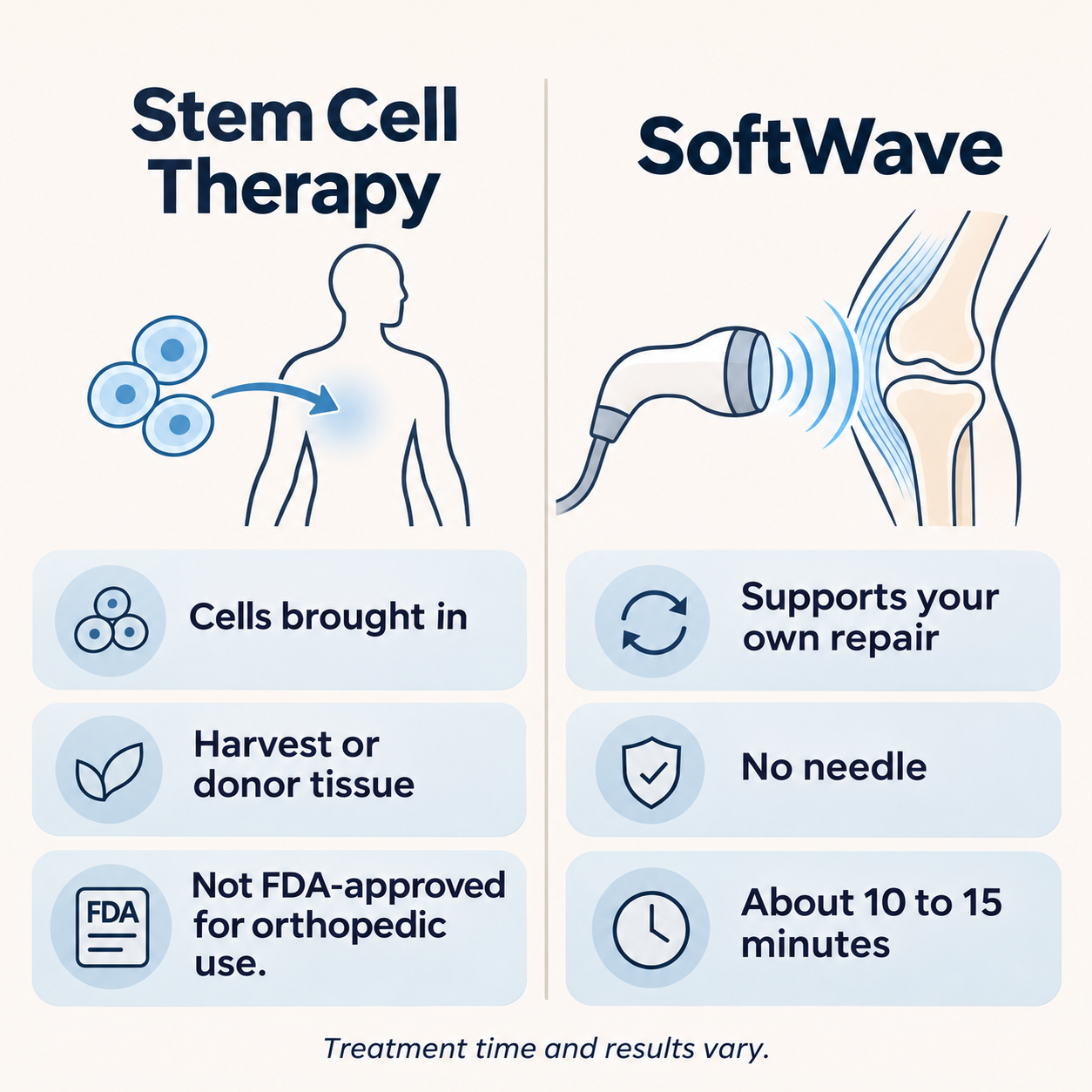
Stem cell therapy tries to bring repair cells in from outside. Depending on the clinic, those cells come from your own bone marrow, from your own fat, or from donor tissue such as umbilical cord or amniotic products. They’re injected into the injured area in the hope that they’ll help rebuild it.
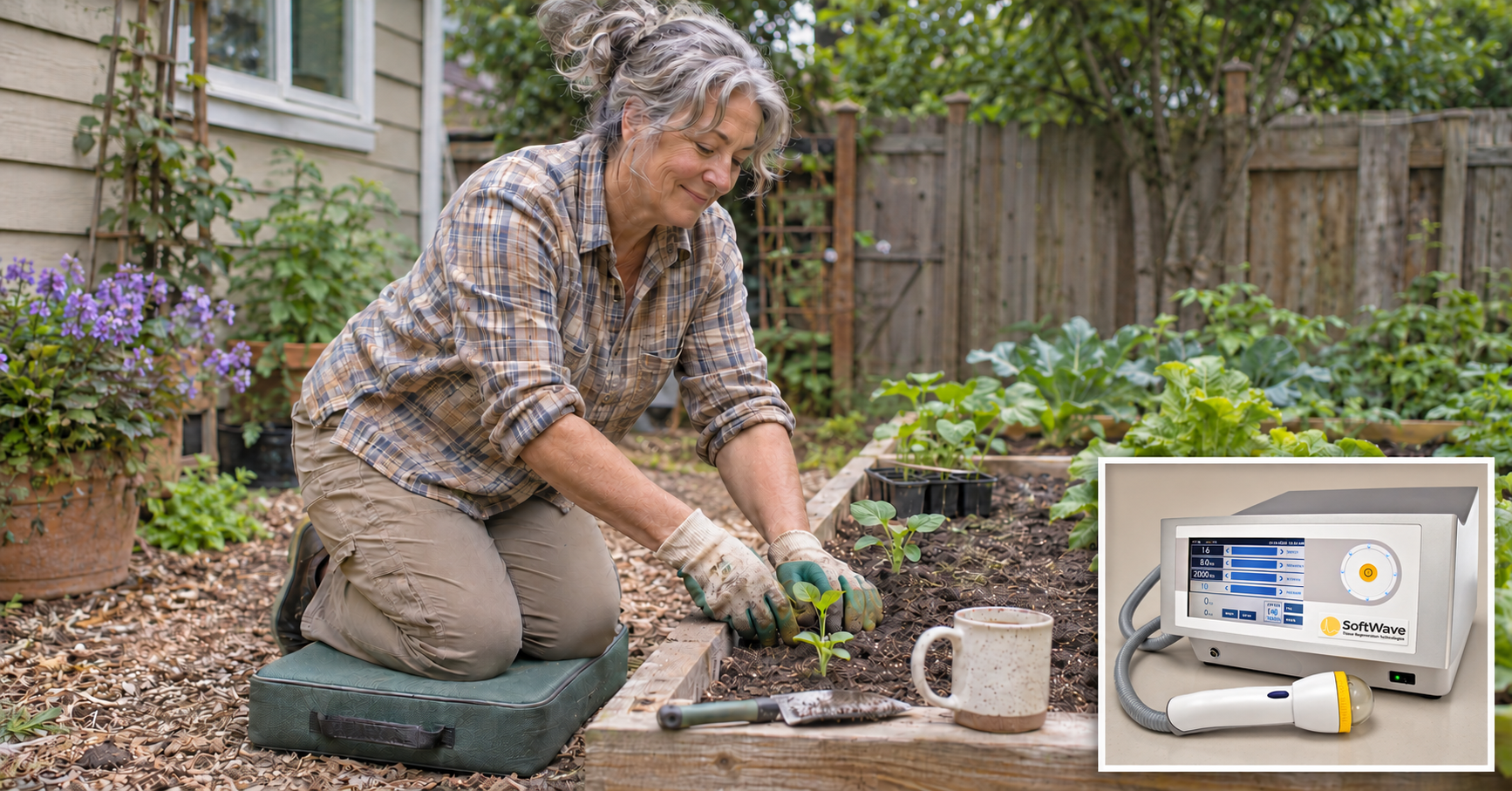
SoftWave works the other way around. The device sends acoustic pressure waves into the tissue, and the research on this kind of shockwave therapy shows a biological response that includes improved blood flow, a calmer inflammatory response, and recruitment of the body’s own mesenchymal stem cells. Laboratory work has also found that shockwave exposure can stimulate mesenchymal stem cells to grow and renew.
I tell patients that one approach brings in outside workers and the other gets your own crew back on the job site. With SoftWave there’s no needle, no harvest, and no injection.
What I Believe About Stem Cell Therapy That Many in My Field Won’t Say
The term “stem cell” has been badly overused, and patients are paying the price for it.
A lot of what’s sold as stem cell therapy in strip-mall clinics is processed, frozen birth tissue. When independent researchers tested commercial amniotic fluid products, they could not confirm that the products contained mesenchymal stem cells. The FDA has warned the public that unapproved regenerative products, including amniotic fluid, Wharton’s jelly, and umbilical cord products, are being widely marketed, and it has received reports of serious harm, including infections.
I’m not against regenerative medicine. I’m against people paying thousands of dollars in cash for a vial whose label promises more than its contents deliver. Procedures that use your own bone marrow or fat, done by qualified physicians, are a different conversation. Even so, they aren’t FDA-approved for orthopedic conditions, and you deserve to hear that before you sign anything.
Why I Brought SoftWave Into My Practice
In nearly 30 years I’ve watched plenty of shiny new technologies arrive with a lot of noise and leave quietly. I’m skeptical by nature, and I think my patients are better off because of it.
SoftWave earned a place at Optimal Health Members for two reasons. First, shockwave therapy has a substantial body of research behind it as a category, including reviews of how musculoskeletal tissue responds to extracorporeal shock waves. Second, it fits the way I’ve always practiced: support the body’s ability to heal, remove what’s getting in the way, and don’t add risk you don’t need.
What Care Actually Looks Like for Each
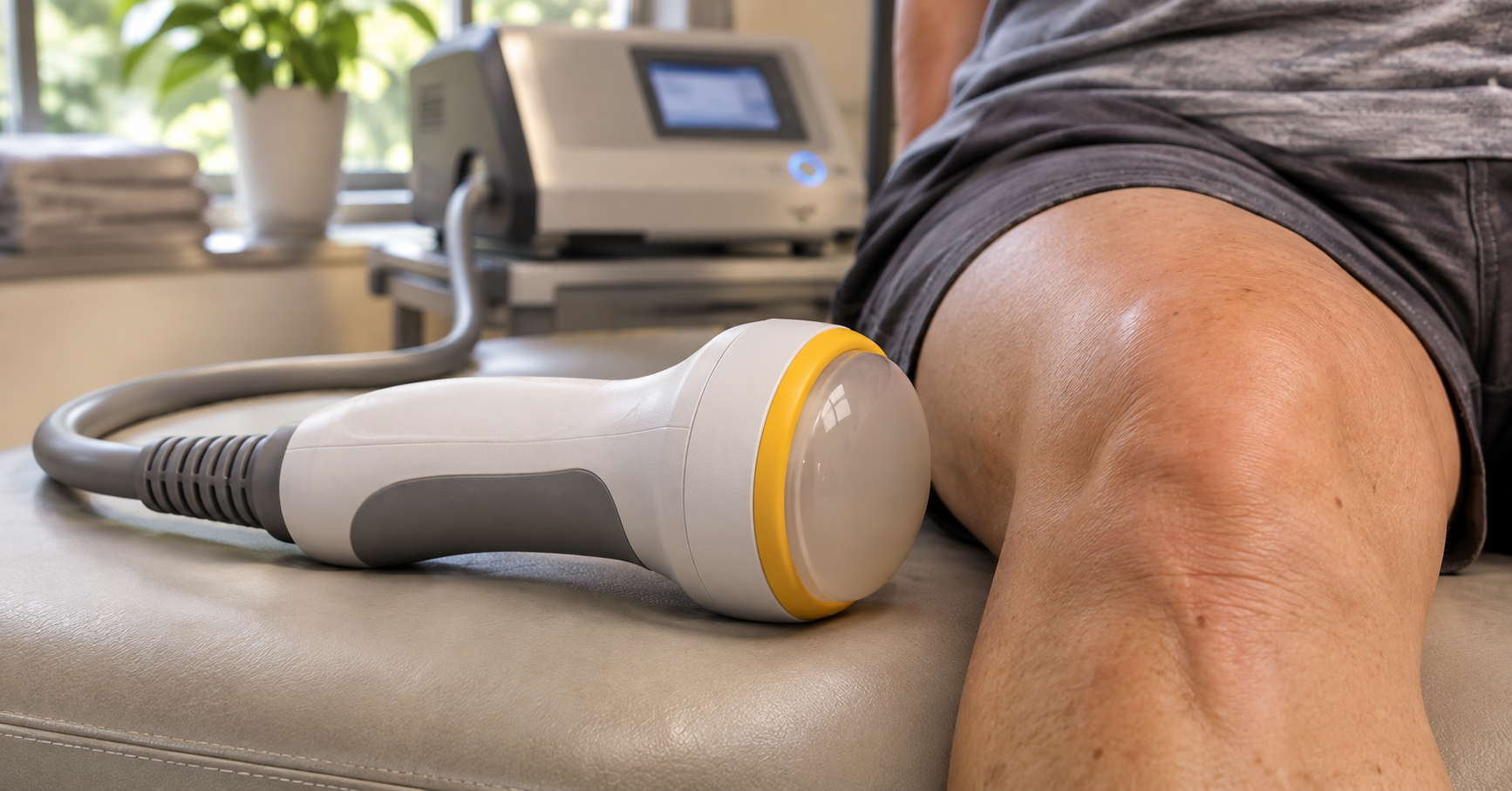
A SoftWave session takes about 10 to 15 minutes. You lie on the table, I place the applicator over the problem area, and you feel a rhythmic tapping. Most people drive themselves home and carry on with their day. Care is a series of sessions, and I measure function as we go: range of motion, how stairs feel, and whether you can sleep on that side again. Those markers matter to me more than a pain number on a chart.
A stem cell procedure is usually one larger event. It may involve a harvest, an injection, and a stretch of restricted activity afterward.
Neither one is magic, and neither is one-and-done. Both depend on what you do afterward: how you move, how you sleep, and how you fuel the repair.
The Biggest Mistake I See People Make
People choose based on how dramatic a treatment sounds instead of what their tissue actually needs.
“Stem cells” sounds powerful, so people assume it must be the stronger option. I’ve also watched people go straight to the most expensive choice without ever getting a clear diagnosis. An irritated tendon, an arthritic joint, and a sprained ligament are three different problems. I tell patients to get an accurate picture of what’s injured first and choose the treatment second. Doing it in that order will save you money and frustration.
Who SoftWave Fits, and When I Send People Elsewhere
In my experience, SoftWave is a strong fit for chronic tendon problems, plantar fasciitis, lingering soft tissue injuries, and many cases of joint pain where the tissue is irritated and stuck in a cycle of poor healing.
It isn’t the answer for a fully ruptured tendon, a mechanically unstable joint, or bone-on-bone arthritis where the structure is gone. In those cases I’ll tell you plainly to see a surgeon. Saying “this isn’t right for you” is part of earning a patient’s trust, and I would rather lose a treatment plan than lose that trust.
If you’re seriously considering an orthobiologic injection elsewhere, ask the hard questions: What’s actually in the vial? Has it been tested for live cells? Is this procedure FDA-approved for my condition?
Combining Care: Where the Best Results Come From
You don’t always have to choose one approach. In my practice, the best results often come from combining treatments. SoftWave pairs well with chiropractic care and Class 4 laser therapy, because together they address the mechanics, the tissue, and the circulation at the same time.
Healing doesn’t stop when you leave my office. The repair work keeps going between visits, and that’s where nutrition, sleep, and targeted support matter. For patients going through SoftWave, laser, or chiropractic care, I often recommend RECOVER™, a regenerative peptide and antioxidant complex with BPC-157, GHK-Cu, and carnosine in a multi-phase release capsule. It doesn’t replace hands-on care. My treatments help start the repair process, and RECOVER™ is designed to support your body’s natural repair work between visits. If you take a blood thinner or are pregnant, talk with your provider before starting it.
What I’d Tell You If You Were Sitting Across From Me
If someone I respected asked which one I’d choose for myself, I’d tell them to start with the least invasive option that has a real chance of working.
For most of the soft tissue and joint pain I see, that means SoftWave combined with good hands-on care, before anything involving needles, harvesting, or a large cash bill. If it hasn’t moved the needle after a fair trial, you’ve lost very little and we’ve learned a lot. Then I’ll help you weigh the next step honestly.
I can’t promise outcomes to anyone. What I can promise is that I’ll tell you what I believe will help you, even when the answer is something I don’t offer.
Key Takeaways
Stem cell therapy brings cells in from outside. SoftWave uses acoustic waves to activate the repair systems already in your body.
Independent testing of commercial amniotic fluid products could not confirm that they contain mesenchymal stem cells, and the FDA has warned about unapproved regenerative products.
Research on shockwave therapy shows effects on blood flow and inflammation and recruitment of the body’s own stem cells.
A SoftWave session takes about 10 to 15 minutes, with no needle and no harvest.
Get an accurate diagnosis first. The right treatment depends on what is actually injured.
Let’s Find Out What Your Tissue Actually Needs
If you’ve been stuck between “live with it” and “have surgery,” there may be a step in between that nobody has explained to you clearly. At Optimal Health Members, I start with an honest evaluation of what’s injured, and then we talk through your options together, including whether SoftWave makes sense for you. No pressure, just a straight answer.