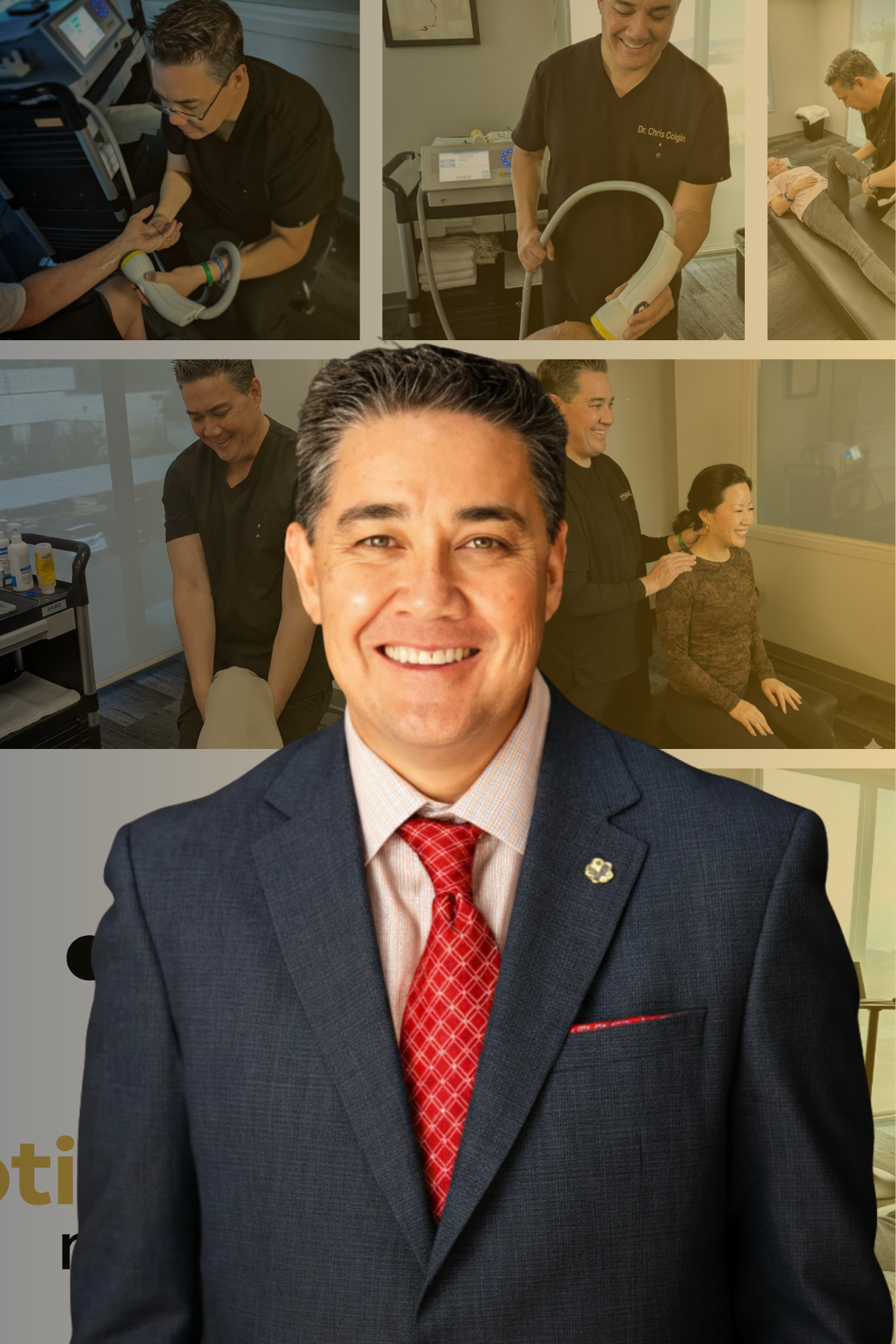
SoftWave Therapy for Frozen Shoulder: How Acoustic Wave Therapy Helps a Stuck Shoulder Move Again
You notice it first in the little things. Reaching for the seatbelt. Tucking in a shirt. Fastening a bra, or brushing the back of your hair. Then it starts waking you up at 2 a.m. because you rolled onto that side. Months go by, and someone tells you to "give it time." So you give it time, and the shoulder stays stuck.
If that sounds like your life right now, I want you to know two things. First, you are not imagining it. Frozen shoulder is one of the most frustrating conditions I treat, and the pain and sleep loss are very real. Second, you do not have to just wait it out. In my practice at Optimal Health Members, SoftWave therapy has become one of the most effective tools I have for helping a frozen shoulder start moving again.
Quick Answer: Does SoftWave Help Frozen Shoulder?
SoftWave is a focused acoustic wave therapy that helps a frozen shoulder heal by improving blood flow, calming chronic inflammation, and activating the body's own tissue repair. Clinical trials on shockwave for adhesive capsulitis show improvements in pain, range of motion, and function. Most patients complete about six weekly sessions, often combined with chiropractic care and mobility work.
Key Takeaways
Frozen shoulder (adhesive capsulitis) happens when the capsule around the shoulder joint becomes inflamed, thickens, and tightens, and the natural course can take one to three years to resolve.
Diabetes and thyroid problems are recognized risk factors, so whole-body health matters when the shoulder is stuck.
Randomized trials have found that shockwave therapy improved pain, disability, and range of motion compared with sham treatment.
One trial found shockwave improved shoulder function and motion better than oral steroids in the short term, with only mild, temporary side effects.
SoftWave works best as part of a full plan that includes the upper back, neck, shoulder blade, and a simple home mobility routine.
What Is Actually Happening Inside a Frozen Shoulder
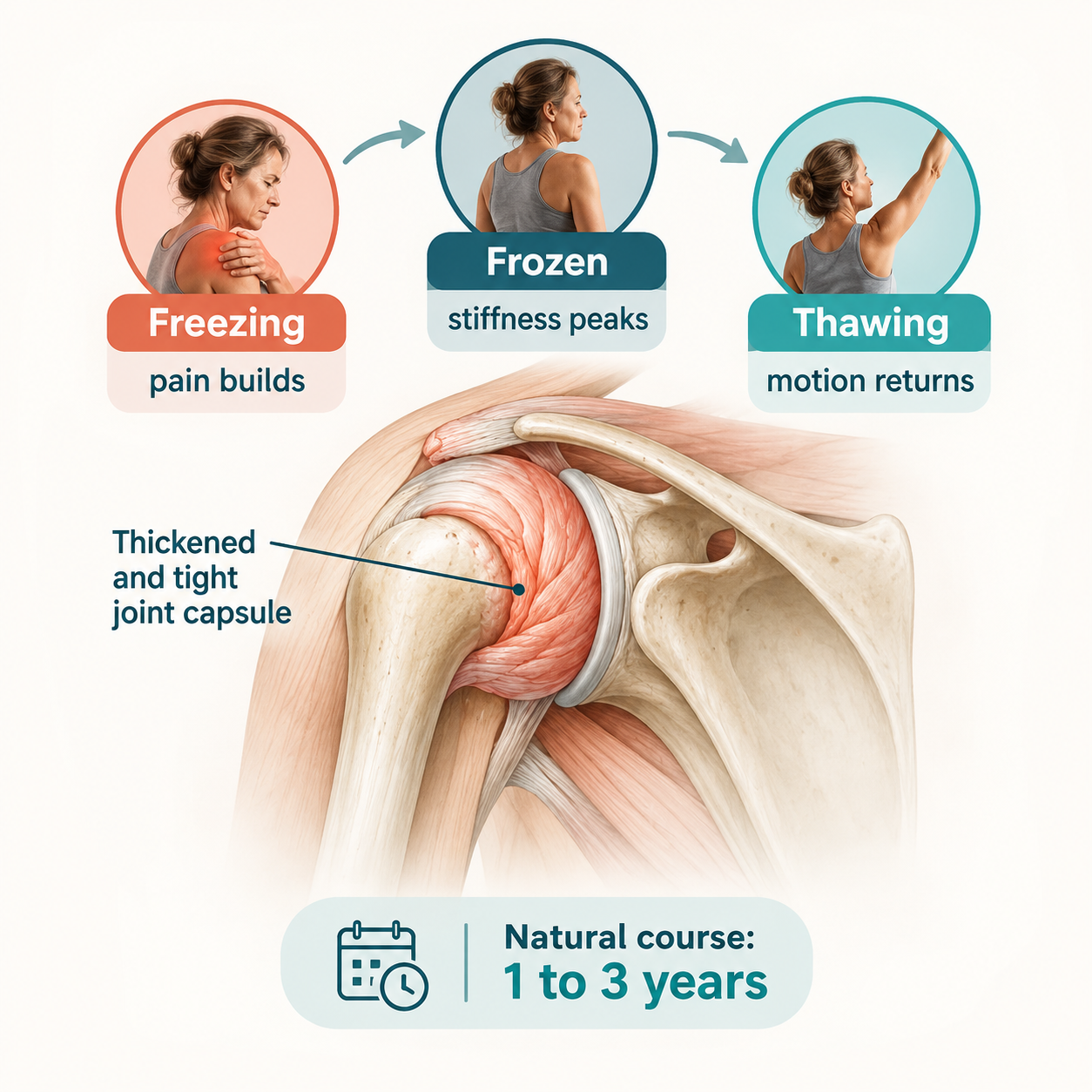
When I explain frozen shoulder to a patient, I describe the shoulder joint as being wrapped in a capsule, almost like a sleeve of connective tissue. In frozen shoulder, that sleeve becomes inflamed, then thickens, tightens, and starts sticking to itself. The medical term is adhesive capsulitis, and that word "adhesive" says it all. The joint space gets smaller, so the arm literally has less room to move.
Frozen shoulder usually moves through three phases. There is the painful "freezing" phase, the stiff "frozen" phase, and eventually the "thawing" phase. According to the Mayo Clinic, that natural course can stretch from one to three years. I respect the body's ability to heal, but I don't believe most people should have to lose two years of their life waiting for a capsule to loosen on its own when we can help it along.
What I See When a Frozen Shoulder Patient Walks Into My Office
After nearly 30 years in practice, I can often spot frozen shoulder before a patient says a word. It's in the guarding. They hold the arm close to the body like it belongs to somebody else.
Most of them are tired by the time they reach me. Not just in the shoulder, but tired of it. They have usually been dealing with it for three, six, sometimes nine months. They can't reach the top shelf. They can't put on a coat without a fight. Many have already been told to rest it and wait, and they feel dismissed. I hear a lot of frustration in these first visits, and I understand it. The sleep loss alone wears on everything else in a person's life, from their patience to their energy to their mood.
Who Gets Frozen Shoulder and Why Blood Sugar Matters
I see frozen shoulder most often in people between 40 and 60, and more often in women. But the risk factor I most want people to understand is blood sugar. A review in the Journal of the American Academy of Orthopaedic Surgeons lists diabetes and hyperthyroidism among the key risk factors, and in my experience, patients with blood sugar issues tend to have more stubborn cases.
So when I see frozen shoulder, I'm going to ask about blood sugar, thyroid, and overall metabolic health. The shoulder is often telling us something about the whole body. For patients who need support getting their metabolic health back on track, I often point them toward our natural GLP THREE metabolic program alongside their shoulder care.
The other big risk factor is immobility. Someone has a minor shoulder injury, a surgery, or even a broken wrist, and they keep that arm still for weeks. That stillness gives the capsule a chance to tighten down. My advice is simple: if you hurt your shoulder, protect it, but don't freeze it.
What SoftWave Is and Why I Brought It Into My Practice
SoftWave is a form of focused acoustic wave therapy. You may hear it called shockwave, though for most of my patients the experience is much gentler than that name suggests. It sends sound energy into the tissue, and that mechanical stimulus prompts the body's own repair responses. Research on shockwave biology describes effects including new blood vessel formation, reduced inflammation, and tissue regeneration driven by a process called mechanotransduction, where cells respond to mechanical signals by switching on repair and remodeling.
I brought SoftWave into Optimal Health Members because I kept seeing patients with chronic soft tissue problems who had tried everything and were stuck. I wanted something that didn't just manage pain, but gave the tissue a real reason to heal. I'm skeptical of hype by nature. I looked hard at the research and talked with doctors I respect before we ever offered it. What ultimately convinced me was watching the results in my own patients.
What the Research Says About Shockwave Therapy for Frozen Shoulder
Patients deserve honesty more than they deserve a sales pitch, so here is where the evidence stands.
The research on shockwave for adhesive capsulitis is encouraging. In a randomized trial of 36 patients, those who received four weekly shockwave sessions improved more in pain, disability, and most directions of shoulder motion than those who received a sham treatment. A randomized trial in the Journal of Shoulder and Elbow Surgery compared shockwave with oral steroids and found the shockwave group had better gains in function and range of motion starting around week four, with side effects that were mild and temporary. More recently, a 2025 randomized controlled trial found that adding shockwave to evidence-based physical therapy reduced pain and disability and improved motion and quality of life at 12 weeks compared with physical therapy plus a sham treatment.
It is not a miracle, and it is not the final word. Studies vary in size, device type, and protocol. But when I put the published evidence next to what I see in my office every week, I feel confident recommending SoftWave as a strong conservative option, especially for people who want to avoid repeated injections or surgery.
What a SoftWave Plan for Frozen Shoulder Looks Like at OHM
A SoftWave session is quick, usually about 10 to 15 minutes applied to the shoulder and the surrounding tissue. For frozen shoulder, most patients complete a series of sessions, often around six, spaced about a week apart. We adjust from there based on how the shoulder responds.
I never treat the shoulder in isolation, though. The shoulder doesn't work alone. If the upper back is stiff, the neck is locked up, or the shoulder blade isn't gliding, the joint is fighting an uphill battle. That's why we often pair SoftWave with chiropractic adjustments, Class 4 laser therapy to help calm inflammation and pain, and specific movement work at home. SoftWave starts the healing response. Everything else helps the body keep that momentum going.
Healing a thickened capsule is real repair work, and that work doesn't stop when a patient leaves my office. For patients who want to support tissue recovery between visits, I often recommend RECOVER™ by AgeRecode, a regenerative peptide and antioxidant complex combining BPC-157, GHK-Cu, and carnosine in a multi-phase release capsule designed to protect the peptides through digestion. BPC-157 supports blood vessel signaling and tissue regeneration, GHK-Cu supports collagen production and helps calm inflammation, and carnosine helps protect tissue from oxidative stress. It is not a replacement for hands-on care. SoftWave, laser, and chiropractic care get healing started, and RECOVER™ helps the body sustain that repair between visits. Anyone on blood thinners, or who is pregnant, should check with their provider first.
How Soon You Can Expect to Feel a Difference
Some patients notice less pain within the first couple of visits, and the first thing they usually mention is better sleep. Range of motion tends to return more gradually over several weeks.
I'm careful to set honest expectations. Frozen shoulder took months to build, and the capsule needs time to remodel. We are looking for steady progress, not an overnight transformation. If you're in the earliest, most inflamed phase, we may start more gently. If you're deep in the frozen phase, we may push the mobility work harder. Results vary from person to person, and I will always tell you straight where you stand.
A Grandmother Who Just Wanted to Lift Her Granddaughter
One patient story stays with me. She was in her mid-fifties, and what brought her in wasn't the pain or even the sleepless nights. It was that she couldn't lift her arm high enough to hold her granddaughter the way she wanted to.
She had been in the frozen phase for about seven months and had already tried one injection that helped for a few weeks before fading. We built a plan around SoftWave, chiropractic work through her upper back and neck, Class 4 laser, and a simple home mobility routine. Around her fourth session, she told me she had slept through the night for the first time in months. A few weeks later, she sent me a photo of herself holding her granddaughter up over her head, both of them laughing.
I keep moments like that. They are the reason I do this work. (Details have been changed to protect her privacy.)

The Biggest Frozen Shoulder Mistakes I See
The first mistake is waiting too long. "Give it time" is not a treatment plan. The longer the capsule stays tight, the more stubborn it can become.
The second is the opposite: forcing it. People get frustrated and yank the arm through aggressive stretches, which flares the inflammation and sets them back.
The third is relying on pain pills or repeated injections to cover up the problem without addressing why the tissue is stuck. Those tools have their place, but they are not the whole answer.
The fourth, which I see constantly, is ignoring the bigger health picture. If your blood sugar is off, your tissue will not heal the way it should. I care about the shoulder, but I also care about the person attached to it.
What I Would Tell You If You Were Sitting Across From Me
You're not stuck forever. Frozen shoulder is one of the most frustrating conditions there is, but it is also one of the most rewarding to help, because when that shoulder starts to open up, people get their lives back. Their sleep. Their workouts. Their ability to do their hair, hug their kids, and play with their grandkids.
Don't just wait it out. Get properly evaluated, find out which phase you're in, and take a look at your overall health while you're at it. I believe God designed the body to heal when we give it the right conditions, and my job is to help create those conditions.
Ready to Get Your Shoulder Moving Again?
If you're in Henderson or the Las Vegas area and you're living with a frozen shoulder, I'd be glad to evaluate you and talk through whether SoftWave makes sense for your situation. You can learn more about our approach at Optimal Health Members or call our office at (702) 541-9060. If you're outside Nevada, my encouragement is the same: find a provider who will look at the whole you, not just the shoulder.
And if blood sugar or metabolic health is part of your picture, take a look at our natural, non-pharmaceutical GLP THREE program, available online wherever you live.