SoftWave for Chronic Neck Pain: What It Is, What the Research Shows, and Who It Helps
If you've lived with neck pain for months or years, you probably know the routine by heart. You wake up stiff. You roll your shoulders, crack your neck, and hope it loosens up by lunch. By mid-afternoon the headache starts at the base of your skull, and by evening your shoulders are up around your ears. You've tried pain relievers, massages, maybe physical therapy or an injection, and some of it helped for a while. But the pain keeps coming back.
I've been in practice for nearly 30 years, and I see this pattern every week. One of the tools that has changed how I care for these patients is SoftWave tissue regeneration therapy. In this post I'll walk you through what it is, what the research actually shows, who it helps, and who it doesn't, the same way I would if you were sitting across from me in my office.
Quick Answer: Does SoftWave Help Chronic Neck Pain?
SoftWave is a noninvasive acoustic wave therapy that stimulates the body's own repair process in chronically irritated neck muscles, ligaments, and connective tissue. Research on shockwave therapy for neck and shoulder myofascial pain shows meaningful reductions in pain and tenderness. Most patients complete about six weekly sessions, often combined with chiropractic care and Class 4 laser therapy.
Key Takeaways
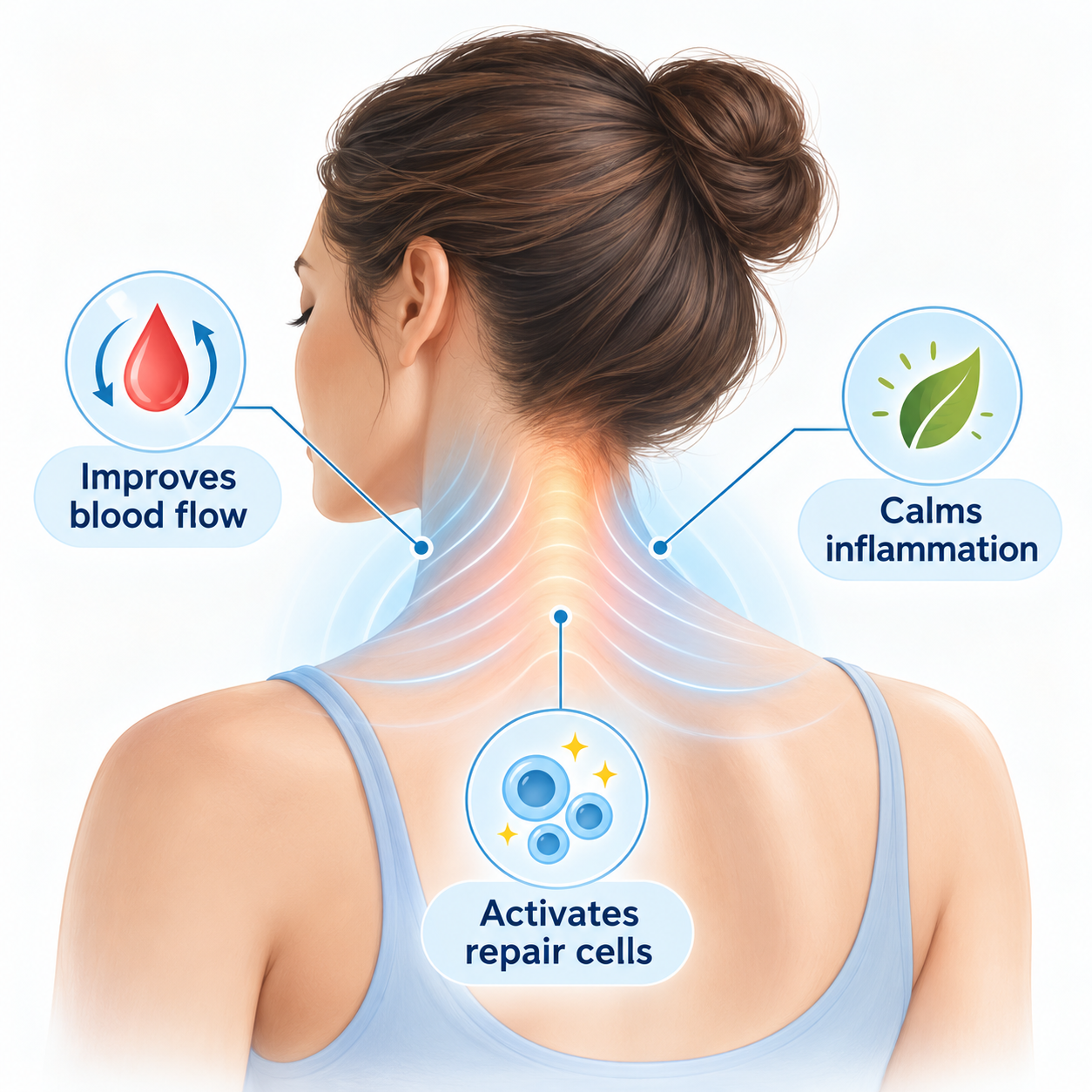
SoftWave uses broad, unfocused acoustic waves to improve blood flow, calm inflammation, and activate tissue repair in the neck and upper back.
A meta-analysis of 11 randomized controlled trials found shockwave therapy reduced pain intensity and tenderness in neck and shoulder myofascial pain compared with other treatments.
Sessions take about 10 to 15 minutes, require no medication or downtime, and a typical course is around six visits about a week apart.
Results build over four to eight weeks as tissue remodels, so early sessions are only part of the picture.
SoftWave works best as part of a complete plan that includes chiropractic care, Class 4 laser therapy, and better daily habits.
What Chronic Neck Pain Really Looks Like When It Walks Into My Office
Most of the people I see with chronic neck pain aren't dealing with a recent tweak. They've been carrying it for years. They come in with a stiff, guarded neck, headaches that start at the base of the skull, tight shoulders, and often tingling or heaviness down one arm.
Nearly all of them have already done the rounds. Pain relievers, muscle relaxers, a few massages, maybe a course of physical therapy. None of those are wrong, and Mayo Clinic notes that poor posture, worn joints, and muscle strain are among the most common causes of neck pain. The problem is that most of those approaches manage symptoms without changing the tissue itself. By the time someone finds us, they're frustrated and a little skeptical. Honestly, I respect that. I'd be skeptical too.
What SoftWave Is and How It Differs From Traditional Shockwave Therapy
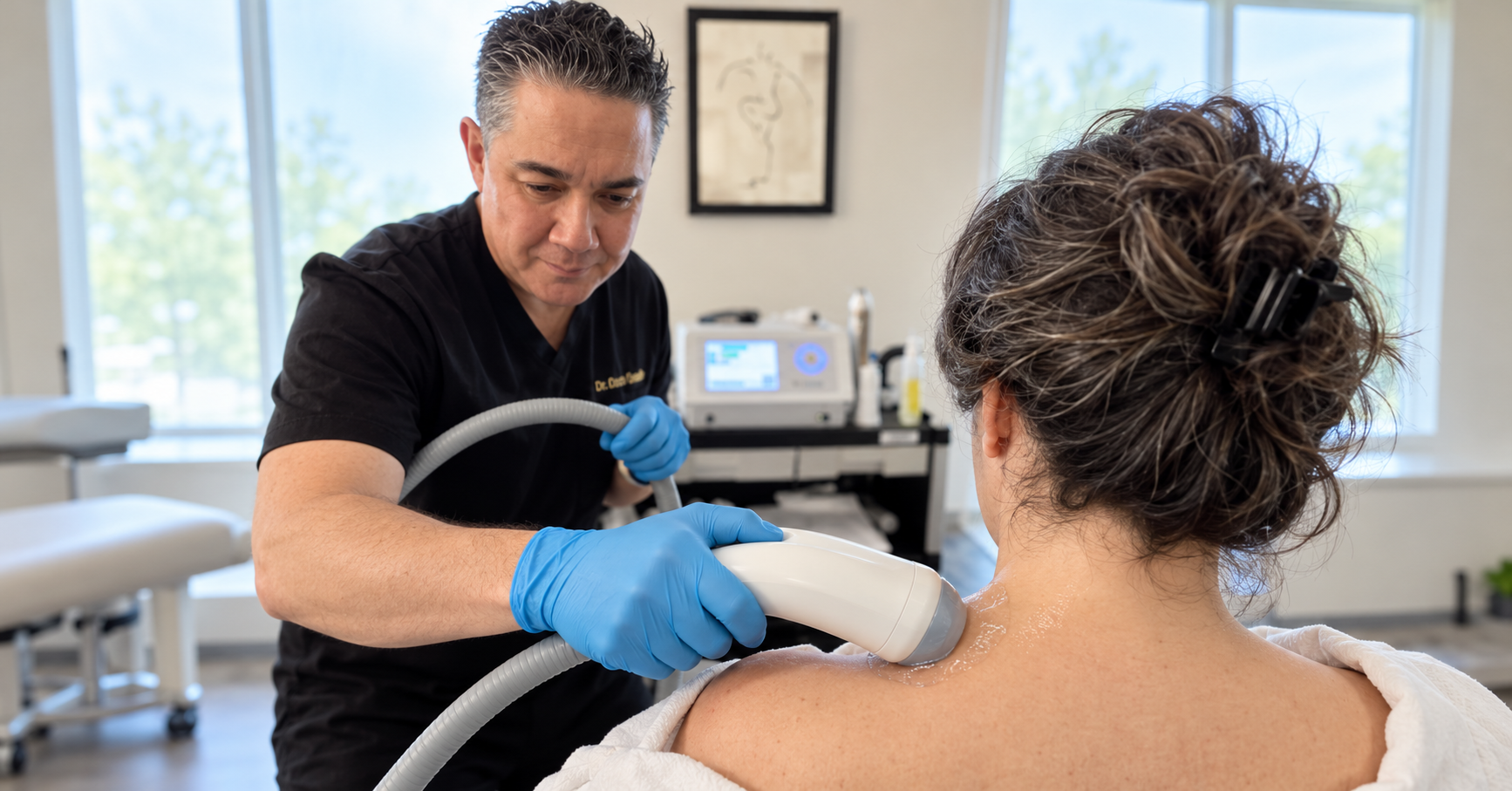
SoftWave is a form of electrohydraulic acoustic wave therapy. It sends broad, unfocused acoustic waves into the tissue to wake up the body's own repair process.
Older focused shockwave devices concentrate a lot of energy into a small point, which can be uncomfortable. SoftWave's applicator spreads that energy across a wider and deeper field, so we can treat the whole neck and upper back region in one session, and most patients tolerate it very well.
What I tell patients is this: we aren't forcing anything. Acoustic waves act as a mechanical signal, and research on shockwave biology describes how that signal triggers tissue regeneration, new blood vessel growth, and anti-inflammatory effects through a process called mechanotransduction. In other words, the tissue receives a message that says, "This area still needs attention," and the body responds.
What the Research Says About Acoustic Wave Therapy for Neck and Upper Back Pain
I always want patients to know where the evidence is strong and where it's still growing.
A meta-analysis of 11 randomized controlled trials published in the American Journal of Physical Medicine and Rehabilitation found that shockwave therapy outperformed other treatments for reducing pain intensity and tenderness in people with myofascial pain in the neck and shoulder. That same analysis did not find a significant change in neck disability scores right after treatment, which is one reason I never rely on a single therapy alone.
A scoping review of 19 clinical studies reached a similar conclusion, reporting a beneficial role for shockwave therapy in improving clinical and functional outcomes for myofascial pain. And a 2025 randomized controlled trial in office workers with upper trapezius pain found that four weekly sessions reduced muscle stiffness, pain, and disability.
The mechanisms are well documented too. A review from Mayo Clinic researchers explains that low-intensity shockwaves promote new blood vessel formation and help attract repair cells to injured tissue.
Is there more neck-specific research to be done, especially on unfocused devices like SoftWave? Yes. But when I put the published science together with what I've watched happen in my own patients, I'm confident recommending it for the right person.
Who Is a Good Candidate for SoftWave, and Who Is Not
The best candidates have chronic soft tissue involvement:
Muscle tension that never fully lets go
Old whiplash injuries that never quite healed
Tech neck from years of looking down at screens
Irritated ligaments around the small joints of the neck
Stubborn trigger points in the upper shoulders and neck
People who have plateaued with other care often do especially well.
Where I'm careful: anyone with an unexplained or rapidly worsening neurological symptom needs a proper workup first. Active cancer in the treatment area, pregnancy, certain bleeding disorders, and some implanted devices are reasons to hold off or treat a different area. I do a full exam before anyone gets on the table. SoftWave isn't the answer for everyone, and I'd rather tell someone no than sell them something that won't help.
What a SoftWave Session Feels Like and What to Expect Over a Course of Care
A session for the neck and upper back usually takes about 10 to 15 minutes. You'll feel a rhythmic tapping, and over the tender spots it can feel a bit sharp, almost like it's finding the exact place that hurts. There's no downtime and no medication.
Many people feel looser the same day, but the real change happens over the following weeks as the tissue remodels. A typical course for chronic neck pain is around six sessions, roughly a week apart, and then we reassess. I tell patients to judge their progress by how they feel four to eight weeks out, not by how they feel that first afternoon.
A Patient Story: When Neck Pain Almost Ended a Career
One patient who stays with me is a dental hygienist in her fifties who had spent close to twenty years leaning over patients. Her neck pain had become constant, and she was getting headaches three or four times a week. She was seriously thinking about leaving a career she loved.
We combined chiropractic adjustments with SoftWave to the neck and upper trapezius and added some simple posture changes at her chair. By about her fourth session, she told me she'd gone a full week without a headache for the first time she could remember. A couple of months later she was still working and planning her retirement on her own terms instead of letting pain make that decision for her.
That's the outcome I care about. Not just a lower pain score, but a life that opens back up.

How SoftWave Works Together With Chiropractic Care and Class 4 Laser Therapy
I think of chronic neck pain care as a team approach where each therapy does a different job.
Chiropractic care restores motion and takes stress off the joints and nerves. SoftWave works on the deeper soft tissue, the chronically irritated muscles, ligaments, and connective tissue, and kickstarts regeneration. Our Class 4 laser therapy, using the LightForce unit, adds photobiomodulation that supports cellular energy and calms inflammation.
When we layer them, results tend to come faster and last longer than any single therapy on its own. I've seen it too many times to think it's a coincidence, and the research reflects it as well. A 2022 randomized trial found that shockwave therapy combined with another targeted treatment reduced upper trapezius pain and stiffness more than shockwave alone.
What Patients Should Do Between Visits to Make Results Last
This is the part people underestimate. Therapy starts the healing, but daily habits determine whether it holds. Here's what I ask of my patients:
Raise your screen to eye level
Take a short movement break every 30 to 45 minutes
Do a few gentle chin tucks and shoulder blade squeezes through the day
Stay well hydrated
Protect your sleep, since the NIH notes that sleep plays a key role in the body's repair processes
Nutrition matters too, because tissue can only rebuild with the raw materials you give it. For patients whose neck tissue has been slow to heal, the space between visits is where a lot of repair either continues or stalls. That's where I'll often suggest a regenerative peptide and antioxidant formula called RECOVER™, which combines BPC-157, GHK-Cu, and carnosine in a multi-phase capsule designed to protect the peptides through digestion. It isn't a replacement for hands-on care. SoftWave and adjustments initiate healing, and RECOVER™ helps the body sustain that repair work between visits. Anyone taking blood thinners or who is pregnant should check with their provider first.
What I Wish More People Understood About Chronic Neck Pain
Chronic doesn't mean permanent.
So many people have been told, "That's just your age," or "You'll have to live with it." Pain that has lasted a long time usually means the tissue got stuck in an incomplete healing cycle. It didn't fail. It stalled. When you give the body the right signal and remove what keeps re-irritating it, it often knows exactly what to do.
After nearly 30 years in practice, I still believe the body was designed to heal. Our job is to clear the path.
A Personal Word If You've Been Living With Neck Pain for Years
I'm sorry you've carried this as long as you have. I know what it does to your sleep, your patience, your work, and even how present you can be with your family.
You don't have to figure it out alone, and you don't have to jump straight to the most aggressive option. Start with a thorough evaluation, get real answers about what's going on in your neck, and then decide. If SoftWave is a good fit, we'll tell you. If it isn't, we'll tell you that too and point you in the right direction. Either way, you deserve to feel like yourself again.

Ready to Find Out if SoftWave Is Right for Your Neck?
If chronic neck pain has been running your days, I'd love to help you get clear answers. At Optimal Health Members, we start with a thorough evaluation, explain exactly what we find, and build a plan that fits your body and your goals, whether that includes SoftWave, chiropractic care, Class 4 laser therapy, or something else entirely. Call us at (702) 541-9060 or visit optimalhealthmembers.com to schedule your visit.