Red Light Therapy vs Infrared: What's the Difference?
For most of us, the confusion starts in the same place. You are shopping for a light therapy panel, or you walk past an infrared sauna at the gym, and suddenly there are three or four terms being used like they all mean the same thing. Red light. Infrared. Near-infrared. Far-infrared. Somewhere in there is the thing that might actually help your sore shoulder or your stubborn low back, but nobody explains which one, and the marketing on the box is not helping. After nearly thirty years of treating pain and helping people heal, I want to clear this up in plain language, because choosing the wrong tool for your problem is a common and avoidable mistake.
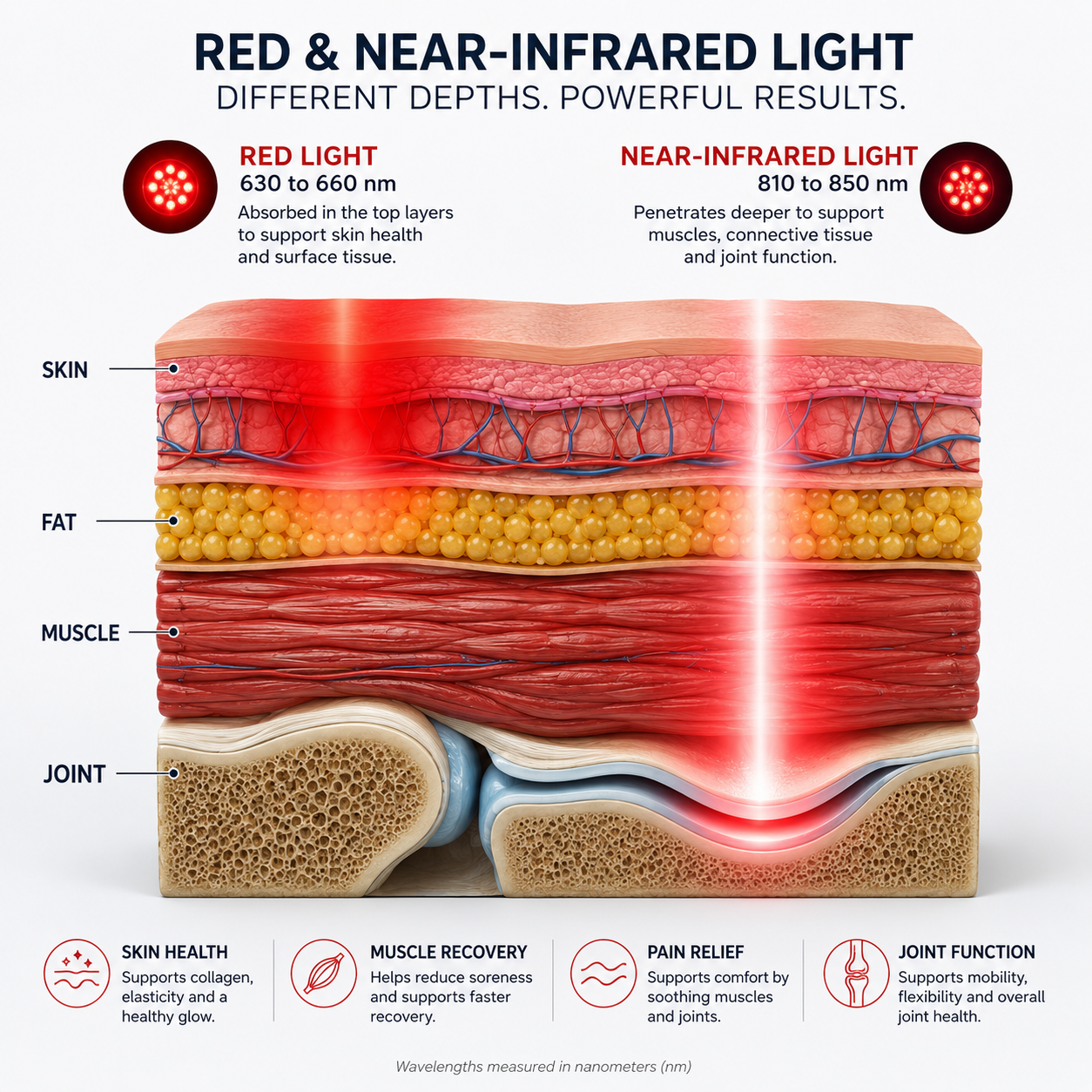
Quick Answer: Red light therapy uses visible red light, roughly 630 to 660 nanometers, to work on skin and surface tissue. Near-infrared, around 810 to 850 nanometers, is invisible and reaches deeper into muscle and joints. Both are forms of photobiomodulation. Choose red for skin and surface recovery, and near-infrared for deeper pain and injury.
Key Takeaways
Red light (630 to 660 nm) is absorbed near the surface, while near-infrared (roughly 760 to 940 nm) penetrates deeper into muscle and joint tissue.
Both work through photobiomodulation, where light absorbed by cytochrome c oxidase raises cellular energy (ATP) and releases nitric oxide to improve blood flow.
An infrared sauna is mostly about far-infrared heat, which is a different tool than the cellular light signaling of near-infrared therapy.
Clinical-grade Class 4 laser uses near-infrared power to reach deep tissue, and high-intensity laser therapy has been shown to reduce chronic low back pain.
Home red light panels can help skin and mild recovery, but most lack the power to reach a serious joint or deep muscle problem.
The Real Difference Between Red Light and Near-Infrared
Let me make this simple. Red light therapy uses visible red light, roughly 630 to 660 nanometers. That is the ruby glow you can actually see, and it works close to the surface, on skin and superficial tissue. Near-infrared sits just past red on the spectrum, around 810 to 850 nanometers. You cannot see it, and it reaches deeper into muscle, joints, and connective tissue.
Both belong to the same family, what researchers call photobiomodulation, which spans red light around 600 to 700 nanometers and near-infrared from roughly 760 to 940 nanometers. The word infrared is where people get tripped up, though. Far-infrared, the kind in an infrared sauna, is really about heat and warming tissue, and it is not the same cellular light signaling. So when I talk about infrared for healing, I mean near-infrared, not the sauna sense of the word.
Why People Mix the Two Up
Most of the confusion comes from marketing and from infrared saunas. People hear infrared and picture a hot cabin, then they hear red light therapy and picture a glowing panel, and they assume these are either completely different or exactly the same thing. The truth is messier than both.
Most quality red light panels actually combine red and near-infrared in one device, so you are getting both at once without realizing it. And infrared itself covers a wide band: near, mid, and far. Far-infrared warms you, and that is really what an infrared sauna is doing. Near-infrared does the deeper cellular work. Nobody explains that on the box, so patients walk in thinking they bought one thing when they really bought another.
What Light Actually Does Inside Your Cells
Here is what actually happens, and it is not heat healing you and it is not magic. Light in these wavelengths gets absorbed by an enzyme in your mitochondria called cytochrome c oxidase. That enzyme is the engine room of the cell. When light hits it, the cell produces more ATP, which is cellular energy, and it releases nitric oxide, which helps open up blood flow.
You also get a calming of oxidative stress and inflammation. So what you are really doing is giving tired, injured, oxygen-starved cells more fuel and better circulation so they can finish the repair work they were already trying to do. That nitric oxide effect is one reason I pay so much attention to circulation in my patients, because good blood flow is the delivery system for everything else the body needs to heal.
Where Class 4 Laser Therapy Fits In
At Optimal Health Members here in Henderson, the hands-on light tool I lean on most is Class 4 laser therapy. People hear laser and assume it means cutting or burning. This is different. Therapeutic Class 4 laser uses those same near-infrared wavelengths, but the light is coherent and far more powerful than an LED panel, so it drives energy deep into the tissue where the problem actually lives, whether that is a shoulder, a low back, or a stubborn tendon.
LED red light panels are wonderful for skin and surface recovery. But when I need to reach a joint capsule or deep muscle, the higher power of laser therapy matters, and the research on high-intensity laser therapy for chronic low back pain backs that up. If you want to see how we use it, you can learn more about the Class 4 laser therapy we offer at Optimal Health Members.
Who Benefits Most From Light-Based Therapy
The patients who respond best are the ones with soft tissue and joint problems that just will not finish healing. Chronic low back pain, rotator cuff issues, tennis elbow, plantar fasciitis, knee arthritis, post-surgical stiffness. I also see real benefit in people with poor circulation and slow-healing tissue, because that nitric oxide and blood-flow effect matters most there.
It is not a fit for everything, and I will get to the honest limitations in a moment. But for musculoskeletal pain and stalled recovery, light-based therapy earns its place. I have watched people who had tried nearly everything else finally turn a corner once we added laser to their care.
A Patient Who Turned a Corner
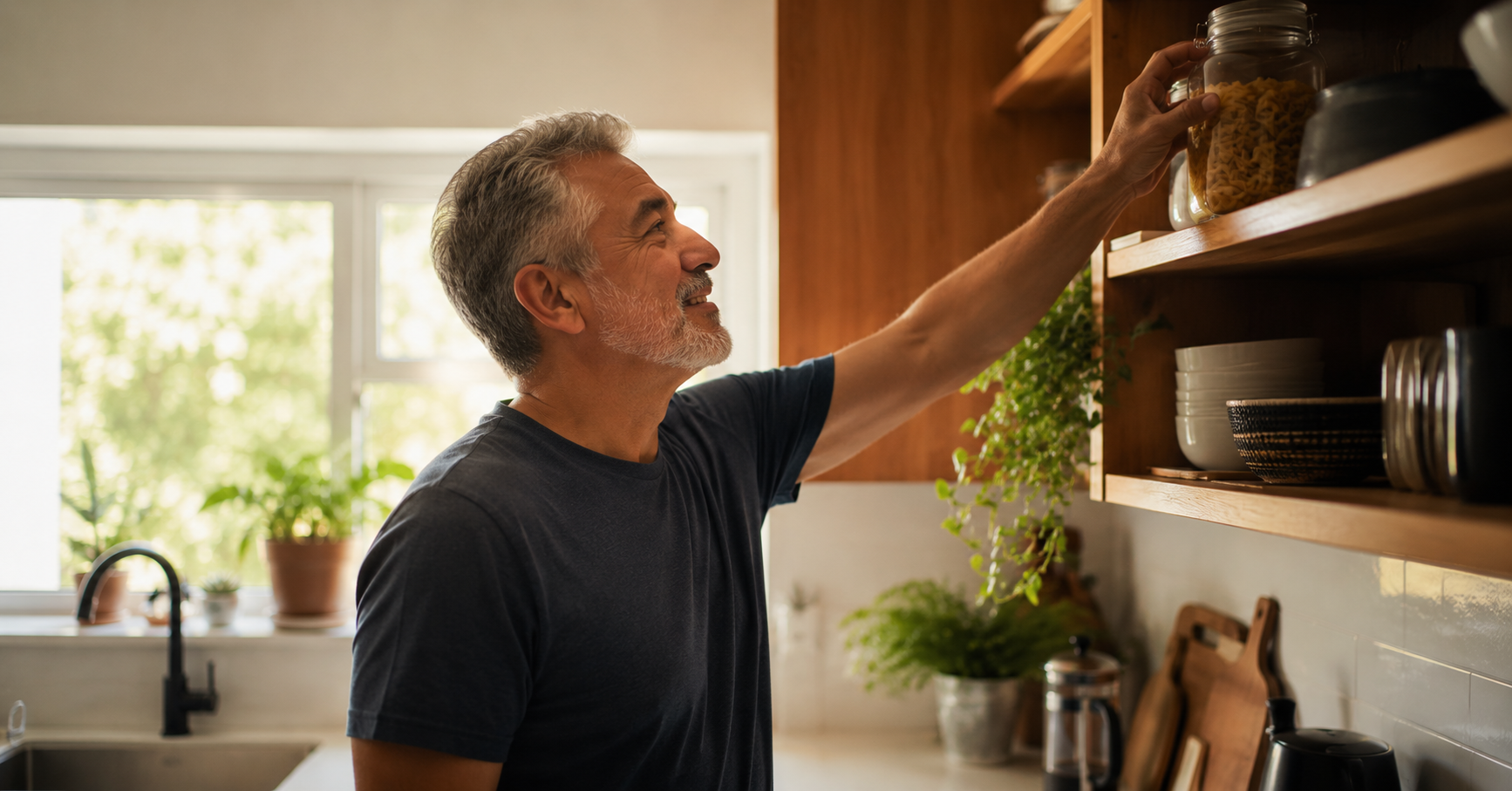
I think of a retired man in his late sixties who came in with a shoulder that had ached for over a year after a fall. He had done imaging, some therapy, and was told the next step was probably surgery. We started Class 4 laser twice a week alongside his adjustments and some specific rehab.
By about the fifth visit he told me he had slept through the night for the first time in months. By the end of his care he was reaching the top shelf again, and he canceled the surgical consult. I want to be careful here, because that is not a miracle and I would never sell it as one. It was a body that finally got the support it needed to finish healing.
The Honest Limitations
Let me be straight, because I owe my patients that. Light therapy is not a cure-all. If you have a full tendon tear, a fracture, or a joint that is truly bone-on-bone, light will not rebuild what is structurally gone. It also is not one-and-done. Both the research and my own experience point to consistency over weeks, not a single session.
And the at-home glow-panel market is full of overpromises. Some devices are underpowered to the point of being decorative. I would rather a patient know the honest ceiling of a therapy than get sold a fantasy and feel let down when it does not deliver a result it was never capable of delivering.
At-Home Panels Versus Clinic-Grade Therapy
At-home red light panels have a real place. For skin health, general recovery, mood, and mild surface soreness, a good-quality panel used consistently can help. Where they fall short is power and depth. Most consumer panels cannot push enough energy deep enough to move a serious joint or deep muscle problem.
That gap is exactly what a clinical Class 4 laser fills. So my honest answer is that a home panel is a fine daily wellness habit, but it is not a substitute for clinical-grade therapy when you have a real injury. Think of the panel as maintenance and the clinic as repair.
Healing Happens Between Visits
Light therapy starts the healing signal, but the body still has to build the new tissue over the following days, and it can only build with the raw materials you give it. So I pay close attention to what happens between visits. Good protein intake, hydration, sleep, and movement all matter more than most people realize.
When a soft tissue or joint injury is involved, I also use targeted supplementation to support that repair work. RECOVER by AgeRecode combines BPC-157, GHK-Cu, and carnosine to support tissue repair, collagen production, and a healthy inflammatory response. It is not a replacement for hands-on care. It helps the body finish the repair work between visits, which is why patients getting Class 4 laser or chiropractic care tend to benefit most from it. Those therapies start the healing, and RECOVER helps the body sustain it the other six days a week.
How to Choose for Your Own Goal
Start with your goal, not the marketing. If you mostly care about skin, surface tone, mild recovery, and general wellness, visible red light around 660 nanometers is your friend, and a home panel may serve you well.
If you are dealing with deeper pain, a joint, a tendon, or a stubborn injury, you need near-infrared, and honestly you want clinical-grade power behind it, which is where Class 4 laser comes in. And if you are picturing an infrared sauna, know that you are buying heat and relaxation. That has its own value, but it is a different tool than cellular light therapy. Match the wavelength to the depth of your problem, and you will make a much better decision than the box on the shelf will make for you.

A Simple Next Step
If you have been living with a shoulder, a back, or a joint that just will not finish healing, the honest first step is figuring out whether your problem is a surface issue or a deep-tissue one, because that determines the right tool. That is a conversation I am glad to have. If you are local to Henderson or the Las Vegas area, you can reach out through Optimal Health Members and we will talk through whether Class 4 laser therapy is a fit for what you are dealing with. No pressure, just a straight answer.