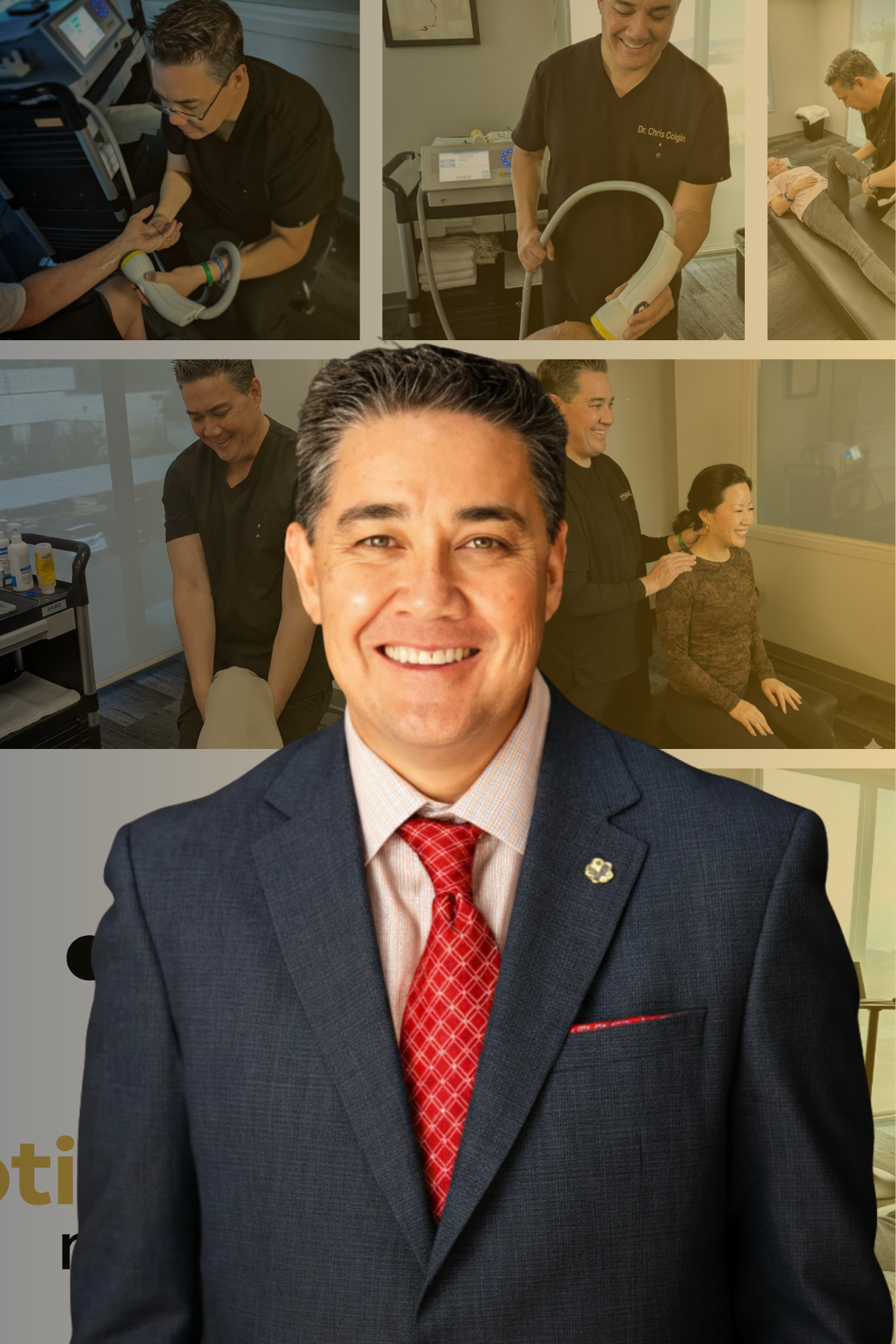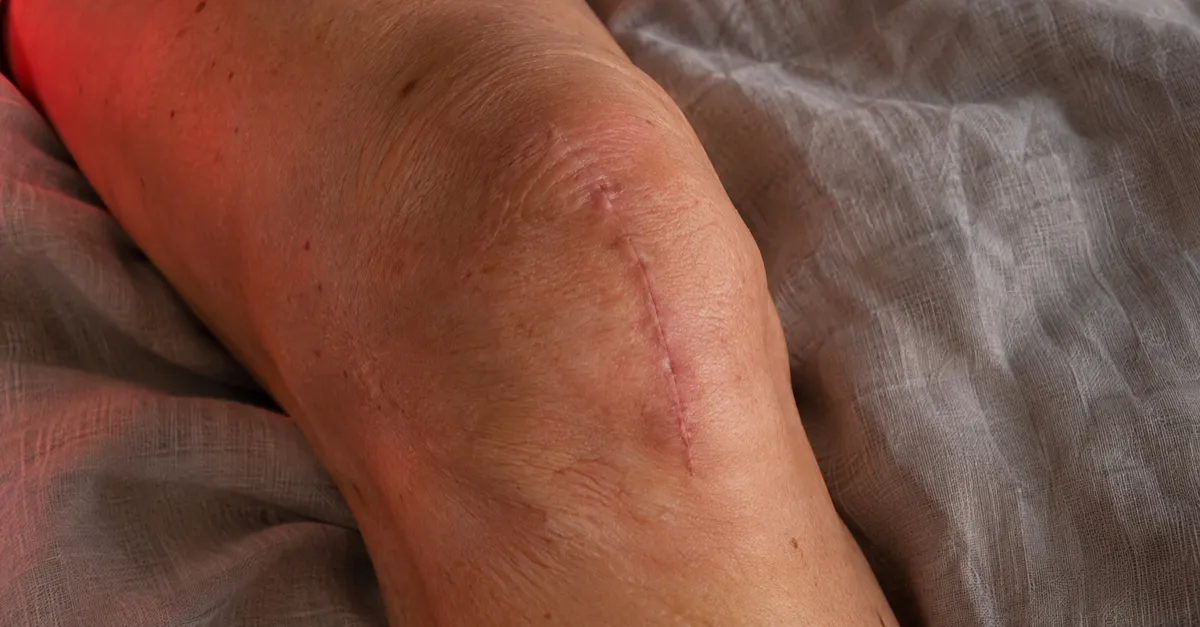
Red Light Therapy for Scar Reduction
You had the surgery. The incision closed. Your surgeon said everything looked great, and you went home. Now, months later, you’re looking at a scar that’s still pink and tight, or you’re dealing with a stiffness or ache near it that nobody warned you about. And somewhere along the way you read that red light therapy can help.
It can. But not the way most people think, and not for every scar. After nearly 30 years of treating patients in Henderson, I’ve come to believe the scar on your skin is only half the story. Here’s what red light therapy actually does, who it helps most, and the mistakes I see people make with it every week.
Quick Answer: Red light therapy can help scars remodel more cleanly, especially newer scars that are still pink. It supports the cells doing the repair work rather than erasing anything. In nearly 30 years of practice, I’ve found it works best combined with movement and hands-on care, because the scar tissue under the skin matters as much as what you see.
Key Takeaways
Red and near-infrared light are absorbed by the mitochondria in your cells, which researchers believe increases the energy available for tissue repair.
Newer scars that are still pink or purple are in an active remodeling phase and tend to respond best. Older white, flat scars usually show subtler changes.
In a randomized, sham-controlled trial, patients who used an 830 nm LED device starting one week after thyroid surgery had better scar scores at six months.
Raised keloid scars need a dermatologist’s evaluation first.
Light therapy works through consistency over weeks and months. More time under the light is not better.
What Red Light Therapy Actually Does to a Scar
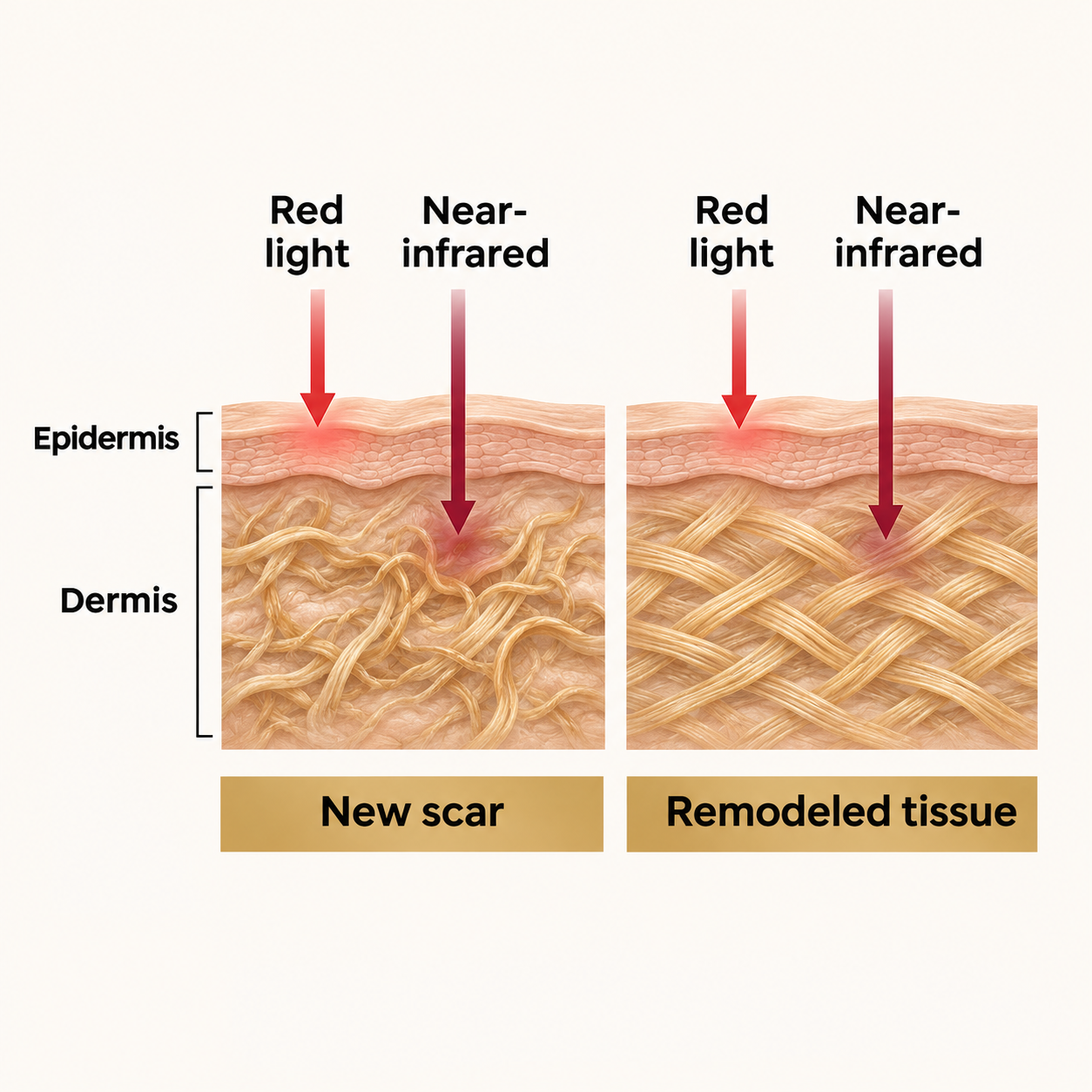
When I explain this to patients in the room, I keep it simple. A scar is your body’s emergency patch job. It’s fast, it’s strong, and it’s messy. Healthy skin has collagen arranged in a neat basket weave. Scar tissue gets laid down in a tangled pile, and over the following months your body works to reorganize and realign that collagen.
Red and near-infrared light gets absorbed by the mitochondria inside your cells. Researchers at Harvard’s Wellman Center for Photomedicine have described how this light interacts with an enzyme in the mitochondria called cytochrome c oxidase, which is thought to increase cellular energy production and trigger signaling linked to repair.
Here’s how I put it to patients: red light doesn’t erase anything. It’s less like a magic eraser and more like adding staff to a crew that’s already on the job. The remodeling is happening either way. Light gives those cells a better shot at doing it well.
Which Scars Respond Best, and Which Ones I Tell People Not to Expect Much From
Newer scars are where I get the most excited. Surgical incisions, C-section scars, cuts that are fully closed but still pink or purple. That color tells me the tissue is still actively remodeling, and that’s the window where light can make a real difference.
The research lines up with what I see. In a randomized, double-blind, sham-controlled trial of thyroidectomy patients, those who used an 830 nm LED device at home starting one week after surgery for four weeks reported higher satisfaction and had better scar scores at six months than those using a sham device. An earlier small case series using 805 nm near-infrared light after scar revision found the treated scars improved more than the untreated side. Small studies, but both point to the same thing: start early.
Older scars that have gone white and flat have mostly finished remodeling. I’m honest with people that changes there tend to be subtle, more about texture and flexibility than appearance. And raised keloid scars are a different animal. If you come in with a keloid, I’m going to send you to a dermatologist first. Different scar types need different treatments, and I’m not going to pretend light therapy is the answer for that one.
Why a Chiropractor Cares About Your Scar at All
This is the part most people never think about. The scar you see on your skin is the tip of the iceberg. Underneath, especially after surgery, scar tissue runs through fascia and muscle, and that’s what shows up in my office.
The knee replacement patient who can’t bend past a certain point. The woman whose low back started hurting a year after her C-section. The person after shoulder surgery who can’t get the last few inches of overhead reach back. In every one of those cases, the skin healed fine. What’s underneath didn’t move well.
So for me, scar care isn’t cosmetic. It’s about whether your body moves the way it was designed to.
The Patient Who Changed How I Take a History
[PATIENT STORY NEEDED: a post-surgical patient, possibly C-section or abdominal surgery, who came in for back or hip pain and did not connect it to their old scar. Should show the moment the connection was made, what was done (red light plus hands-on work), and what changed in their movement or comfort. One person’s experience only, no implied typical result.]
What that case taught me is that I now ask every new patient about surgeries and old injuries, even ones from decades ago. People leave scars off their intake forms because they don’t think it matters. Very often, it does.

The Biggest Mistake I See With Red Light Therapy
There are two, and they’re related.
First, people buy an inexpensive panel or mask online, use it for a week or two, see nothing, and decide it doesn’t work. Light therapy is cumulative. It’s consistency over weeks and months, not a one-time zap.
Second, people think more is better. They’ll sit in front of a device for an hour or press it right against the skin, assuming they’ll get faster results. Light therapy has a sweet spot, and going way past it doesn’t help and can work against you. I’d rather see someone do the right dose three times a week for two months than overdo it for ten days and quit.
In-Office Red Light vs. the At-Home Devices You See Online
I’m not against home devices. Some of them are decent, and for a small surface scar, consistent home use can be a reasonable choice. In fact, the thyroidectomy study I mentioned used a home device.
The problem is that the market is full of devices with no real information on what wavelength and power they actually put out, and you have no way of knowing. In my office, I know exactly what dose I’m delivering, and I can pair it with other therapies. For a deeper surgical scar, we also have Class 4 laser, which reaches tissue a home panel was never going to touch.
My honest advice: if you go the home route, buy from a company that publishes its wavelength and output, and talk to someone who knows what they’re looking at before you start.
How I Combine Red Light With SoftWave, Class 4 Laser, and Hands-On Care
Red light is one tool, and I almost never use it alone for a significant scar. For deeper post-surgical scar tissue, I’ll use SoftWave to stimulate the tissue and get the healing response going, Class 4 laser to reach deeper structures, and red light for the surface and overall tissue health.
Then we add hands-on work and movement, because scar tissue that gets light but never gets moved tends to stay stubborn. Collagen lines up along the lines of stress you put on it. If you never move it, it doesn’t know which direction to line up.
Between visits, your body still has repair work to finish, and that’s where nutrition and support matter. For patients going through SoftWave, laser, or chiropractic care after surgery or injury, I often suggest RECOVER™, a peptide and antioxidant complex with BPC-157, GHK-Cu, and carnosine that supports the body’s natural collagen production and tissue repair processes. It’s not a replacement for hands-on care. The therapies in my office get healing started, and RECOVER™ helps support that work on the days you’re not here. If you take a blood thinner or are pregnant, talk with your provider before starting it.
When to Start After Surgery or Injury, and When to Wait
The skin needs to be fully closed first. No open wounds, no stitches still in, no active drainage. If you’ve had surgery, check with your surgeon before starting anything.
Once you have clearance, I’d much rather start early than late, because that pink remodeling phase is the window I talked about. I also want people to know light therapy is not appropriate over an area with active cancer or certain skin conditions, and anyone on photosensitizing medications needs to check with their prescriber first. These aren’t scare tactics. They’re the questions I ask every patient before we start.
What You Do the Other 166 Hours of the Week
I tell patients the treatment room is maybe two hours of their week. The other 166 hours decide a lot of the outcome.
Protect a new scar from the sun. The American Academy of Dermatology recommends broad-spectrum sunscreen of SPF 30 or higher on healed wounds to help reduce discoloration. Eat enough protein, because your body can’t build good collagen from nothing. Stay hydrated. And if you smoke, this is the time to stop. A large review in JAMA Surgery found smokers have significantly more healing complications after surgery, largely because smoking starves healing tissue of oxygen.
Once your doctor clears it, add gentle massage and movement over the area. That’s the part most people skip, and it’s the part I care about most.
The Opinion I’ll Stand Behind, Even If Others Disagree
I think most practitioners treat scars as a cosmetic afterthought, and that’s a mistake. If you’ve had surgery, your scar tissue deserves the same attention as the joint or muscle that was operated on.
I also believe people get far too little guidance after the incision closes. They’re told the surgery went well and sent home, and nobody tells them the next six to twelve months are when that tissue is deciding how it’s going to heal. I’d rather have that conversation early, while there’s still something to influence, than five years later when someone can’t figure out why their hip hurts.

If you’re living with a scar that still feels tight, or a pain near an old surgery that never quite made sense, I’d like to take a look. We’ll talk through your history, look at what’s happening under the skin, and decide together whether red light therapy and the rest of our care make sense for you. You can learn more at Optimal Health Members or call our office at (702) 541-9060.