Poor Circulation in Legs When Walking: What to Know
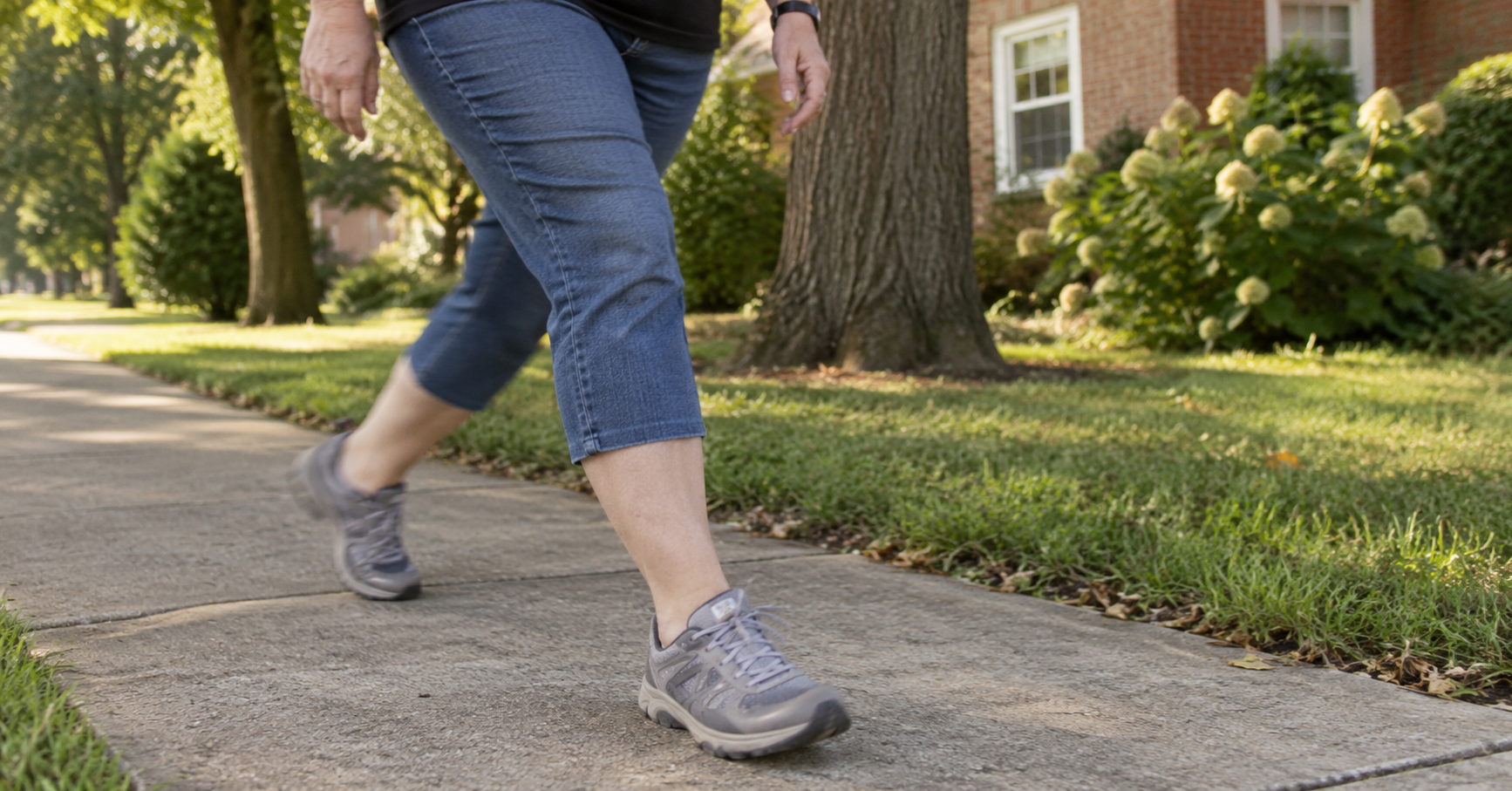
For a lot of my patients, it starts as something small. A heaviness in the calves a few blocks into a walk. A cramp that shows up right on schedule and eases once they stop. Most people brush it off as being out of shape or just getting older. Sometimes that's exactly what it is. Sometimes it's your circulatory system telling you something you need to hear. After nearly thirty years in practice, I've learned that the legs rarely lie, and this is one of those symptoms worth taking seriously instead of quietly working around.
Quick Answer:
Poor circulation in the legs when walking often shows up as cramping or heaviness that comes on with activity and eases with rest, a pattern sometimes linked to peripheral artery disease (PAD). Common causes include inactivity, smoking, and high blood sugar. Any leg pain with minimal activity, skin color changes, or a non-healing wound needs prompt medical evaluation.
Key Takeaways:
Leg pain or cramping that predictably shows up with walking and eases with rest can point to peripheral artery disease, not just muscle fatigue.
Warning signs that need urgent medical attention include pain at rest, a cold or pale leg, or a wound that won't heal.
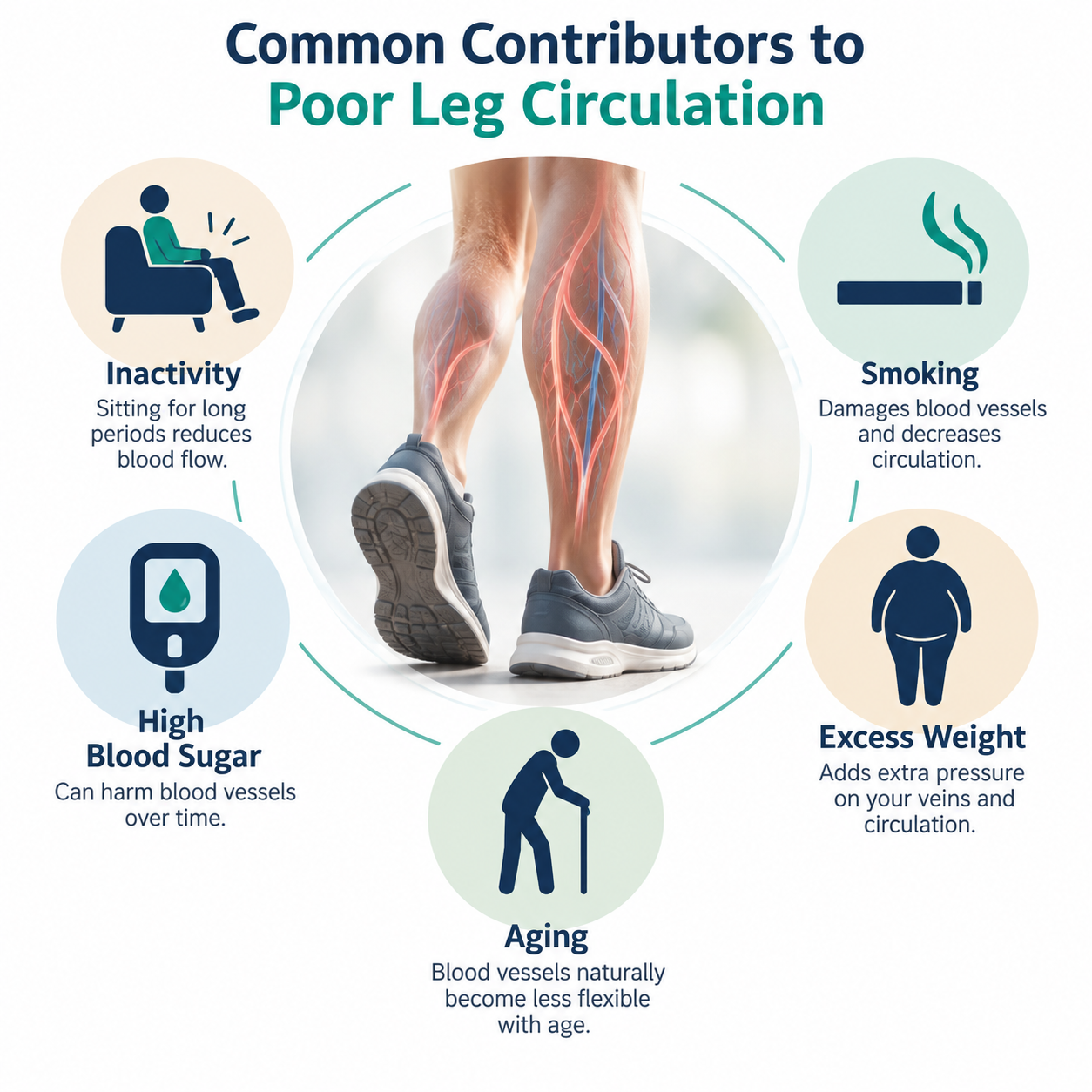
Inactivity, smoking, high blood sugar, and excess weight are among the most common contributors to poor leg circulation.
Chiropractic care can support the nerve and mechanical factors that influence circulation, but it is not a substitute for vascular screening.
Interval walking, daily movement, and nitric oxide support may help healthy circulation once serious causes have been ruled out by a doctor.
What's Actually Causing That Ache in Your Legs
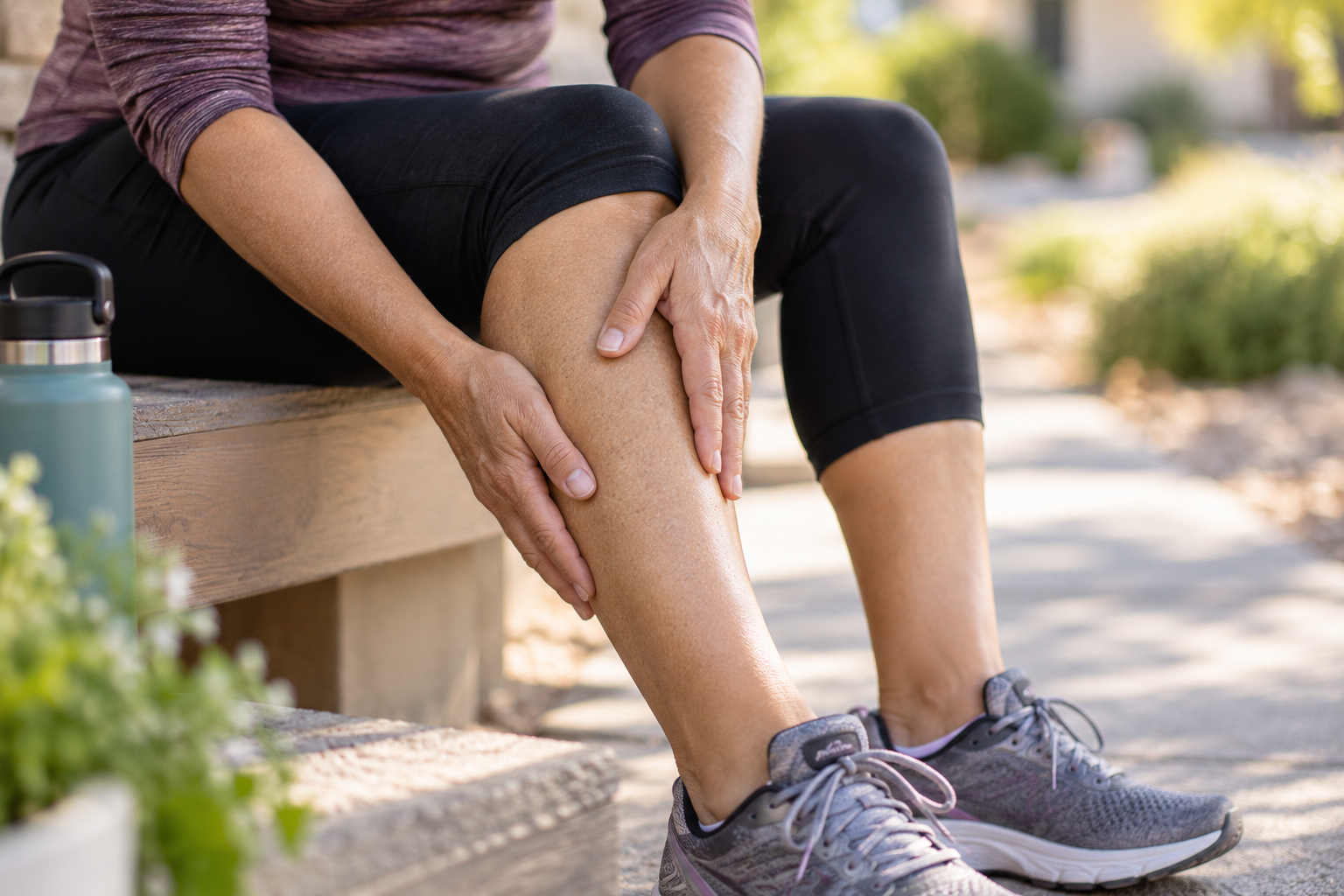
The pattern I hear about most often follows a rhythm. Walk for a stretch, feel the calf tighten or ache, stop and rest, and the discomfort fades, only to return at roughly the same distance the next time you walk. That rhythmic on-and-off quality is one of the clearer signs that this isn't a simple muscle strain. It's often related to how efficiently blood is moving through the arteries in your legs, and it's a hallmark symptom associated with peripheral artery disease, a condition where narrowed arteries reduce blood flow to the limbs.
In my experience, the most common contributors are a sedentary lifestyle, a history of smoking, and uncontrolled blood sugar. Nerve irritation in the low back can also play a role, since the nervous system helps regulate how well blood vessels open and close to move blood efficiently. Extra weight carried around the midsection adds pressure that affects how well blood returns from the legs to the heart. And age is a factor no one can fully outrun, though you can absolutely slow its effects down. According to the National Heart, Lung, and Blood Institute, PAD affects millions of adults, and many don't realize what's causing their symptoms until they ask.
A Patient Who Quietly Shrank His Life Around It
I had a patient, a man in his early sixties, who came in convinced his hips were the problem because he'd stopped playing the back nine of his golf game. It wasn't his hips at all. It was his calves cramping up every few holes, and he'd quietly adjusted his whole life around it without telling anyone, not even his wife. He stopped walking the dog as far. He started parking closer to the store than he used to. Small accommodations that, added together, made his world a lot smaller.
Once we talked it through and I got him back to his primary care doctor for proper vascular screening, we found some peripheral artery narrowing that needed medical management, not just chiropractic adjustments. That case has stayed with me because the pattern is so common. People adjust quietly instead of asking why. If any part of his story sounds familiar, that's worth paying attention to.
When to Stop Waiting and Call Your Doctor
I get direct with patients here because I'd rather be the person who told you to get checked than the person who let something slide. If you have leg pain that comes on with minimal activity or even while at rest, if a leg suddenly looks pale, cold, or takes on a bluish tone, if you notice a wound on your foot or ankle that isn't healing, or if one leg is swelling noticeably more than the other, that's not a wait-and-see situation. That needs a doctor, and often vascular imaging, the same week rather than the same month.
According to Johns Hopkins Medicine, untreated PAD can progress and increase risk for more serious cardiovascular events, which is exactly why early evaluation matters. I've referred more than one patient over the years because what looked like a simple circulation complaint turned out to need medical intervention beyond what I can offer. Chiropractic care has a real place in supporting circulation, but it is never a substitute for ruling out serious vascular disease first.
Where Chiropractic Care Fits In
Chiropractic care isn't going to reverse an arterial blockage, and I'll never tell a patient that it will. What it can do is address the nervous system and mechanical factors that influence blood flow indirectly. When the low back and pelvis are misaligned or restricted, the nerves that help regulate vascular tone in the legs can be irritated, which affects how well blood vessels dilate and contract to move blood efficiently. Improving mobility also tends to get people moving more, and movement is one of the best things you can do for circulation.
I think of chiropractic as one piece of a larger picture rather than the whole picture. It works best alongside proper cardiovascular screening, consistent movement, and, when appropriate, targeted nutritional support. If you're a patient at Optimal Health Members, this is exactly the kind of whole-body conversation we have during an evaluation, because circulation rarely has just one cause.
Movement That Actually Helps
Walking is medicine here, which sounds contradictory since walking is often what triggers the discomfort. The answer isn't to avoid it. It's to build tolerance gradually and intentionally. I recommend interval walking to patients, walk to the point of discomfort, rest briefly, then continue, because that pattern actually helps train the body to build collateral circulation over time. The Mayo Clinic notes that supervised exercise programs are often a first-line recommendation for PAD-related leg pain, and I've seen that play out in my own practice.
Elevating your legs at the end of the day, avoiding sitting for more than an hour without standing and moving, and doing simple ankle pumps during long stretches of sitting all matter more than most people expect. Supportive footwear matters too, because poor foot mechanics change how hard the calf muscles have to work to pump blood back up the leg with every step.
The Metabolic Connection Most People Miss
This is where I see the clearest overlap with the metabolic work we do at Optimal Health Members. Chronic high blood sugar damages the lining of blood vessels over time, and carrying excess weight increases the workload on your entire vascular system, especially in the legs, where blood has to fight gravity to get back to the heart. The CDC points to blood vessel damage as a well-documented complication of poorly managed blood sugar.
Anti-inflammatory eating, the kind I talk about constantly with patients, whole foods, lean proteins, minimizing processed sugar, supports vessel health at a cellular level. I've watched patients who improved their metabolic markers through a structured program like GLP THREE also report that their legs feel lighter and less achy on walks, and that's not a coincidence. Circulation and metabolism are tied together far more than most people realize.
Natural Support for Healthy Blood Flow
For patients who don't have a red flag condition and are cleared for it, I like nutritional support that helps the body do what it's designed to do rather than forcing an outcome. One I recommend for circulation specifically is Nitric Boost, because it supports healthy nitric oxide production, and nitric oxide is what allows blood vessels to relax and widen properly so blood can move through them efficiently. Research on nitric oxide's role in vascular function, including work reviewed by the National Institutes of Health, continues to point to this pathway as central to healthy circulation.
I explain it to patients like this. Your vessels have a natural ability to open up when you need more blood flow, like during exercise, and that ability tends to decline with age and poor vascular health. Supporting that pathway naturally, alongside movement and good nutrition, is a reasonable and often overlooked piece of the puzzle. It's not a replacement for medical care when medical care is needed. It's support for the body's own systems.
The Mistake I See Most Often
The biggest one is waiting. People notice the ache, chalk it up to getting older, and quietly do less instead of finding out why it's happening. The second mistake is reaching straight for compression socks or a supplement without ever getting checked for the underlying cause. Those things can genuinely help, but they aren't a diagnosis, and I've seen patients mask a legitimate vascular problem for a year or more because a product made the symptom slightly more tolerable.
I tell patients the same thing every time. Treat the symptom and find the cause. Doing one without the other is how small problems become big ones.
My Bottom Line for You
Don't shrink your life around this, and don't ignore it either. That ache is information, not just an inconvenience. Get it checked out, especially if it's new or getting worse, because ruling out serious vascular disease has to come first. Then build a plan, movement, nutrition, and the right support, that actually addresses why it's happening instead of just numbing the discomfort. In almost thirty years of practice, I've never seen a patient regret asking the question early. I've seen plenty regret waiting.

If you've been quietly adjusting your walks, your errands, or your days around leg discomfort, I'd rather you come talk to us than keep working around it. At Optimal Health Members in Henderson, we take a whole-body look at what's driving your symptoms, and if metabolic health is part of the picture, our team can also walk you through how GLP THREE fits into supporting circulation from the inside out.