What Is Nitric Boost and How Does It Support Healthy Circulation?
I hear this complaint almost every week in one form or another. A patient mentions, almost as an afterthought, that their hands never seem to warm up, or that their legs feel like they are dragging by two in the afternoon. Nobody walks in and says "I think my circulation is off." But that is often exactly what is happening.
Quick Answer: Nitric Boost is a nitric oxide support supplement that helps blood vessels relax and widen, improving blood flow throughout the body. It works by supplying nutrients your body converts into nitric oxide, the molecule responsible for healthy vasodilation. Regular use supports warmer extremities, steadier energy, and better recovery.
Key Takeaways
Nitric oxide is a molecule your body produces naturally to signal blood vessels to relax and widen, and production declines with age and inflammation.
Nitric oxide support supplements work slowly, over two to four weeks, not as an immediate stimulant.
Beetroot-derived dietary nitrate has been studied for its role in the nitrate-nitrite-nitric oxide pathway that regulates vascular tone.
Circulation and tissue healing are directly connected, which is why it often comes up alongside chiropractic and decompression care.
People managing healthy blood pressure, active adults, and anyone with cold hands and feet or slow recovery from activity tend to benefit most.
What Nitric Boost Actually Does In The Body
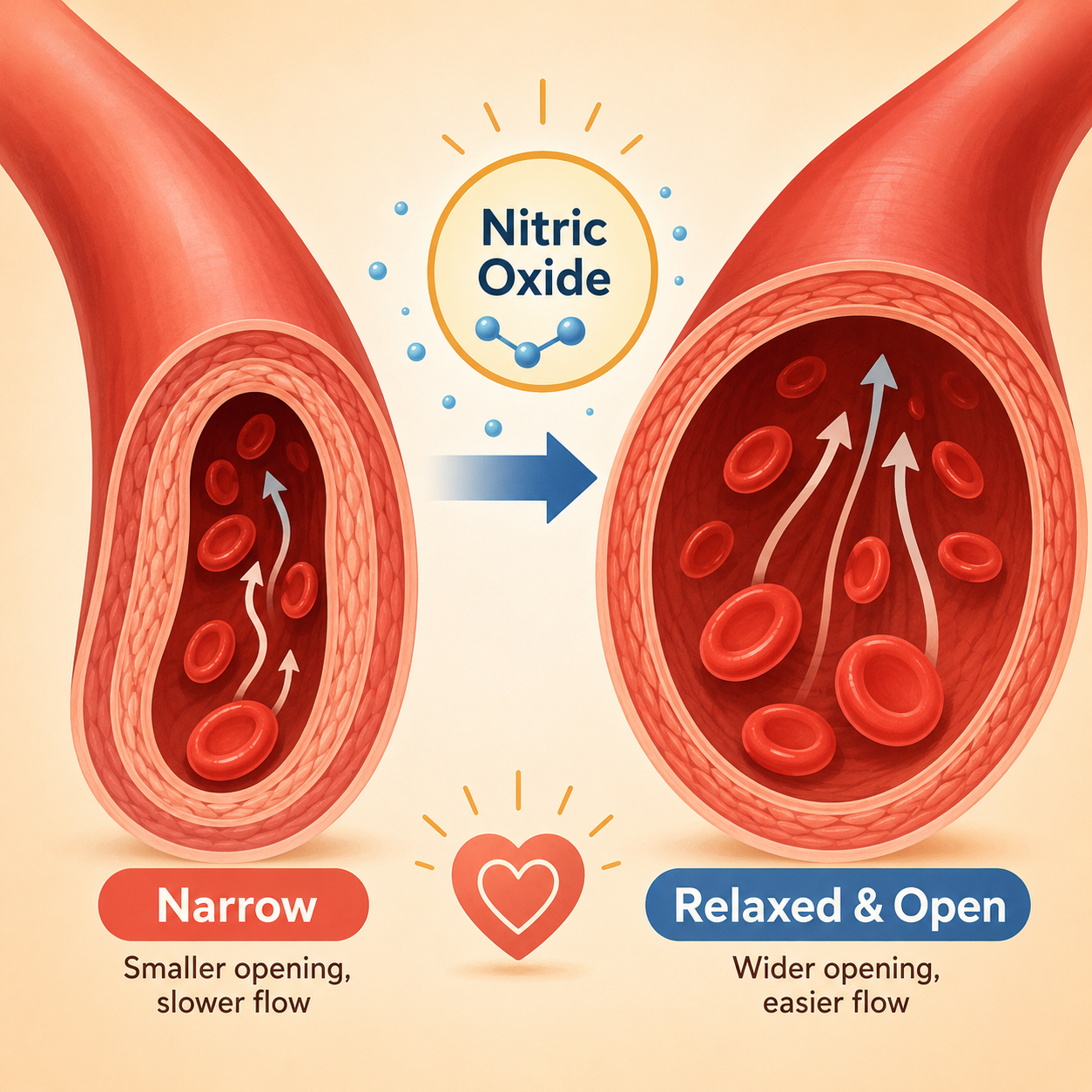
Nitric Boost is a nitric oxide support supplement, and in plain terms, its job is to help your blood vessels relax and open up so blood flows more freely. Nitric oxide is a molecule your own body makes, and it signals the smooth muscle lining your arteries to widen. Nitric oxide is produced by an enzyme in the endothelium and acts as a signaling molecule that relaxes vascular smooth muscle and supports healthy blood flow. When that signaling process slows down, which it naturally does as we age, circulation suffers.
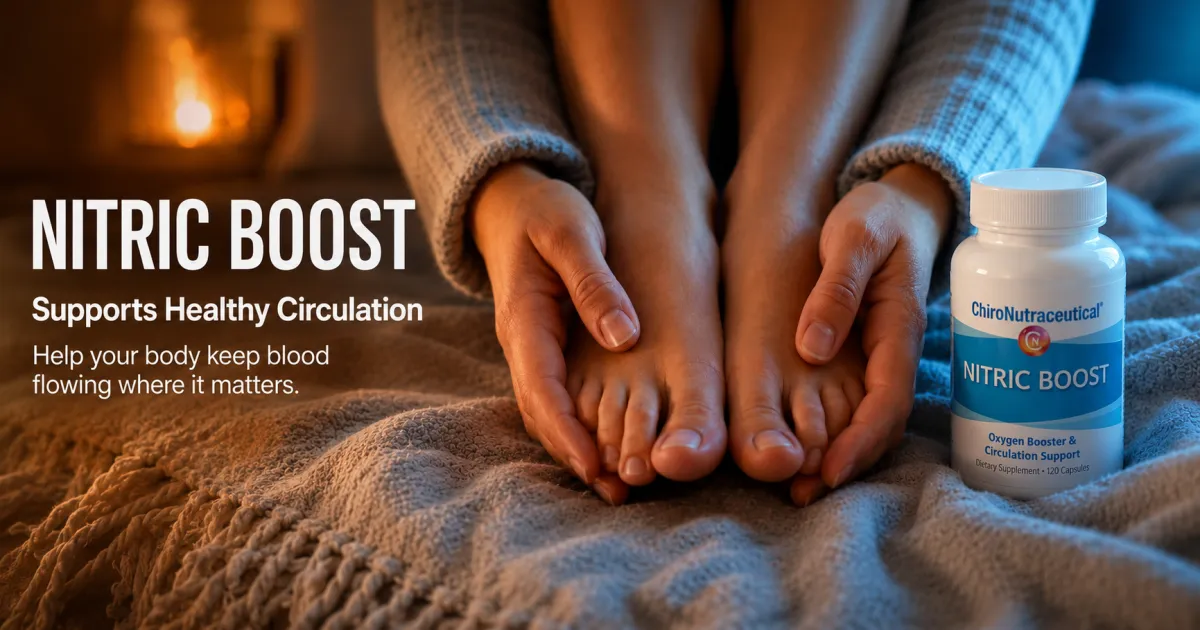
The version I use in practice is Nitric Boost by ChiroNutraceutical, and what sets it apart from a lot of the nitric oxide products on the market is that it does not rely only on beet-derived nitrates. It pairs a beet root extract with S7, a proprietary blend that has been studied for its ability to help the body increase its own nitric oxide production rather than just supplying an external source. I look at it as giving your circulatory system the building blocks it needs to do a job it already knows how to do, but may be running short on fuel for.
It comes down to a mix of aging, oxidative stress, and lifestyle. The enzyme responsible for producing nitric oxide becomes less efficient over time, and inflammation in the blood vessel lining interferes with the process further. Age-related endothelial dysfunction is marked by reduced nitric oxide production and increased vascular stiffness. I see this most in patients over 40, folks managing blood pressure concerns, people who sit most of the day, and anyone dealing with chronic fatigue or cold hands and feet that never seem to warm up. Those are often circulation complaints before anyone ever uses that word out loud.
A Patient Story: The Contractor Whose Legs Finally Stopped Aching
I had a gentleman in his late 50s, a retired contractor, who came in mainly for lower back pain, but he mentioned almost as an afterthought that his legs felt heavy and tired by early afternoon, every single day. Once we addressed the mechanical piece with adjustments and Class 4 laser therapy, I also talked with him about supporting his circulation directly, since his history and activity level pointed that way. Within a few weeks of consistent use alongside his care plan, he told me the heaviness in his legs had lifted noticeably, and he was walking his dog further without stopping to rest. That is not a guarantee for every patient, but it is a real example of how circulation and musculoskeletal health are more connected than people expect.
This is also where I bring up something else worth understanding if you are already working with hands-on care. When someone is recovering from soft tissue strain, or going through a course of SoftWave or Class 4 laser therapy at our Henderson practice, the treatment itself initiates healing, but the body still has to finish that repair work between visits. That is where a regenerative support like RECOVER by AgeRecode can play a role. It is a peptide and antioxidant complex built around BPC-157, GHK-Cu, and carnosine, and part of what makes it relevant to a circulation conversation is that BPC-157 has been studied for its role in supporting nitric oxide signaling and angiogenesis, the process of new blood vessel formation that tissue needs to repair itself well. I do not treat it as a replacement for the hands-on work. I think of it as support that helps the body keep making progress in the days between appointments.

The Biggest Misconception People Have
The biggest one is that people think of it as a stimulant, like it is supposed to give you an energy jolt the way caffeine does. It does not work that way. Nitric oxide support is slow and steady, it is about improving blood flow and vascular function over time, not a quick hit. I tell patients not to expect to feel it in thirty minutes. Expect to notice, over two to four weeks, that your hands and feet are warmer, your energy is steadier through the day, and recovery from activity feels a little easier.
Who Tends To Benefit Most
People managing healthy blood pressure already, active adults who want better exercise recovery and endurance, anyone with poor peripheral circulation like cold extremities, and patients recovering from injury who need good blood flow to the tissue to heal well. I also see real interest from men focused on overall vascular health, since nitric oxide plays a role there too. It is not a one size fits all recommendation, which is why I talk it through with each patient individually.
What The Research Actually Shows
Yes, and this is not new or fringe science. Dietary nitrate from beetroot has been evaluated in clinical trials for its effects on blood pressure through the nitrate-nitrite-nitric oxide pathway, and the underlying mechanism, nitric oxide's role in vasodilation, is one of the better documented pathways in vascular biology. I always tell patients I want to see the research behind anything I recommend, not just a marketing claim.
How This Fits Alongside Chiropractic Care
They are more connected than people assume. Poor circulation slows tissue healing, and tissue healing is central to everything we do here, whether that is recovery from an adjustment, Class 4 laser therapy, or SoftWave treatment. When blood flow is sluggish, the whole recovery process takes longer. I think of circulation support as part of the foundation that makes the hands-on work more effective, not a replacement for it.
What To Look For, And What To Avoid
Look for clinically studied forms. Beet root extract standardized for nitrate content is a good foundation, and ingredients studied for supporting the body's own nitric oxide production, like S7, add another layer most basic products skip. Avoid proprietary blends that hide the actual dosages, and be cautious of products stacked with a lot of stimulants, since that defeats the purpose of a calm, steady vascular effect. Purity and third-party testing matter to me. I would rather recommend less of something proven than more of something vague.
Precautions Worth Knowing
Absolutely, and I am always upfront about this. Anyone on blood pressure medication or nitrates for heart conditions needs to talk to their prescribing physician first, since combining them can lower blood pressure too much. Pregnant or nursing women should check with their provider. This is exactly why I do not treat any supplement as harmless just because it is natural. Natural still means it is active in the body, and that requires respect.
The One Piece Of Advice I Give Every Patient
Move your body every single day, even if it is just a walk around the block. Nitric oxide production responds directly to movement, your blood vessels release more of it when you are active. I tell patients that no supplement will outwork a sedentary lifestyle. Support circulation with movement first, good hydration, and real food, and then a well chosen supplement can help fill the gap. That order matters to me more than almost anything else in this conversation.

If cold hands, heavy legs, or that afternoon slump sound familiar, it is worth a real conversation rather than guessing your way through the supplement aisle. Come see us at Optimal Health Members in Henderson and we will look at your whole picture, not just one symptom, and figure out what actually makes sense for you.