How Can You Improve Circulation Naturally With Nutrition, Movement, and Supplements?
If your feet are cold in a warm house, if your hands go numb on your commute, if your legs feel heavy by 3pm, you already know something isn't moving the way it should. Most people assume this is just aging, or genetics, or one of those things you live with. In almost three decades of practice, I've found that's rarely the full story. Circulation responds to what you do every single day, and small consistent changes in nutrition, movement, and targeted support can shift it faster than most people expect.
Quick Answer: You can improve circulation naturally through daily walking, proper hydration, nitrate-rich foods like beets and leafy greens, reducing sodium and refined sugar, and supporting nitric oxide production, which helps blood vessels relax and widen. Class 4 laser therapy can also boost local blood flow. Most people notice warmer hands and feet, less leg heaviness, and better energy within four to six weeks of consistent changes.
Key Takeaways
Prolonged sitting is one of the most common and overlooked causes of poor circulation, since it compresses leg blood vessels and slows venous return.
Nitric oxide allows blood vessels to relax and widen, and its natural production declines with age.
Nitrate-rich vegetables such as beets and leafy greens support the body's nitric oxide pathway, while omega-3 fatty acids help reduce blood viscosity and inflammation.
Frequent gentle movement, like 20 to 30 minute daily walks, supports circulation more effectively than occasional intense workouts, since calf muscle contraction acts as a secondary pump that pushes blood back toward the heart.
Sudden swelling, redness, or pain in one leg, or wounds that won't heal, can signal a blood clot or vascular disease and needs immediate medical evaluation, not just a wellness plan.
What Poor Circulation Actually Feels Like
Most patients don't come in saying "I think I have a circulation problem." They tell me their feet are cold even in summer. They say their hands go numb typing or driving. Their legs feel heavy by the afternoon, or they get that pins and needles feeling after sitting too long at a desk. Some notice their skin looks a little dusky, or their nails seem to take forever to grow.
Individually, none of these sound like much. Together, they usually point to blood flow that isn't cycling the way it should. I've had patients in their 40s who assumed this was simply part of getting older. Once we address the underlying circulation issue, that heaviness and numbness tends to clear up faster than they expect.
Everyday Habits That Quietly Wreck Circulation
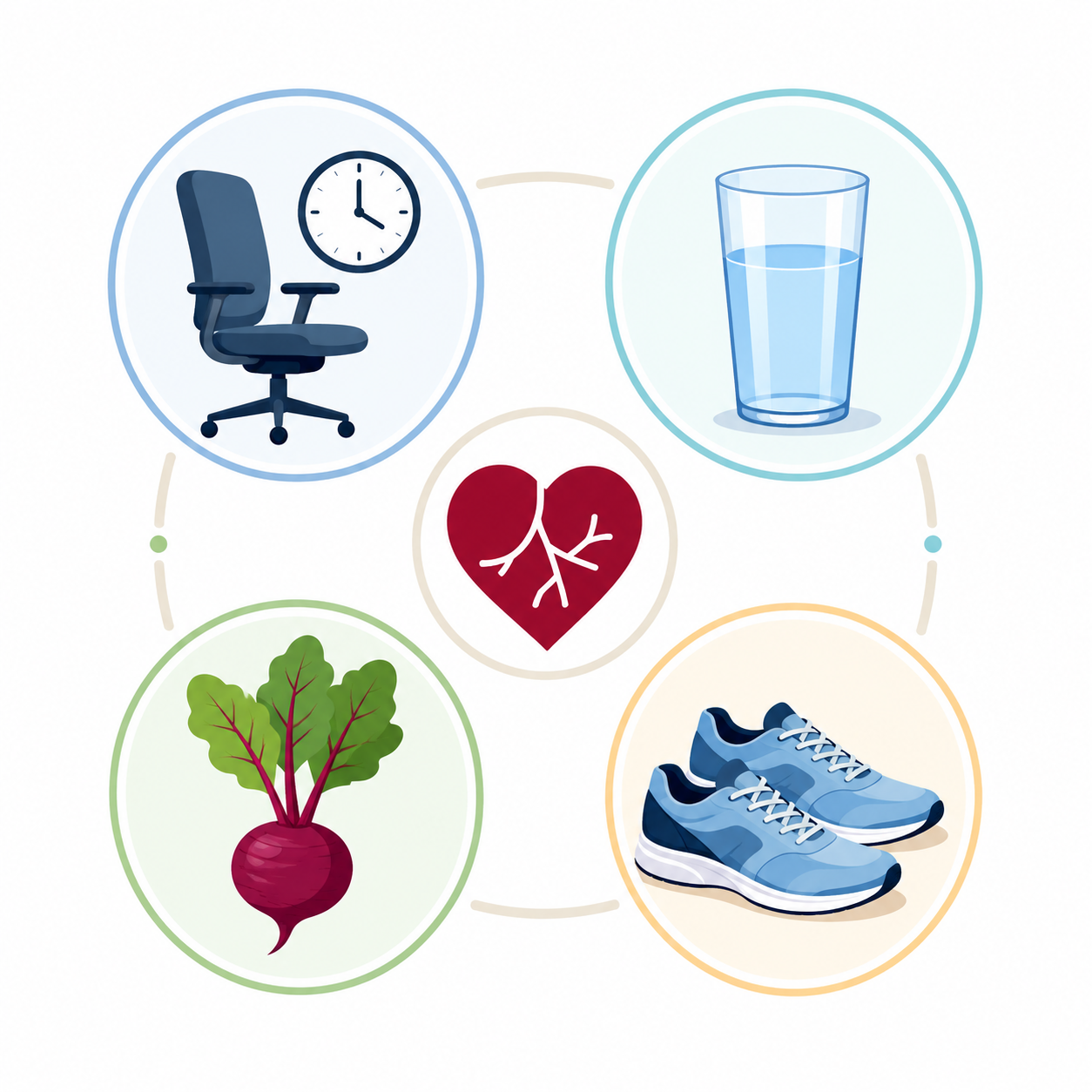
Sitting is the biggest offender I see, by a wide margin. Here in the Las Vegas valley, I watch it happen constantly: a long commute, eight hours at a desk, then an evening on the couch. Prolonged sitting compresses the blood vessels in your legs and slows venous return, meaning blood pools instead of efficiently cycling back to the heart.
Dehydration is another quiet contributor, especially in a desert climate. Blood is mostly water, and when patients are chronically underhydrated, blood becomes thicker and harder to move. Smoking, high sodium processed foods, and chronic stress round out the list. None of these feel dramatic on any given day, which is exactly why they do so much damage over years.
The Role of Nutrition in Circulation
Nutrition is foundational because your blood vessels are living tissue. What you eat either supports or damages the endothelium, the inner lining of your blood vessels. I point patients toward nitrate-rich vegetables like beets, spinach, and arugula because they support nitric oxide production, and nitric oxide is what allows blood vessels to relax and widen.
I also emphasize omega-3s from fatty fish, which help reduce inflammation and blood viscosity, and foods rich in polyphenols like berries, dark chocolate, and green tea, which support vascular flexibility. On the flip side, I ask patients to cut back on excess sodium and refined sugar, both of which stiffen blood vessels over time.
Why Nitric Oxide Matters So Much
Nitric oxide is essentially the signal that tells your blood vessels to relax and open. Without enough of it, vessels stay constricted and blood has a harder time reaching your extremities, your brain, and your muscles. The challenge is that nitric oxide production naturally declines with age, and a lot of the diets I see don't provide enough of the raw materials, like nitrates and L-arginine, to keep production strong.
That's why I recommend Nitric Boost by ChiroNutraceutical for patients who need more support than diet alone provides. It's formulated to help the body produce nitric oxide more efficiently, and I've seen it make a real difference for patients who plateaued with diet and movement changes but still had that persistent cold hands, cold feet pattern.
Movement That Actually Makes a Difference
You don't need to become a marathon runner. What actually moves the needle is consistency and frequency, not intensity. Walking for 20 to 30 minutes most days does more for circulation than an occasional intense workout, because your calf muscles act as a secondary pump that helps push blood back up toward your heart.
For patients at a desk job, I recommend standing and moving for a couple of minutes every 30 to 45 minutes, rather than waiting for one workout to undo eight hours of sitting. Simple ankle pumps and calf raises sound too small to matter, but they genuinely support venous return. What's overrated is thinking you need intense cardio sessions. Frequent gentle movement beats occasional hard movement when it comes to circulation specifically.
How Chiropractic Care and Class 4 Laser Therapy Fit In
Spinal misalignment can affect nerve function to blood vessels, since your nervous system helps regulate vascular tone, so proper alignment supports healthy circulatory signaling. But the most direct impact I see clinically comes from Class 4 laser therapy. The photobiomodulation from the laser increases local blood flow and stimulates nitric oxide release right at the treatment site, which is part of why patients heal faster and often report warmth returning to areas that felt cold or stiff.
I've used it on patients dealing with circulation-related stiffness in their lower legs and hands, and the combination of improved local blood flow plus reduced inflammation tends to compound over a series of treatments.
A Patient Story: Cold Feet That Finally Warmed Up
I had a woman in her mid-50s, a retired teacher, come in because her feet were so cold at night she couldn't sleep without socks, even in a warm house. She'd already been evaluated by her primary doctor and cardiologist, and nothing structural was wrong.
We started with the basics: cutting her sodium, adding beets and leafy greens, getting her walking daily instead of just weekend hikes, and adding Nitric Boost since diet changes alone were slow to show results. Within about six weeks, she told me she'd stopped wearing socks to bed for the first time in years. That's the kind of change that doesn't show up on a lab test but completely changes someone's daily life.
When Poor Circulation Signals Something More Serious
I'm always upfront with patients about this. If someone has one leg that's suddenly swollen, red, or painful, that could indicate a blood clot and needs immediate medical attention, not a wellness plan. Same with chest pain, sudden numbness on one side of the body, or wounds on the feet that won't heal, especially in diabetic patients.
Natural approaches to circulation are meant to support healthy blood flow in people who are otherwise healthy but want to feel and function better. They are not a substitute for evaluating genuine vascular or cardiac disease, and any good provider should be screening for that before jumping straight to lifestyle recommendations.
The Biggest Myth About Circulation
The biggest myth is that cold hands and feet are just something you're stuck with, or that it's purely genetic. I hear "I've always had cold feet, it runs in my family" constantly. Genetics can play a role, sure, but in my experience the majority of patients with that complaint have modifiable factors at play: too much sitting, dehydration, low nitric oxide production, or nutrient gaps. Another myth is that circulation only matters for older adults. I regularly see poor circulation symptoms in patients in their 30s who sit at a desk all day and don't move enough.
Where to Start Today
Start with movement, since it's free and immediate. Get up and walk for a few minutes every half hour if you're at a desk job, and add a 20 to 30 minute walk daily. Second, look at your hydration and sodium intake, since both directly affect how easily your blood moves through your vessels. Third, if you've made those changes and you're still dealing with cold hands, cold feet, or that heavy leg feeling, that's when I'd look at targeted nutrition support like Nitric Boost to help your body produce nitric oxide more efficiently. Small, consistent changes almost always beat dramatic short-term fixes when it comes to circulation.

If cold hands, cold feet, or that heavy leg feeling have become your normal, they don't have to stay that way. At Optimal Health Members in Henderson, we look at circulation through movement, nutrition, targeted support like Nitric Boost, and Class 4 laser therapy when appropriate, always starting with what your body actually needs rather than a one-size-fits-all plan. If you're ready to feel warmth and energy return, reach out and let's talk about what's really going on.