Why Is Healthy Blood Flow Important for Overall Wellness?
Cold feet in July. Hands that go numb reaching for something on a high shelf. A cut that takes twice as long to close up as it used to. Most people file these things under "getting older" and move on. After nearly 30 years in practice, I can tell you that's usually the wrong file. Those are circulation signals, and your body is asking for help.
Quick Answer: Healthy circulation delivers oxygen and nutrients to every tissue in your body, including the areas we treat in chiropractic care. Poor blood flow shows up as cold hands and feet, fatigue, brain fog, and slow healing. Supporting circulation through movement, hydration, nutrition, and targeted care improves how well your whole body functions and heals.
Key Takeaways
Cold extremities, afternoon fatigue, and slow healing from minor injuries are common early signs of poor circulation, not just normal aging.
Nitric oxide production naturally declines with age, which is a major driver of circulation problems later in life.
Daily walking is one of the most effective, no-cost ways to support healthy blood flow.
Class 4 laser therapy increases local circulation at a cellular level, which is part of why it accelerates tissue repair.
Circulation support and hands-on care work together. Neither replaces the other.
The Circulation Problems Hiding in Plain Sight
In almost 30 years of practice, I've noticed a pattern. People come in for back pain or neck tension, and somewhere in the conversation about their overall health, they mention their feet are always cold, or they get lightheaded standing up too fast. Most of them have never connected those dots to circulation. They assume it's just part of getting older or being run down from work.
It isn't. It's the vascular system asking for support.
Circulation matters directly to the kind of care I provide. When I adjust a spine or work on a joint, I'm removing interference so the nervous system can communicate properly. But nerves and tissues still need oxygen and nutrients delivered efficiently to actually repair themselves. I've had patients respond slowly to adjustments and laser therapy, and once we addressed their circulation, their results picked up noticeably. You can have the best hands-on care available, but if the delivery system, meaning the blood vessels themselves, isn't working well, you're fighting an uphill battle.
A Patient Story That Changed How I Look at Recovery
I had a gentleman in his early 60s, an avid golfer, who came in with chronic shoulder pain that wasn't responding the way I expected. Good compliance, did his exercises faithfully, but progress was slow. It turned out he had significant circulation issues, cold extremities and some numbness in his fingers he hadn't even mentioned because he figured it was unrelated to his shoulder.
We addressed his vascular health alongside his shoulder treatment. Within a few weeks, his shoulder pain started improving faster than it had in months, and he told me his hands felt "alive again" for the first time in years. That case has stuck with me because it's a reminder of how connected the body really is. You can't isolate one joint from the system feeding it.
What the Research Says About Nitric Oxide
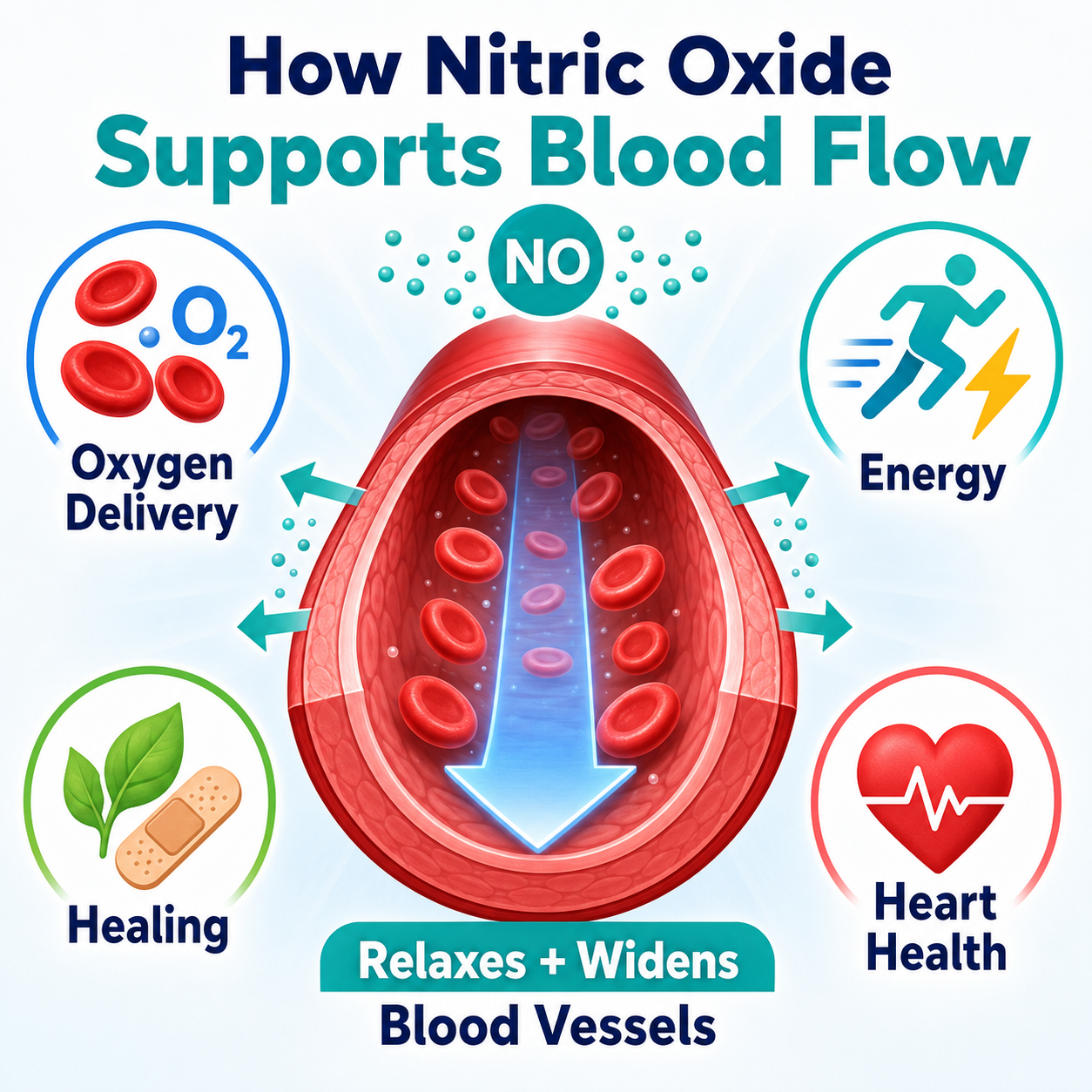
Nitric oxide is a molecule your blood vessels produce that tells them to relax and widen, which improves blood flow throughout the body. Research published through the National Institutes of Health has shown that nitric oxide production naturally declines with age, which is part of why circulation problems become more common later in life.
This isn't some exotic biohack. It's a foundational piece of cardiovascular health. Poor nitric oxide production is linked to fatigue, elevated blood pressure, and slower healing. The encouraging part is there are real, natural ways to support it.
Natural Ways to Support Healthy Circulation
Movement comes first, always. Daily walking does more for circulation than almost anything else, and it costs nothing. Beyond that, I look closely at hydration, because dehydrated blood is thick, sluggish blood that doesn't move the way it should.
I talk to patients often about beets, leafy greens, and citrus, foods that naturally support nitric oxide production. Stress management matters more than most people realize too. Chronic stress constricts blood vessels over time, and that adds up.
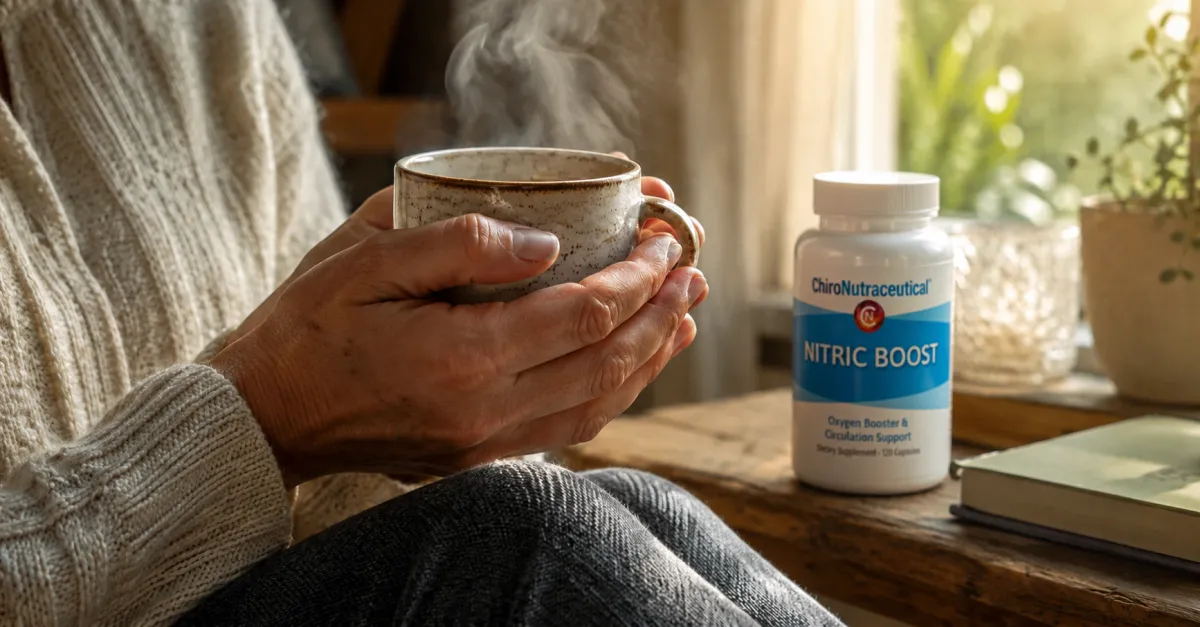
For patients who are already doing the foundational work but still need an extra push, especially those dealing with cold extremities, fatigue, or slow recovery from workouts or injury, I'll recommend a targeted nutraceutical like Nitric Boost by ChiroNutraceutical. It's formulated to help the body produce nitric oxide more efficiently. I don't hand it to everyone who walks through the door. It's for the patient who's already invested in their health and needs that additional lever pulled.
How Class 4 Laser Therapy Fits Into the Picture
Class 4 laser therapy, which is what we use now in place of spinal decompression, works at a cellular level to stimulate mitochondrial activity and increase local blood flow to the treated area. That increased circulation is a big part of why patients heal faster with it. We're not just masking pain, we're improving the tissue's actual ability to repair itself by feeding it more oxygen and nutrients right where it's needed.
I've watched patients with stubborn tendon and joint issues respond in ways that surprised even me once we added laser therapy into their plan. When circulation and hands-on treatment work together, healing accelerates in a way that neither one accomplishes alone.
When a patient is recovering from a soft tissue injury or dealing with slow post-procedural healing, laser therapy and adjustments start that repair process, but the body still has work to do between visits. This is where RECOVER by AgeRecode can help. It contains BPC-157, GHK-Cu, and carnosine, ingredients studied for their role in supporting tissue regeneration, collagen synthesis, and reducing oxidative stress. I think of it as support that sustains the healing momentum we build in the office. It's not a replacement for treatment, it's a complement to it, particularly for patients recovering from injury or surgery where circulation to the healing tissue matters most.

The Myth I Wish More People Would Let Go Of
The myth I hear constantly is that poor circulation is just a normal, unavoidable part of aging you have to live with. "My feet are always cold, that's just how it is now." No. Some decline is natural, but significant circulation problems are often a sign the body needs support, not something to accept and ignore.
I've seen too many patients turn this around with the right combination of movement, nutrition, and care to believe it's a lost cause.
What To Do If You've Been Ignoring the Signs
Pay attention to your body. Cold hands, fatigue, slow healing, these aren't quirks, they're signals. Start with the basics: move more, drink more water, eat foods that support your vascular health. But if you've been dealing with this for a while and it isn't improving, come see us. We look at the whole picture, not just the symptom sitting in front of us.
I've been doing this almost 30 years, and the patients who get the best results are the ones who stop ignoring the small signals before they become big problems.
If cold hands, fatigue, or slow healing have become your normal, let's change that. Visit us at Optimal Health Members in Henderson to talk through what's really going on, or explore GLP THREE if metabolic health is part of your picture too.