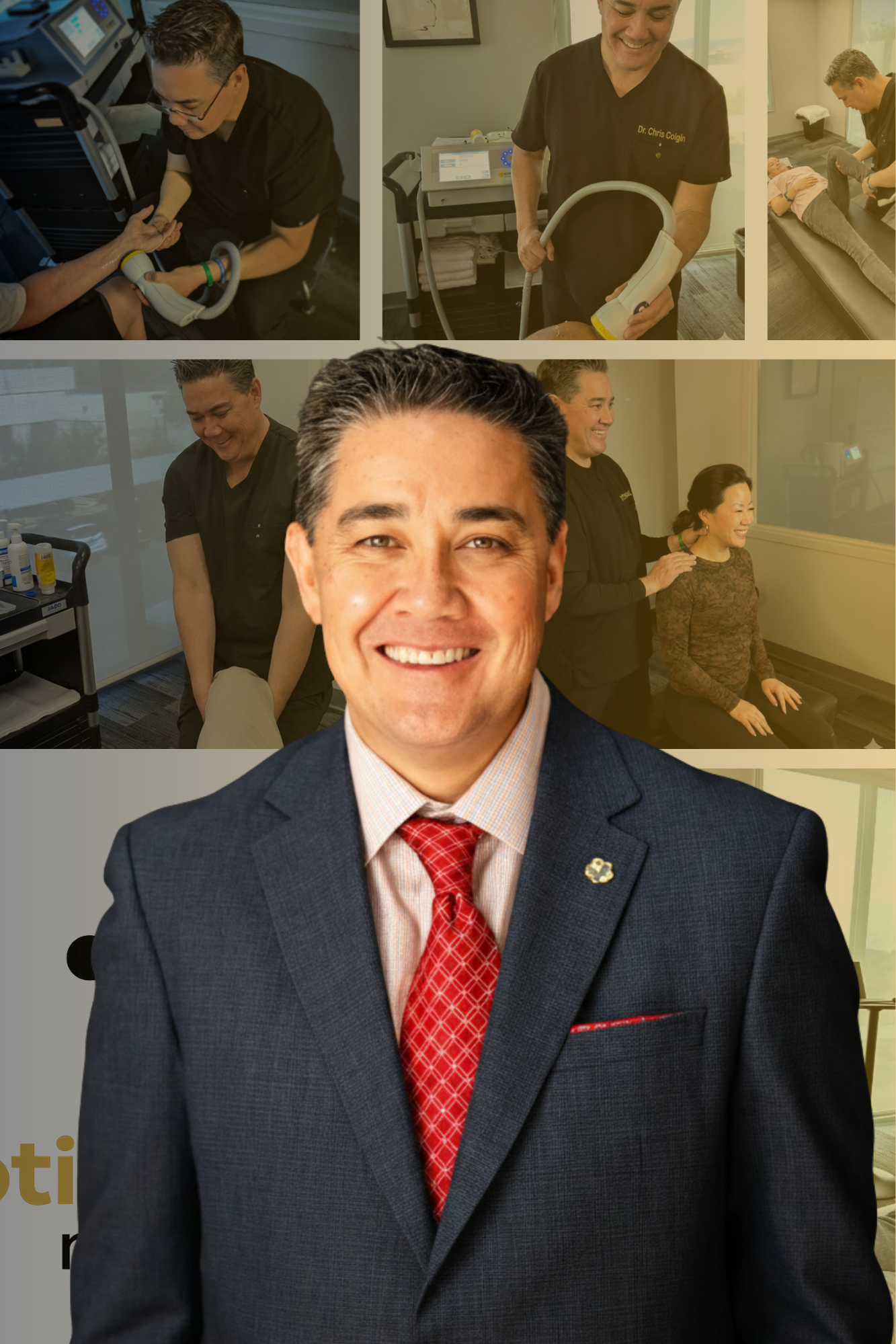
How Does Extracorporeal Shockwave Therapy Work to Diminish Pain?
I have had patients sit across from me and say some version of the same thing: "I have tried everything." They have done the physical therapy, the cortisone injections, the prescription anti-inflammatories. They have rested it, iced it, braced it. They have been told the next step is surgery. What they have not been offered is a treatment that directly addresses the biological reason the tissue stopped healing in the first place.
Extracorporeal shockwave therapy is the closest thing I have found in clinical practice to a tool that meets that description. In nearly 30 years of working with patients dealing with chronic musculoskeletal pain, few technologies have produced the kind of consistent, measurable outcomes I see with SoftWave shockwave treatment. Not because it is a miracle. But because, unlike most passive approaches, it works with the body's own repair mechanisms rather than simply interrupting the symptoms.
I want to explain exactly how it works, what it treats, and what the evidence actually says, so that if you are considering this treatment, you are making an informed decision rather than a hopeful one.
Where Shockwave Therapy Came From and What It Actually Is
The term extracorporeal means "outside the body." Extracorporeal shockwave therapy, abbreviated as ESWT, delivers high-energy acoustic waves through the skin and into targeted tissue beneath the surface. No incisions, no needles, no anesthesia.
The technology was originally developed to break up kidney stones without surgery, a procedure called lithotripsy that became standard of care in the 1980s. Researchers and clinicians noticed that patients receiving lithotripsy showed unexpected improvements in musculoskeletal pain in adjacent areas, and that observation launched decades of research into applying controlled acoustic energy to damaged tendons, muscles, and connective tissue.
A comprehensive review published in the Journal of Orthopaedic Surgery and Research describes ESWT as a well-established intervention for musculoskeletal disorders, with a strong evidence base across multiple tissue types and clinical presentations. It is now used by sports medicine physicians, chiropractors, and physical therapists worldwide.
ESWT comes in two primary forms. Focused shockwave therapy delivers concentrated energy to a precise, deep point in the tissue, targeting a specific small area of pathology. Radial shockwave therapy disperses energy over a broader, shallower treatment zone. At my practice, I use SoftWave technology, which produces true electrohydraulic shockwaves delivered through a parabolic reflector to cover a broader treatment area at therapeutic depth. This broad-focused approach allows us to treat larger tissue volumes in a single session, which is clinically meaningful for conditions involving diffuse tendon or fascial involvement.
The Three Biological Mechanisms That Make Shockwave Therapy Work
This is the part of the conversation I find most important to have with patients, because understanding the mechanism is what separates a treatment you commit to from one you abandon too soon.
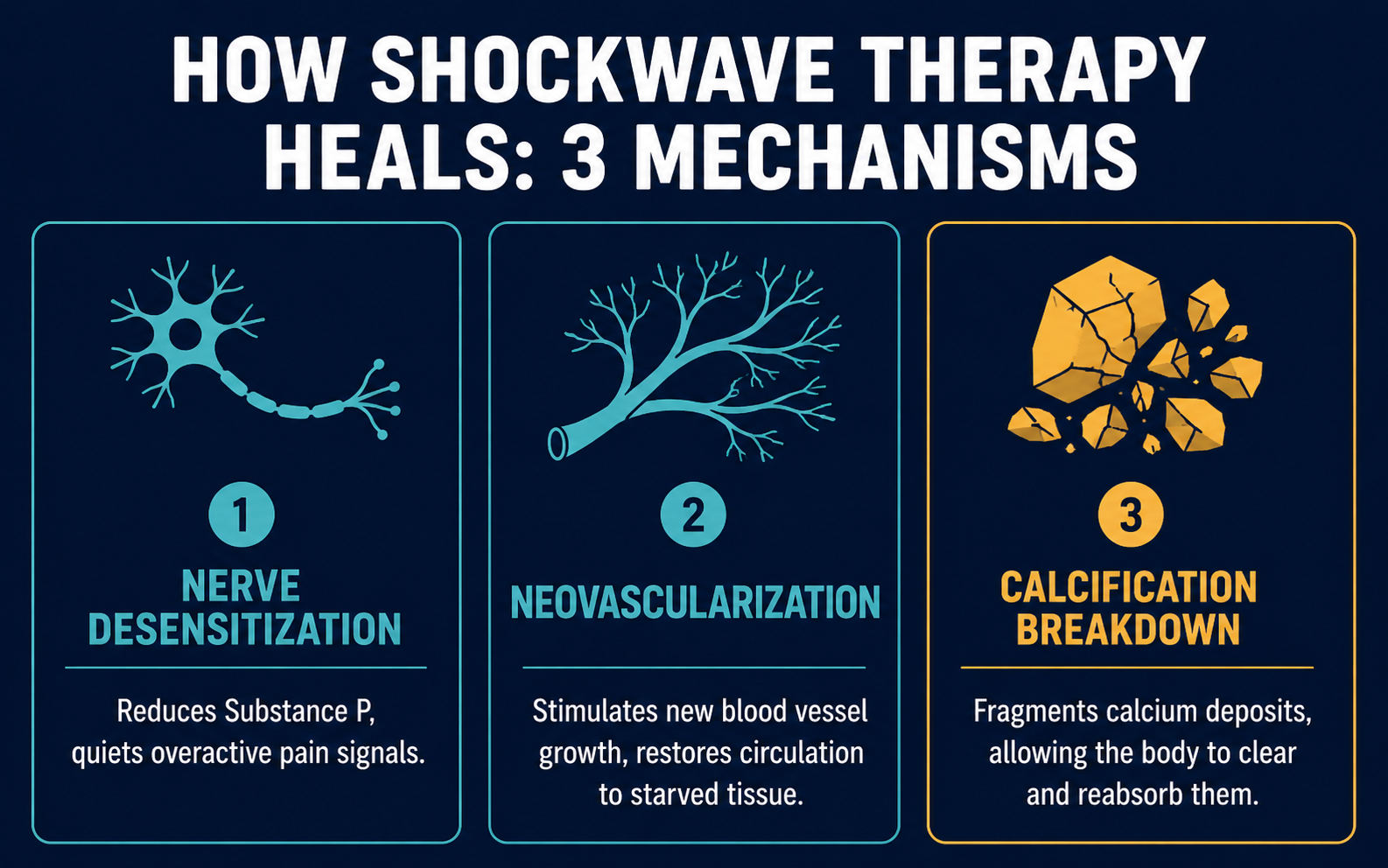
ESWT reduces pain and promotes healing through three distinct and simultaneous biological processes.
Nerve desensitization through Substance P reduction. Chronic pain is frequently maintained by overactive nerve fibers called C-fibers, which continue sending pain signals to the brain long after the original injury has partially resolved. These fibers are kept in a state of heightened sensitivity in part by a neurotransmitter called Substance P, which amplifies and sustains pain signal transmission. Research demonstrates that shockwave therapy reduces local Substance P concentrations in treated tissue, effectively quieting the nerve activity that has been maintaining your pain. This is why some patients notice a meaningful reduction in pain within a session or two, even before the structural tissue healing is complete.
Neovascularization and restored circulation. Tendons and certain connective tissues have a naturally poor blood supply compared to muscle. When these structures are chronically injured or degenerated, their already-limited circulation becomes further compromised, creating a physiological environment where healing is nearly impossible. Shockwave energy stimulates the formation of new blood vessels in the treated area through a process called neovascularization. Studies by Wang et al. have demonstrated measurable new vessel formation following ESWT application, restoring the oxygen and nutrient delivery that tissue repair requires. This is the mechanism that breaks the cycle of failed healing in chronic tendinopathy.
Breakdown of pathological calcifications. In tendons and soft tissues affected by chronic injury, calcium deposits accumulate and contribute significantly to pain, stiffness, and restricted movement. The acoustic energy delivered during shockwave treatment physically fragments these deposits. The body can then reabsorb and clear the fragmented calcium over the weeks following treatment. This is particularly relevant for calcific rotator cuff tendinopathy and chronic plantar fasciitis, where calcification is a common complicating factor.
These three mechanisms do not operate sequentially. They activate simultaneously during every session and continue their biological effects in the days and weeks that follow.
The Conditions That Respond Best to Shockwave Treatment
I want to be specific here because the range of conditions ESWT addresses is broader than most patients realize when they first hear about it.
Plantar fasciitis is one of the most common conditions I treat with SoftWave in my Henderson practice. The heel and arch pain associated with plantar fasciitis often persists because the fascia degenerates faster than it heals, and passive approaches do not provide the regenerative stimulus the tissue needs. Multiple randomized controlled trials, including a landmark study in the Journal of Bone and Joint Surgery, have found ESWT to be significantly more effective than placebo for chronic plantar fasciitis, with outcomes sustained at one-year follow-up.
Tendinopathies throughout the upper and lower extremity respond reliably to shockwave treatment. Rotator cuff tendinopathy, tennis elbow, golfer's elbow, patellar tendinopathy, and Achilles tendinopathy all involve degenerated tendon tissue that rebuilds slowly without intervention. Shockwave accelerates collagen remodeling and fibroblast activity, directly addressing the structural deficit rather than suppressing the symptoms that result from it.
Calcific shoulder tendinopathy is one of the most dramatic responders I see in practice. Patients who have been managing this condition for a year or more, sometimes told surgery is their only option, frequently experience substantial and lasting improvement within a course of shockwave treatments.
Chronic trigger points and muscle tension in the neck, shoulder girdle, and lumbar paraspinals also respond well, particularly when conventional soft tissue approaches have reached a plateau.
Let me tell you about a patient I will call Carol. She came into my office having dealt with plantar fasciitis in her right heel for eighteen months. She had done custom orthotics, physical therapy twice per week for three months, two cortisone injections, and had been stretching her plantar fascia and calf daily without fail. The pain was manageable in the middle of the day but debilitating in the morning and after any period of rest. Her orthopedic surgeon had mentioned a surgical release as a possible next step.
Carol was not interested in surgery. What she wanted was to walk her dog in the morning without spending the first twenty minutes in sharp pain. After five SoftWave sessions over five weeks, that was her reality. The morning pain she had normalized over eighteen months was largely gone at week six. That outcome is not unusual for chronic plantar fasciitis with SoftWave. It is what I expect when the treatment plan is appropriate and the patient is consistent.
What to Expect During and After Your Session
Most SoftWave sessions in my office last between fifteen and thirty minutes, depending on the number of areas being treated and the complexity of the presentation.
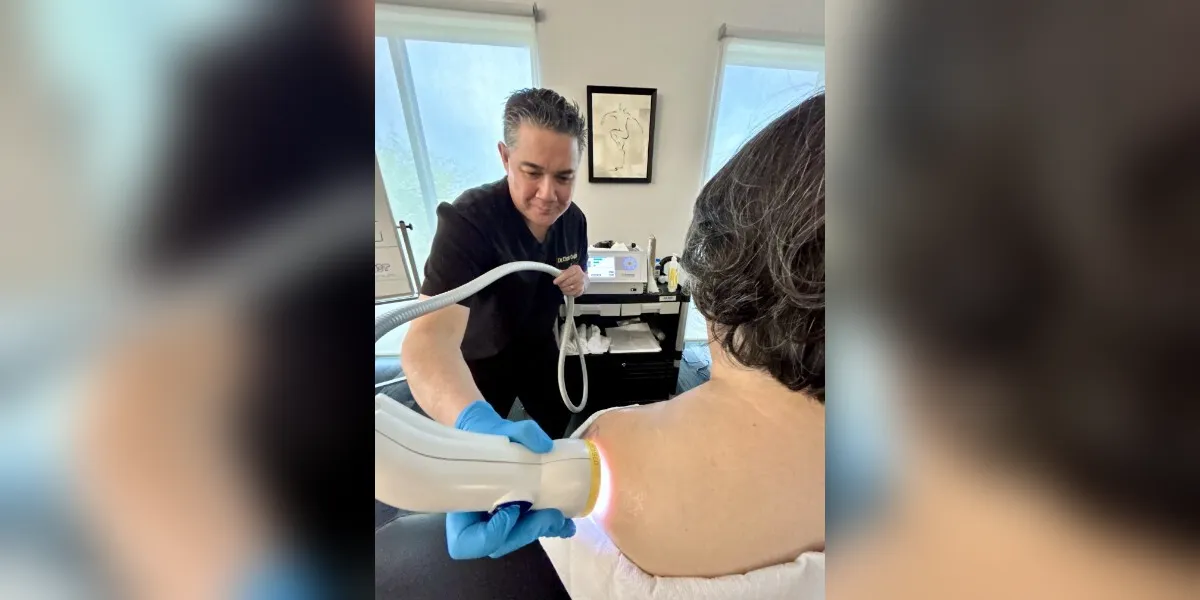
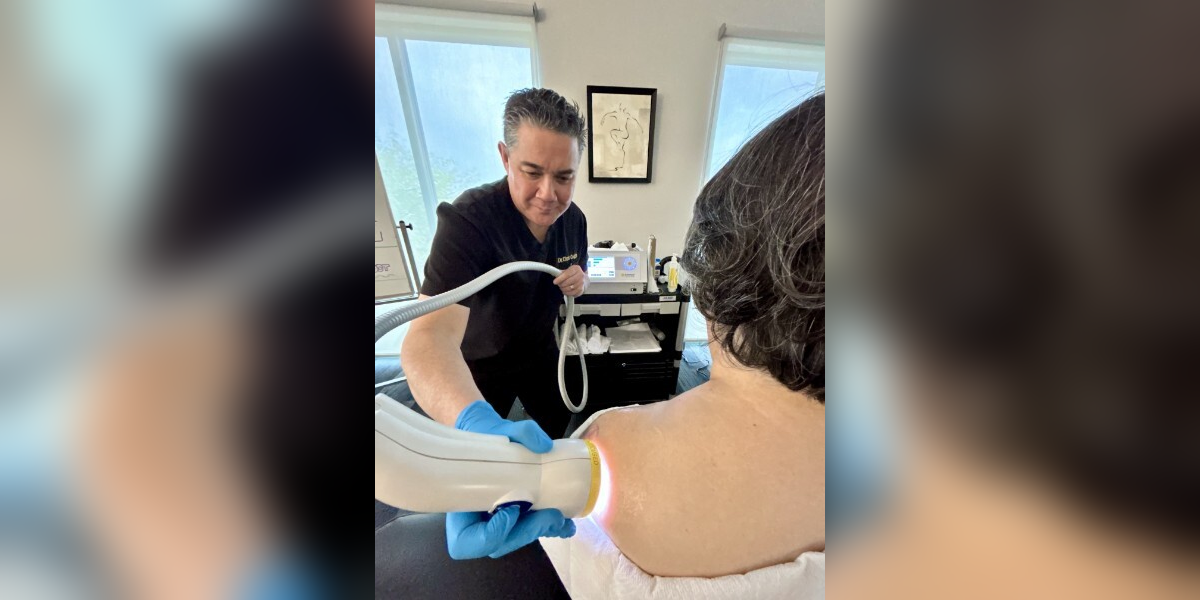
Before treatment, a coupling gel is applied to the skin over the treatment area. This gel conducts the acoustic waves efficiently through the surface tissue and allows the applicator to move smoothly. The SoftWave handpiece is then positioned and moved through the treatment area while delivering controlled pulses of energy.
Most patients describe the sensation as a rapid tapping or moderate pressure. Areas with significant inflammation or dense calcification may feel more sensitive during treatment. I adjust the intensity based on your feedback and your clinical response during the session. The goal is to deliver a therapeutic stimulus, not to create distress.
One thing I emphasize with every patient is that the healing unfolds after the session, not during it. The biological cascade initiated by shockwave treatment continues for days and weeks. Most patients notice gradual improvement after two to three sessions, with more significant results emerging over a course of four to six treatments spaced approximately one week apart. Clinical studies consistently report this treatment timeline, and understanding it prevents patients from abandoning the protocol before the full biological response has had time to develop.
Some temporary soreness or mild swelling in the treated area is normal in the twenty-four to forty-eight hours following a session. This is the body actively responding to the stimulus, not a sign that something went wrong. I generally recommend avoiding strenuous loading of the treated area for one to two days after each session, but most patients return to their normal daily routines the same day.
Why I Use SoftWave Technology Specifically
Not all shockwave devices produce the same clinical outcomes, and I want to be transparent about why SoftWave is the platform I chose for my practice.
SoftWave TRT uses an electrohydraulic mechanism that generates true shockwaves, not simply pressure waves, and delivers them through a parabolic reflector that creates a broad-focused treatment zone. This allows us to treat a larger volume of tissue per session at clinically effective depths, which matters considerably for conditions involving diffuse tendon involvement or larger fascial structures like the plantar fascia.
The technology also produces a strong neovascularization response, which I have found to be one of the most critical factors in outcomes for chronic tendinopathy. When tissue that has been struggling to heal for months begins receiving adequate circulation again, the clinical response is often faster and more durable than with treatments that address pain signaling alone.
I am not suggesting SoftWave is the right tool for every patient and every condition. But for the presentations I see most commonly in my Henderson, Nevada practice, it has become one of the most reliable clinical assets I have.

Pain Should Not Become Your New Normal
Chronic musculoskeletal pain has a way of becoming a background condition that people gradually adjust their lives around. They stop running. They stop playing golf or pickleball. They choose the elevator instead of the stairs. They accept that mornings are painful and that certain activities are no longer available to them. None of that is inevitable.
Extracorporeal shockwave therapy, and SoftWave technology in particular, addresses the biological reality of why chronic pain persists. It is not masking a symptom. It is providing the cellular stimulus that allows tissue to complete a repair process the body has been attempting and failing to finish on its own.
If you are in the Henderson or Las Vegas area and dealing with chronic heel pain, a tendinopathy that has not responded to conventional care, calcific shoulder irritation, or persistent musculoskeletal pain of any kind, I would welcome the conversation. You can schedule a consultation at Optimal Health Members and we will evaluate whether SoftWave therapy is the appropriate next step for your specific presentation. You do not have to keep adjusting around the pain.