Belly Fat Exercises at Home: What Actually Works
If you've searched "belly fat exercises at home," you've probably already tried a round of crunches, felt sore for two days, and seen nothing change in the mirror. That's not a lack of effort. It's usually a mismatch between what people think targets belly fat and what actually does.
Quick Answer: The most effective belly fat exercises at home combine bodyweight strength training, short cardio intervals, and core stability work done at least four to five days a week. No single move burns fat from one area of the body. Real, lasting change in the midsection comes from consistent full-body training paired with adequate sleep and steady eating habits over weeks, not days.
Key Takeaways
Spot reduction, the idea that ab exercises burn fat specifically from the belly, is not supported by the evidence. Targeted ab work strengthens the muscle underneath the fat, but it does not remove the fat itself.
A Harvard-affiliated study found that adults who did 20 minutes of daily weight training saw less age-related increase in abdominal fat than those who did the same amount of aerobic exercise alone.
The CDC recommends at least 150 minutes of moderate aerobic activity per week plus muscle-strengthening work on two or more days for adults, which is the baseline most home routines should hit.
A realistic at-home routine mixes bodyweight strength moves, short cardio bursts, and core stability work rather than an endless set of crunches.
Sleep, stress, and steady eating patterns influence abdominal fat as much as the workout itself, which is why exercise alone sometimes isn't enough to see the change you're expecting.
Why Is Belly Fat So Stubborn Compared to Fat Everywhere Else?
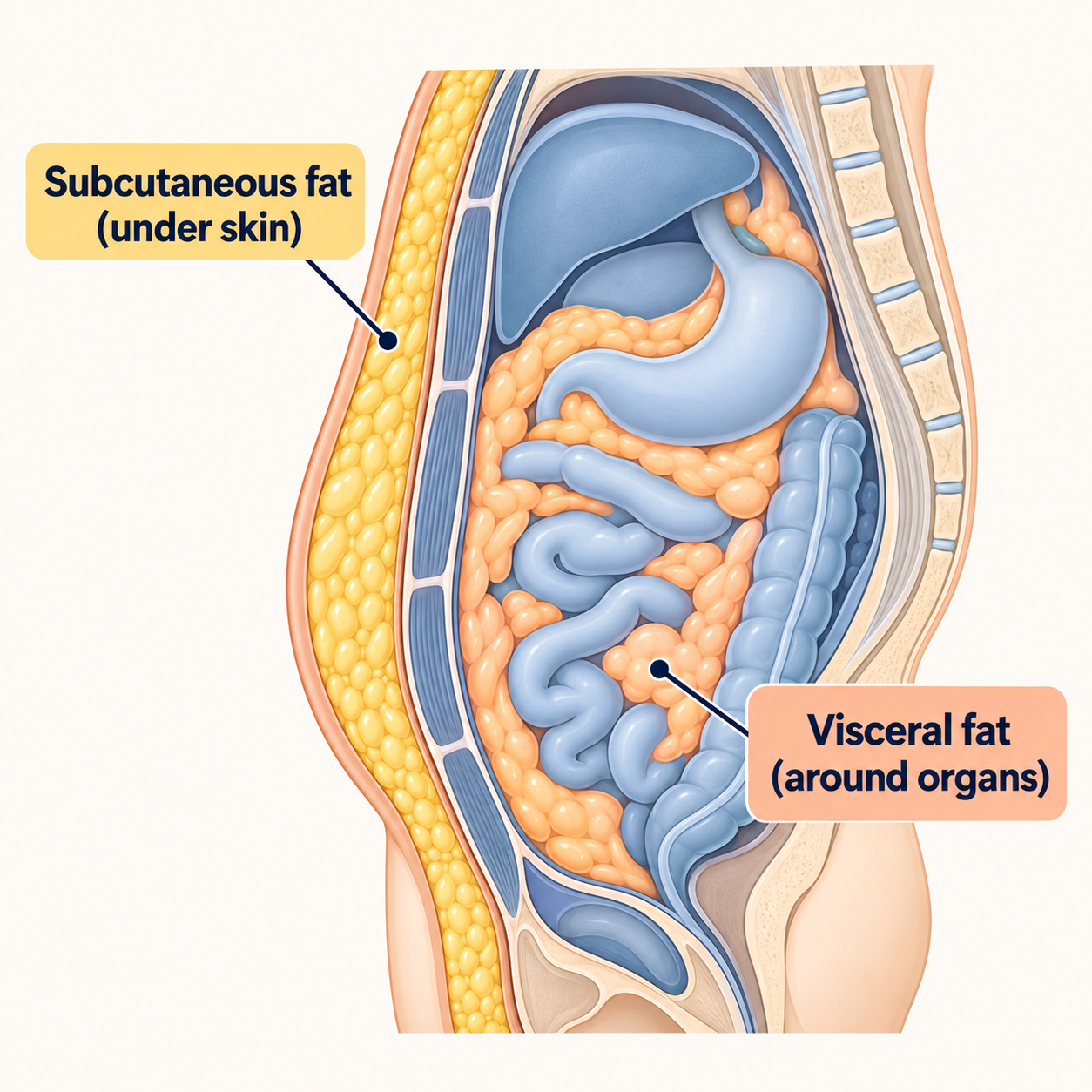
Not all body fat behaves the same way. Fat just under the skin, called subcutaneous fat, is what you can pinch. Fat that sits deeper, wrapped around the organs in the abdomen, is called visceral fat, and it's the type most closely tied to metabolic strain.
This is also where the "spot reduction" myth causes the most frustration. According to Mayo Clinic, you can strengthen and tone the abdominal muscles with crunches or other belly-focused exercises, but doing those exercises alone won't get rid of the fat covering them. The fat you're trying to lose responds to the same overall approach that reduces fat everywhere else in the body: consistent movement, adequate protein, and a sustainable calorie balance. There's no exercise that reaches into one zone and pulls fat out of it.
That's genuinely good news, because it means you're not missing some secret ab move. You're looking for a routine that trains the whole body well, done often enough to matter.
What Are the Best Belly Fat Exercises You Can Do at Home Without Equipment?
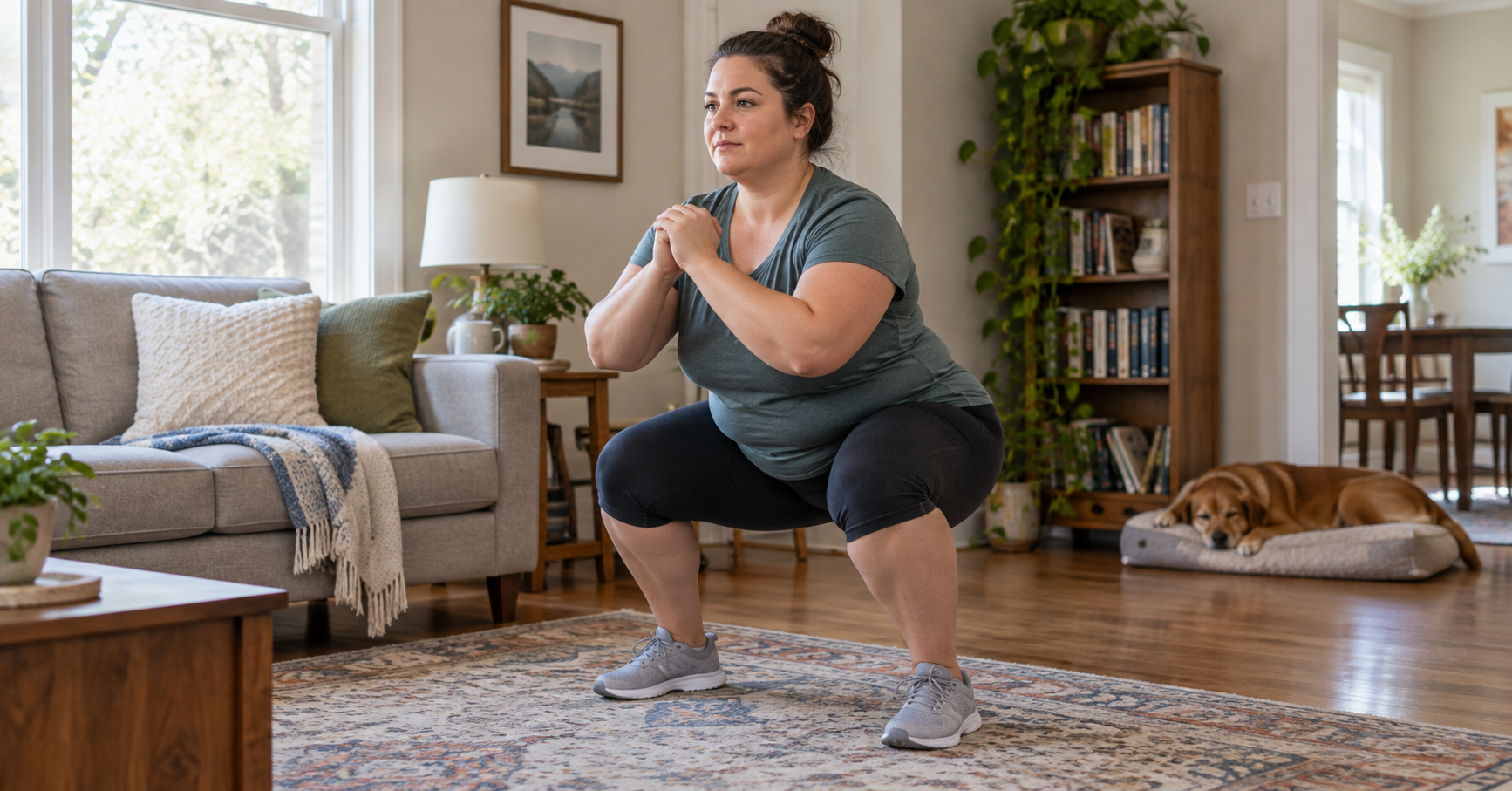
A good at-home routine leans on three categories: strength training, cardio intervals, and core stability. You don't need a single piece of equipment for any of it.
Strength moves (train 2 to 3 times a week):
Bodyweight squats
Glute bridges
Standing bicycle twists
Push-ups or incline push-ups against a counter
Reverse lunges
Cardio intervals (train 2 to 3 times a week):
Jumping jacks
High knees
Mountain climbers
Marching in place with a fast pace
Step-ups on a stair or sturdy platform
Core stability (train most days):
Forearm plank, held for time rather than rushed for reps
Bird dog
Dead bug
Slow, controlled bicycle crunches
Strength training deserves more credit than it usually gets in belly fat conversations. In a Harvard T.H. Chan School of Public Health study of men over 40, those who added 20 minutes of daily weight training saw less increase in age-related abdominal fat than those who spent the same amount of time on aerobic exercise alone, and the group who combined both saw the best results. Cardio still matters, but it works best alongside strength work, not instead of it.
A simple structure that fits most schedules: three strength sessions, two cardio-interval sessions, and a few minutes of core work most days, all doable in a living room in 20 to 30 minutes.
How Often Should You Train to See Real Change?
This is where most people quit too early. Visible change in the midsection is one of the slower things the body gives up, and a lot of people stop right around the point where the work would have started paying off.
The CDC's Physical Activity Guidelines for Americans call for at least 150 minutes of moderate-intensity activity per week, plus muscle-strengthening work on two or more days. That's the floor, not the ceiling, but it's a realistic target if you're starting from home with no equipment. Broken up, that's roughly 25 to 30 minutes a day, five days a week.
Give a consistent routine six to eight weeks before judging it. Most people notice changes in how their clothes fit and how they feel moving before they notice a change in the mirror. That order is normal. It doesn't mean the work isn't working.
Does Diet Matter More Than Exercise for Losing Belly Fat?
Exercise and eating habits aren't competing factors, they work together. You can train perfectly and still carry stubborn abdominal fat if your eating pattern keeps you in a calorie surplus, and you can eat well and still see slow progress if you're sedentary the rest of the day. Both matter, and neither one fully substitutes for the other.
I've worked with weight management patients in my practice since 2012, and the pattern I see most often isn't a lack of willpower. It's people treating exercise and metabolic health as two separate problems instead of one connected system. Around our office, we put it plainly: weight loss is the side effect of fixing your metabolism, not the goal you chase directly. A body with stable blood sugar levels already in a normal range and efficient fat metabolism responds better to the same workout than one working against constant energy crashes and cravings.
That's the thinking behind formulas like GLP THREE, a natural liquid dropper supplement built around a patented MBC-267 peptide complex, along with Panax Ginseng, Saffron, and Hops extract. It's formulated to support the body's own GLP-1 pathway, appetite signaling, fat metabolism, and lean muscle maintenance as part of an active lifestyle, not as a replacement for one. It's not a prescription medication, it requires no injections, and it isn't a substitute for the exercise habits covered above. Anyone considering it can also request a one-time complimentary consultation and computerized Body Composition Analysis to get a clearer picture of where they're starting from.
Frequently Asked Questions
Can belly fat exercises at home really work without a gym? Yes. Bodyweight strength moves, cardio intervals, and core stability work can meet or exceed general activity guidelines without any equipment. The gym isn't what drives results, consistent effort is.
How long does it take to notice a difference from home workouts? Most people notice how their clothes fit or how they feel before they see a visible change, typically somewhere in the six to eight week range with consistent training. Slower, steady change tends to hold up better long term.
Do crunches and planks alone get rid of belly fat? No. They strengthen the muscles under the fat but don't specifically burn fat from that area. Pairing core work with strength training, cardio, and an appropriate eating pattern is what drives visible change.
Is walking enough to reduce belly fat? Walking counts toward your weekly aerobic minutes and helps with overall fat loss, but pairing it with strength training tends to outperform walking alone for abdominal fat specifically.
What else, besides exercise, affects belly fat? Sleep quality, stress levels, and steady blood sugar levels all play a role in where and how the body stores fat. Exercise is one lever among several, not the only one.
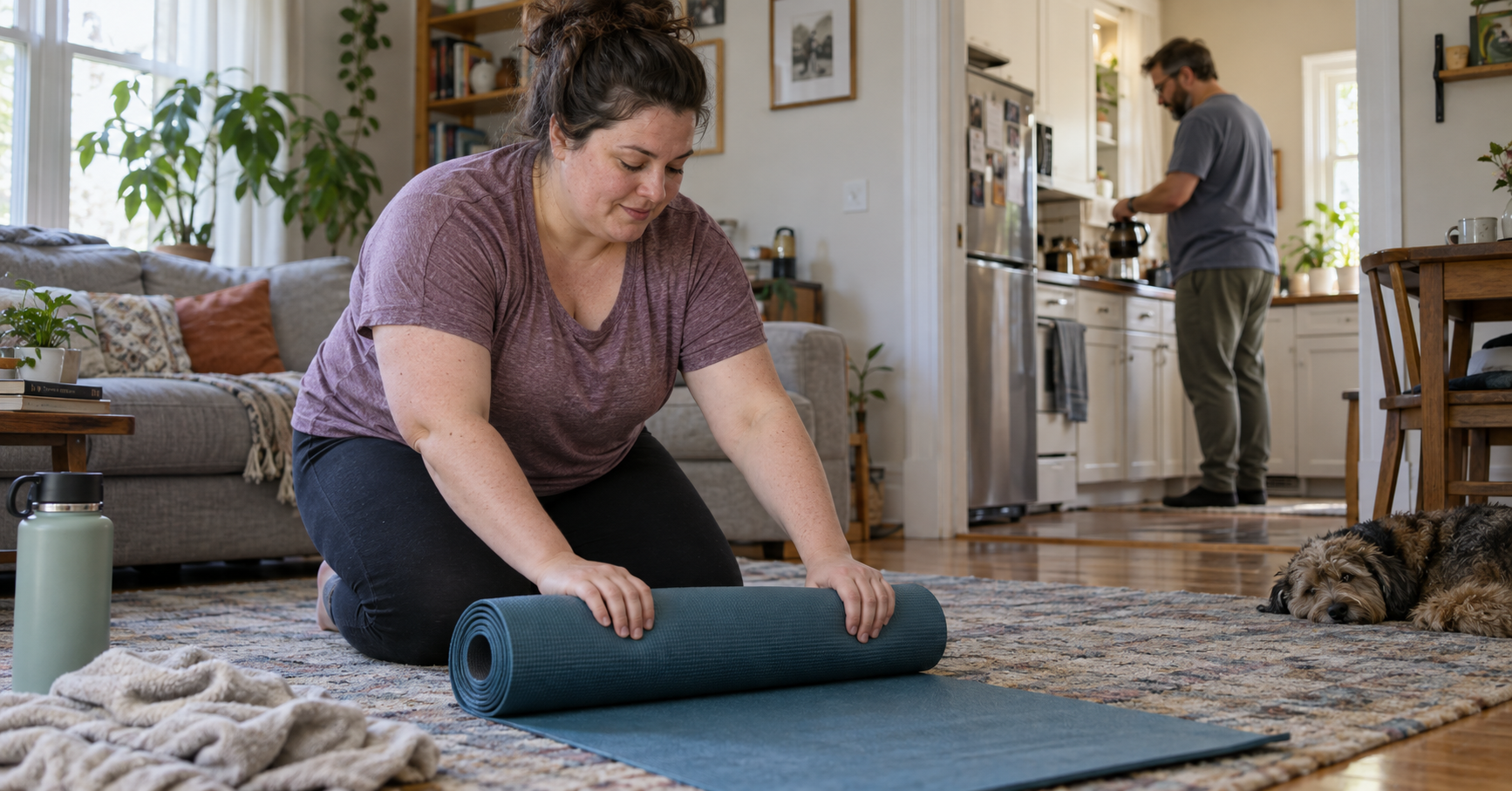
Consistency beats intensity here. Pick a handful of the moves above, commit to the CDC's baseline of activity most weeks, and give it time before judging the results. If you're also looking at what's supporting your metabolism between workouts, that's a conversation worth having with Dr. Chris Colgin, DC, Director of Optimal Health Members. A free consultation and computerized Body Composition Analysis are included with every order and are a reasonable next step if you want a clearer picture of where to start.
These statements have not been evaluated by the Food and Drug Administration. This product is not intended to diagnose, treat, cure, or prevent any disease. Individual results may vary. Talk to your doctor before starting any new supplement.