Does GLP-1 Weight Loss Work Without Diet and Exercise?
People ask me this all the time now. In the exam room, in my DMs, at events. And I get why — the GLP-1 conversation has exploded, and everyone wants to know if they can get the results without changing much about their life.
So let me just answer it directly, the way I would if you were sitting across from me right now.
Yes, It Works. But You're Probably Asking the Wrong Question.
Technically, GLP-1 support — whether that's a pharmaceutical injection or a natural nutraceutical protocol like the one I use with my patients — will help most people lose weight. The mechanism is real. Research confirms that GLP-1 suppresses appetite, slows gastric emptying, and reduces food intake — what a lot of people describe as constant "food noise." You eat less without white-knuckling it. The scale moves.
But here's where I push back on the question itself: losing weight and losing the right weight are two completely different things.
When you drop pounds without changing how you eat or move, a significant chunk of what you're losing isn't fat. It's muscle. Studies show that 14 to 23 percent of weight lost during caloric restriction is lean mass — and muscle is your metabolic engine. Lose enough of it and your resting metabolism slows down, your energy drops, and the moment you stop the program — the weight comes back. Often with a little extra on top.
So does it work? Depends entirely on what you mean by "work."

The Biggest Thing People Get Wrong About GLP-1 Weight Loss
The Biggest Thing People Get Wrong About GLP-1 Weight Loss
Most people walk into my office thinking the medication or the supplement is doing the heavy lifting. It isn't.
Think of it this way: GLP-1 support is not a treatment for obesity. It's a tool for appetite regulation. What it actually does is quiet the noise so you can make better decisions. The window it opens is real and valuable. But what you do inside that window is what determines whether your results last six months or six years.
I've watched patients drop 20, 30, even 40 pounds on GLP-1 protocols. The ones who changed nothing else? Most of them cycled back. The ones who used the appetite relief as a runway to build better habits? Almost none of them came back with the weight on.
I've Seen Both Sides. Here's What Actually Happened.
One patient comes to mind immediately. She dropped 28 pounds in about four months — almost no structured exercise, no real change in food quality. She felt amazing. She looked great. She was thrilled.
Six months after stopping, she'd regained most of it, plus a little extra. Her resting metabolism had slowed because she'd lost lean tissue along the way. She came back frustrated. We had to start over, this time with intention.
That story isn't rare. It's the norm when GLP-1 support is used in isolation.
Contrast that with what happens when someone actually pairs the protocol with lifestyle changes — even modest ones. I have a patient, a man in his early 50s, who came in about 40 pounds overweight. Inflamed. Exhausted. Joint pain that had been affecting his quality of life for years. He'd tried caloric restriction twice before and it hadn't stuck either time.
We put him on our nutraceutical GLP-1 support, added SoftWave therapy for his chronic joint inflammation, brought in red light therapy, gave him a simple Paleo-style eating framework, and had him start with 20 minutes of walking and some basic bodyweight work. That's it. Nothing extreme.
Eight months later, he was down 34 pounds. His inflammatory markers had dropped significantly. And he told me — and this is the part I remember — that it was the first time in years he'd woken up without pain.
No single thing did that. It was the combination. And that's exactly the point.
What Changes When You Add the Right Pieces
When patients combine GLP-1 support with real lifestyle changes — even small ones — the results look completely different. And I'm not just talking about the number on the scale.
Their energy stabilizes. Labs improve. Joint pain decreases. Sleep quality goes up. Motivation stops being a battle.
The weight loss at that point isn't the goal anymore. It's a side effect of actually getting healthier. That's when results stick. That's when people stop cycling.
The Three Mistakes I See Over and Over
Eating less but not better. Appetite suppression doesn't discriminate between a salad and a bag of chips. If you're running a caloric deficit on processed food, you're still feeding the chronic low-grade inflammation that drives insulin resistance and metabolic dysfunction. The quantity is down. The damage isn't.
Ignoring protein. When you're in a caloric deficit without prioritizing protein and resistance training, your body will break down muscle alongside fat for fuel. You end up lighter and metabolically weaker. That's the opposite of what we're trying to build.
Treating it like a sprint. Lose the weight, stop the program, go back to exactly how you were living before. That's not a plan — that's a cycle. And most people I see have been through that cycle more than once before they come see me.
What I Actually Tell Patients to Focus on First
This one surprises people. My answer is not "eat less." It's not even "move more."
Preserve muscle. Reduce inflammation. First.
Chronic low-grade inflammation is a core driver of insulin resistance and metabolic disease — and it doesn't resolve on its own just because the scale goes down. When you protect lean tissue and lower systemic inflammation, everything downstream gets easier. Metabolism improves. Insulin sensitivity improves. Energy improves. Motivation improves. The whole thing gets less hard.
My order of priority: reduce inflammation first, preserve and build muscle second, improve food quality third — then start thinking about eating less. Most people arrive with the order completely backwards. They start with restriction and wonder why nothing lasts.
Weight Loss and Healthy Fat Loss Are Not the Same Thing
I use this line with patients all the time:
Your scale doesn't know the difference between a pound of fat and a pound of muscle. It just knows weight.
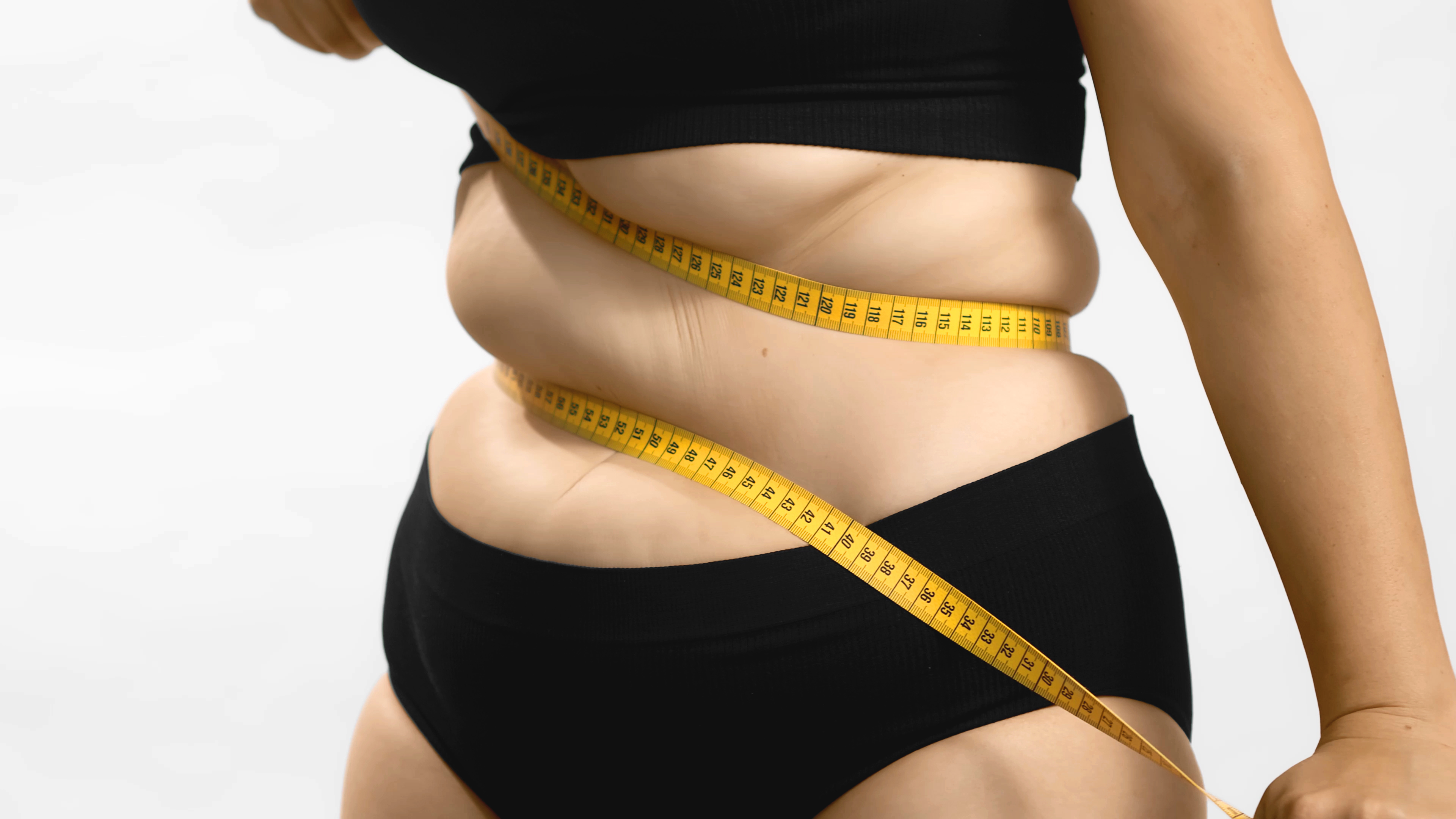
Healthy fat loss means you're getting smaller and stronger at the same time. You're preserving metabolic tissue, improving body composition, and building a body that actually works better than it did before. Weight loss can happen fast. Healthy fat loss takes a little longer — but it's the kind that changes your life.
One is a number. The other is a transformation.
What Should Sit Alongside GLP-1 Support
Coaching. Accountability. Lab work. Red light therapy. Nutritional guidance. Lifestyle modification.
I want to be clear about something: these are not add-ons to the protocol. They are the protocol.
GLP-1 support — natural or pharmaceutical — is one input. But chronic weight gain is a multifactorial problem. Hormones, inflammation, gut health, sleep, stress, movement patterns, psychology around food. If you only address appetite, you're addressing maybe 20 percent of what actually created the problem.
Lab work tells us what's really happening metabolically. Red light therapy has been shown to increase mitochondrial ATP production, support fat oxidation, and reduce blood glucose spikes following meals. Coaching and accountability address the behavioral side — which is where most programs fall apart. Comprehensive care produces comprehensive results. Partial effort produces numbers that don't last.
My Final Word to Someone Who Wants the Results but Not the Work
I'm not going to lecture you. But I am going to be straight with you, because you deserve honesty more than you deserve a pitch.
I've watched people chase shortcuts for 30 years. I understand it completely. Life is hard, you're tired, and the idea of overhauling your habits feels like too much. That's a completely human response to a genuinely difficult situation.
Here's what I know though: GLP-1 support — natural or pharmaceutical — can absolutely reduce cravings, quiet the appetite, and give you a much easier entry point than you'd have otherwise. That window is real and it's valuable.
The question is what you do with it.
If you use the appetite relief to keep living exactly the way you were living before, you'll end up right back where you started. Sometimes worse. But if you use it to make one better choice per day — walk to the mailbox, swap one processed meal for something real, drink more water — your body will meet you there.
My ask isn't perfection. It never has been. It's just one better choice.
Give your body something to work with. It will surprise you.
Want to learn more about our natural GLP-1 support protocol? Visit Us