What's the Difference Between Class 3 and Class 4 Lasers?
I hear some version of this conversation almost every week. A patient comes in and says, "I already tried laser therapy, it didn't do anything." When I ask what kind of laser they used, most of the time they have no idea. That is not their fault. Nobody explains upfront that laser therapy is not one single thing. There is a real difference between a Class 3 laser and a Class 4 laser, and that difference often decides whether a patient gets real relief or just an expensive shrug.
Quick Answer
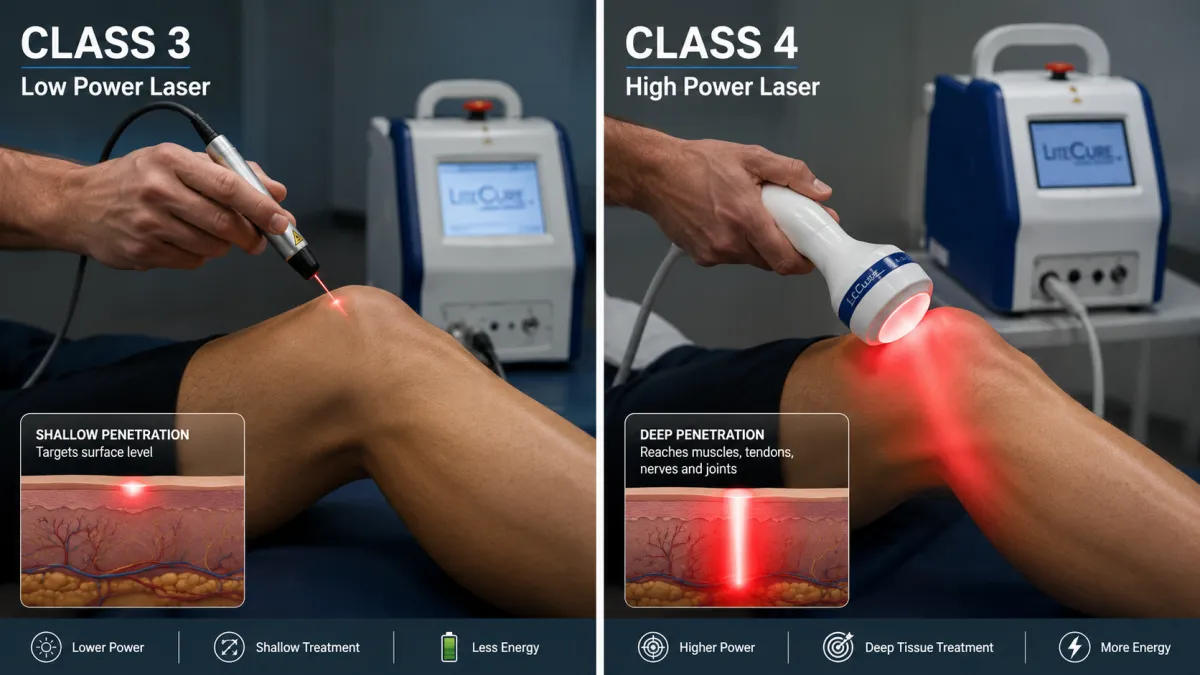
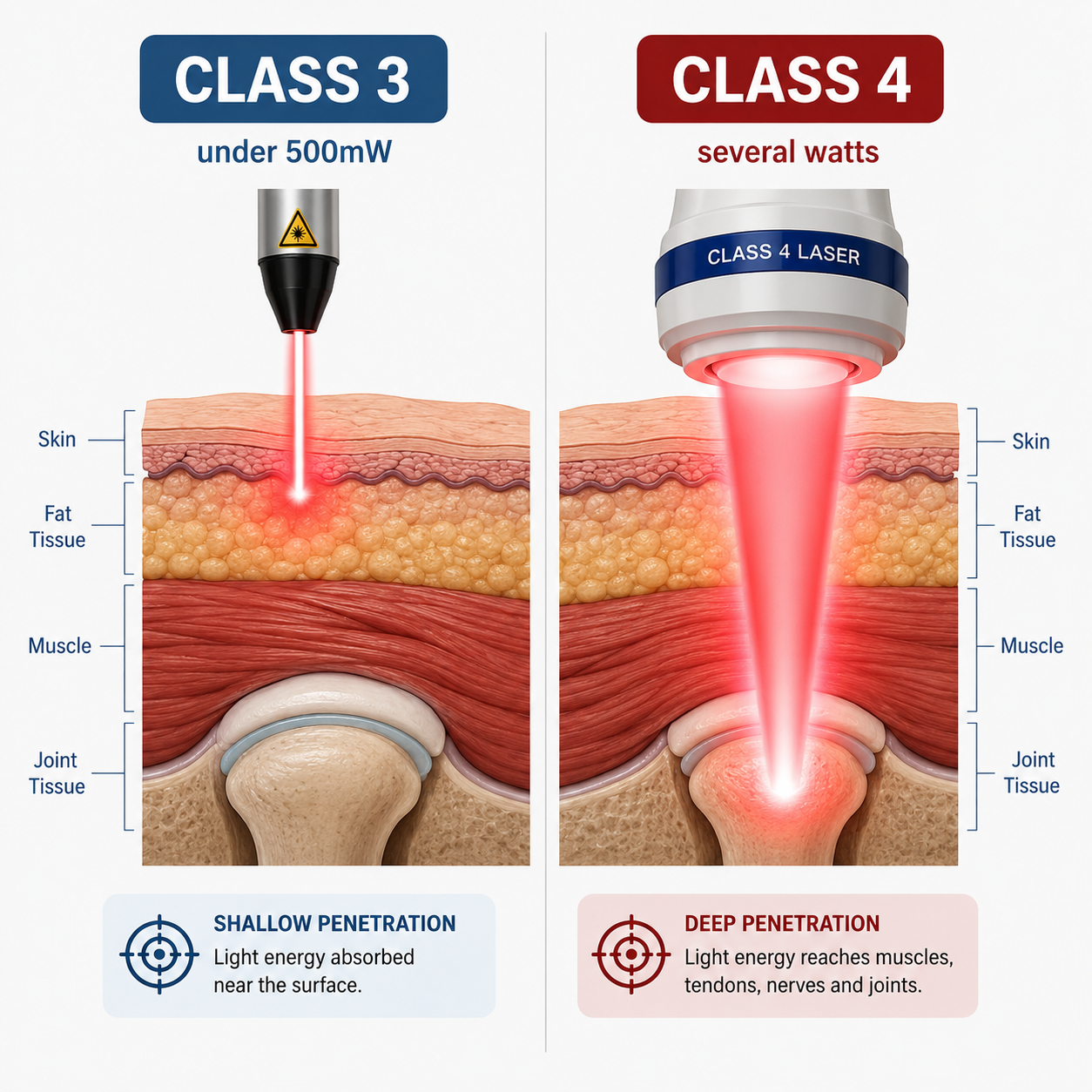
Class 3 lasers, also called low level or cold lasers, output under 500 milliwatts and mainly affect surface tissue. Class 4 lasers output several watts, allowing light energy to reach a biologically effective depth of roughly four centimeters into tissue. That extra power means more energy actually reaches deep joints, tendons, and muscles where healing needs to happen, which is why Class 4 therapy tends to produce faster, more noticeable results for musculoskeletal pain.
Key Takeaways
Class 4 lasers operate at watt-level power, while Class 3 lasers typically output under 500 milliwatts, which limits how deep the light can therapeutically penetrate.
The biologically effective depth of an infrared therapy laser is conservatively estimated at about four centimeters, deep enough to reach spinal joints, knees, and shoulders.
At the cellular level, photobiomodulation enhances cytochrome c oxidase mediated mitochondrial ATP production, which is what fuels tissue repair.
Clinical trials on high intensity (Class 4) laser therapy have shown significant pain reduction in knee osteoarthritis patients compared to sham laser treatment.
Class 4 laser therapy is generally most effective when paired with chiropractic adjustments rather than used as a standalone treatment.
Why This Question Keeps Coming Up In My Office
Almost nobody walks into my practice already knowing there are different classes of therapeutic lasers. What usually happens is a patient tried laser therapy somewhere else, maybe at a physical therapy office or even a spa that added it as an extra service, and they did not get much out of it. They come to me still hurting and tell me laser therapy did not work. That is my cue to ask what kind of laser they used. Almost every time, they cannot answer, because nobody told them the class number matters. Once I explain it, things start to make sense for them.
What Actually Separates Class 3 From Class 4
Think of it like the difference between a flashlight and a floodlight. A Class 3 laser puts out a small amount of power, generally under 500 milliwatts. It can stimulate some cellular activity at the skin surface, but it does not have the power to reach deep tissue in a therapeutic dose within a reasonable treatment time. A Class 4 laser runs at several watts, which allows the light energy to penetrate several centimeters into muscle, tendon, and joint tissue. Wavelength is the main determinant of how deep the laser penetrates, and photons in the near infrared range around 790 nanometers penetrate the deepest. At that depth and dose, you get real photobiomodulation, meaning the mitochondria inside your cells absorb that light energy and produce more ATP, the fuel your cells use to repair themselves. Research shows this irradiation increases ATP production and upregulates mitochondrial function across a therapeutic wavelength window from roughly 650 to 1200 nanometers. More power delivered safely simply means more energy reaching the tissue that actually needs to heal.
Why I Chose Class 4 Laser Therapy For My Practice
Early in my career I looked at Class 3 lasers because they were cheaper and easier to bring into a practice. But I kept running into the same wall. Patients would feel something mild during the session and then nothing lasting afterward. I did not want to offer a treatment in my office that I could not stand behind with a straight face. When I researched Class 4 systems and saw the difference in wattage and actual tissue penetration backed by real research, it was not a hard decision. I have had patients with rotator cuff issues and chronic knee pain who tried lower powered laser elsewhere with no real change. Within a handful of Class 4 sessions in my office, they were telling me they could sleep on that shoulder again or get up from a chair without wincing. That is the kind of result that builds confidence in what you are recommending to people.
Where I See The Clearest Difference In Results
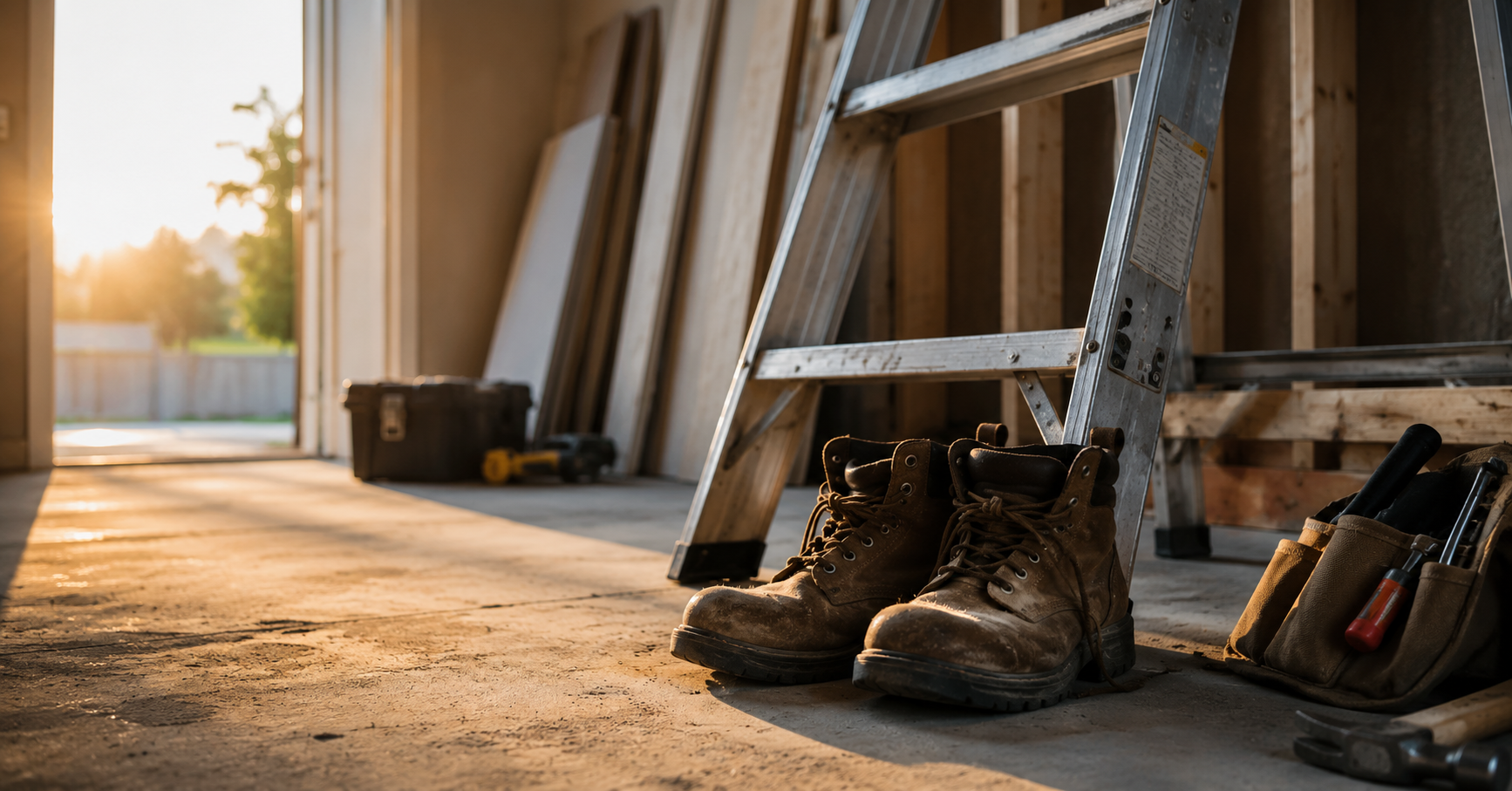
Deep joint issues are where the gap between the two classes shows up most clearly. Plantar fasciitis, chronic low back pain, shoulder impingement, and knee osteoarthritis all involve tissue that sits below the surface, and you need enough power to actually reach it in a clinically meaningful dose. Research on high intensity laser therapy for knee osteoarthritis backs this up directly. One randomized controlled trial found that patients receiving high intensity laser therapy alongside conservative treatment showed a significantly greater decrease in pain scores compared to those receiving sham laser. I had a patient, a contractor in his fifties, who came in with plantar fasciitis so bad he was limping through his own job sites. He had tried an over the counter cold laser device at home for weeks with no change. After about six Class 4 sessions combined with chiropractic adjustments, he was back on ladders without the morning pain that used to stop him in his tracks.
Comfort And Safety During Treatment
Class 4 lasers sound intimidating because of the name, but in trained hands they are very safe. The handpiece is moved continuously over the treatment area, never held still in one spot, which keeps the tissue from overheating. Most patients describe the sensation as a pleasant, gentle warmth, closer to a warm massage than anything uncomfortable. The one real precaution is protective eyewear for everyone in the room, which we always use without exception. I have never had a patient tell me the treatment itself was uncomfortable. Most say it is one of the more relaxing parts of their visit.
What Happens When Patients Switch From Class 3 To Class 4
This comes up more than people might guess. I had a patient with chronic neck pain from years at a desk job who had done a series of low level laser sessions at another clinic and told me flatly that it did nothing. I explained the power difference, and she was honestly skeptical going in, figuring laser was laser. After her first two Class 4 sessions paired with adjustments, she noticed she could turn her head to check her blind spot without that catching pain for the first time in over a year. I do not take the initial skepticism personally. I would be skeptical too if my only experience with a technology had been underwhelming.
How Many Sessions It Actually Takes
Most of my patients start noticing meaningful change within four to six sessions, sometimes sooner depending on how chronic the issue is. Acute injuries often respond even faster. Compare that to what is sometimes marketed with lower powered units, where patients are told to expect twenty or more sessions before any real change, and even then the results are often modest. That is a real difference in someone's time, money, and patience. I would rather tell a patient honestly what to expect than have them commit to a long series of appointments hoping something eventually clicks.
Since Class 4 laser therapy works by accelerating the body's own tissue repair process, it pairs naturally with support between visits. This is where I bring up RECOVER by AgeRecode with certain patients, particularly those dealing with soft tissue injuries, chronic inflammation, or a slower healing joint that needs extra help finishing the job between office visits. RECOVER combines BPC-157, GHK-Cu, and carnosine in a multi-phase release capsule designed to support angiogenesis, collagen synthesis, and cellular repair without replacing the hands-on care that actually initiates healing. I am always clear with patients that RECOVER is not a substitute for adjustments or laser therapy. It is a tool that helps the body sustain and accelerate the repair work that treatment in my office already started.
Laser Works Best As Part Of A Bigger Plan
I almost never use Class 4 laser as a standalone therapy, and I tell patients this upfront. The laser reduces inflammation and accelerates tissue repair, but if a joint is misaligned or there is restricted motion in the spine or extremities, the underlying mechanical problem is still there. Adjustments restore proper movement and alignment, and the laser helps the surrounding tissue heal and calm down faster. Used together, patients get both the structural correction and the cellular repair support. I have seen patients plateau when they try laser alone somewhere else, because nobody addressed the alignment issue that caused the inflammation in the first place. You can read more about how we combine chiropractic care and Class 4 laser therapy at our Henderson practice.
What To Ask Before You Buy Cheap Laser Therapy Somewhere Else
If you are laser shopping and see a much cheaper offer somewhere, ask directly what class and wattage the laser is. A legitimate provider should answer without hesitation. I would also ask how many sessions they typically recommend for a condition like yours, because a very high number is often a sign of a lower powered device trying to make up for weak dosing with volume. Cheaper is not always the same as effective, and with laser therapy, power output is not a minor technical detail. It is the whole ballgame.
The Research Behind Why Power Matters
I often point out to patients that research on photobiomodulation has shown cytochrome c oxidase mediated ATP production is the mechanism driving the biological effect of laser therapy, and that mechanism depends on enough energy actually reaching the target tissue. A Class 3 laser might use a similar wavelength to a Class 4 unit, but if it cannot deliver enough energy to the target tissue within a reasonable treatment time, the dose is essentially incomplete. Multiple controlled trials on high intensity laser therapy for knee osteoarthritis have found meaningful improvements in pain and function when high intensity laser was combined with exercise therapy compared to placebo laser combined with exercise therapy. I always want my patients to understand that with laser therapy, power and dose are not marketing details. They determine whether the treatment does what it is actually supposed to do.

A Word From Dr. Colgin
If you have tried laser therapy before and walked away unimpressed, I would encourage you not to write off the technology entirely. The class and power of the device you experienced may have simply been under strength for what your body needed. At Optimal Health Members in Henderson, Nevada, we use Class 4 laser therapy alongside chiropractic adjustments because I have seen what adequate power and proper care can do together. If you are dealing with a joint or muscle issue that has not responded to other approaches, I would be glad to talk with you about whether this combination makes sense for you.