Can Better Circulation Improve Skin Health?
You’ve spent real money on serums and creams, and your skin still looks tired. Your hands stay cold even when the room is warm. A small scrape on your shin takes weeks to close. You sit most of the day, you’re not sleeping well, and you’ve started to wonder if your skin is aging faster than you are.
I’ve been in practice since 1996, and I’ve had this conversation with more patients than I can count. Most of them came in for back pain or a stiff neck, not their skin. But when I put my hands on someone, skin temperature is one of the first things I notice. Over the years I’ve learned that skin is often an early report card on how well blood is moving through the body. So let me answer the question directly, and then show you what I actually tell patients in my Henderson office.
Quick Answer
Yes. Your skin gets its oxygen, nutrients, and collagen building blocks through tiny blood vessels, so better circulation gives it a better supply line. In nearly 30 years of practice, the patients I see with cold hands, slow-healing shins, and dull skin usually sit too much and move too little. Daily movement is where I start.
Key Takeaways
Skin is fed by a network of small vessels in its deeper layer, and research has estimated that blood flow to the skin drops by roughly 40 percent between ages 20 and 70.
Long periods of sitting reduce blood vessel function in the legs, and short, regular walking breaks help protect it.
Chronically high blood sugar binds to collagen through glycation, which research links to thinner, disorganized collagen and slower wound closure.
Smoking narrows the small vessels that feed your skin, which reduces oxygen and nutrient delivery.
A sore that won’t heal, a limb that turns suddenly cold or pale, or leg pain while walking needs a medical evaluation, not a home remedy.
Your Skin Eats Through Its Blood Supply
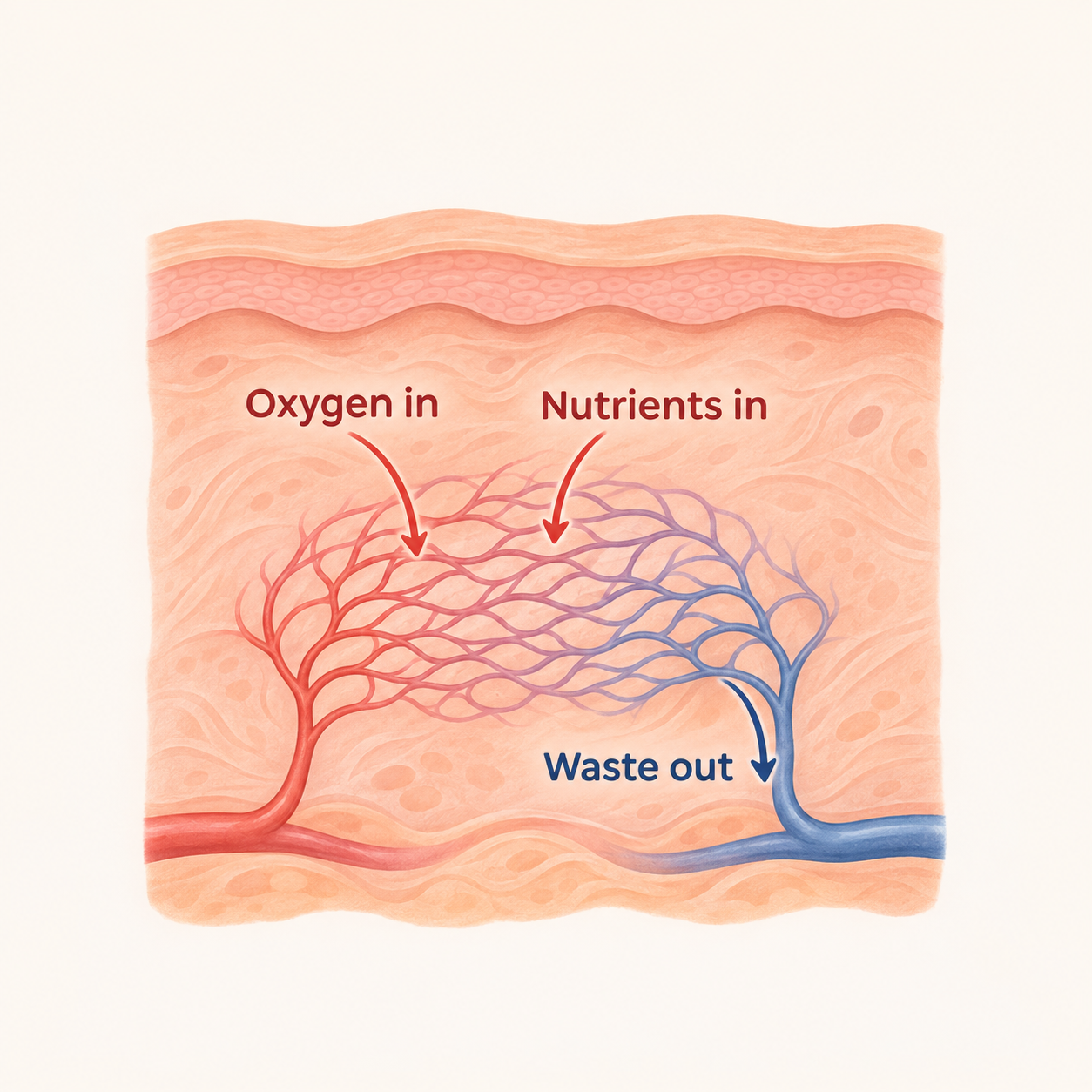
When a patient asks me whether circulation really matters for their skin, I tell them their skin is an organ, and every organ eats through its blood supply. Oxygen, water, nutrients, and the raw materials your body uses to build collagen all arrive through small vessels in the deeper layer of the skin. Waste leaves the same way.
That supply line changes as we age. Researchers who study the skin’s small vessels have found that the body’s ability to grow new vessels slows with age, leaving fewer and less dense vessels in the skin. Aged skin also has a harder time widening and narrowing its vessels in response to heat and cold.
I’m careful not to oversell this. Circulation isn’t the only thing behind skin health. Sun exposure, genetics, sleep, hormones, and blood sugar all matter. But circulation is the delivery system for everything else. You can eat well and use quality products, and if delivery is poor, less of it reaches the place you’re trying to help.
The Signs I Notice Before a Patient Mentions Their Skin
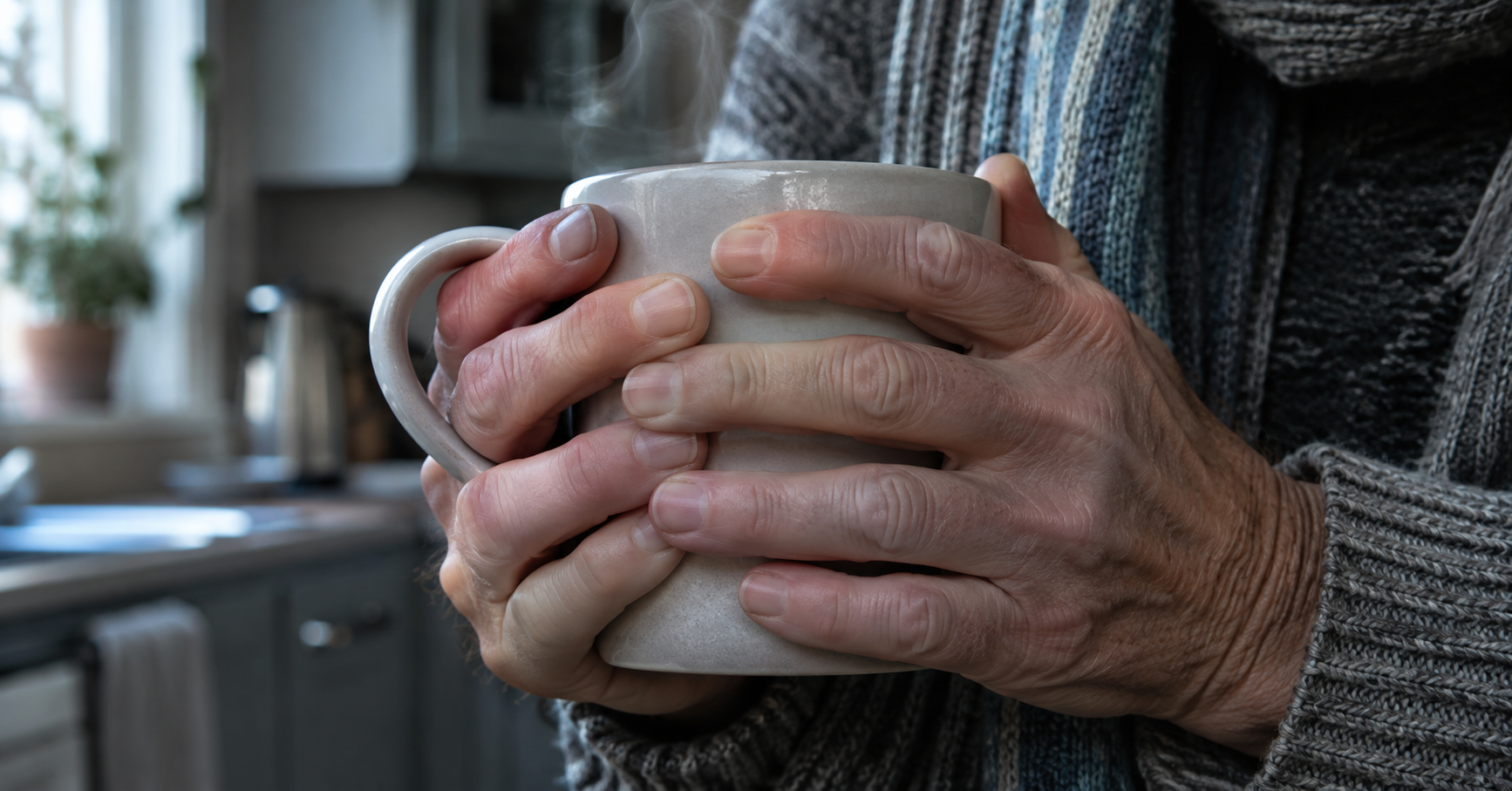
After nearly 30 years of putting my hands on people, I notice temperature before I notice anything else. Cold hands in a warm room. Feet that feel like they’ve been in the refrigerator. Skin on the lower legs that looks shiny, thin, or a little discolored. Small cuts on the shins or feet that hang around for weeks.
None of these signs diagnoses anything on its own. But when I see three or four of them in the same person, and that person sits all day, rarely breaks a sweat, and has blood sugar creeping up on their lab work, I stop thinking of it as a skin problem. I start asking what’s happening upstream.
The Most Common Mistake: Working From the Outside In
The mistake I see most is people trying to fix their skin from the outside in and never from the inside out. I’ve had patients describe skin care routines with eight or nine steps, and the same person sits ten hours a day, drinks coffee instead of water, and hasn’t walked more than a parking lot’s length in weeks.
I’m not against good skin care. Daily sunscreen is one of the smartest habits anyone can keep. The mistake is expecting a bottle to do the job your bloodstream is supposed to do.
The second mistake is waiting for a dramatic fix. Circulation responds to small habits repeated every day. That’s not exciting to sell, so most people never hear it.
What Changed My Thinking About Circulation and Skin
Early in my career, I thought about circulation mostly in terms of injuries: getting blood to a strained muscle or a stiff joint so it could recover. What changed my thinking was listening to patients a few months into care. They had come in for back pain or a sports injury, and as they got out of pain and started moving again, they mentioned things I never asked about. Their feet weren’t as cold. A spot on their shin had finally closed. Someone at home said they looked less worn out.
I didn’t set out to work on anyone’s skin. What I learned is that better blood flow doesn’t stay in one place. When a person starts moving again, the whole body gets the benefit, and the skin is often where they see it first.
What Chiropractic Care Can and Can’t Do for Your Skin
I want to be straight about this, because my profession hasn’t always been. Chiropractic adjustments don’t treat skin conditions, and I won’t tell you they do.
Here’s what I can say from experience. People in pain don’t move, and people who don’t move have poor circulation. When we restore motion in the spine and joints, reduce pain, and get someone walking and exercising again, their circulation improves because their daily life changed. Blood vessel tone is also influenced by the nervous system, and I see a lot of tense, guarded bodies in patients carrying long-term stress. That’s part of why I pay attention to the nervous system and not just the joint that hurts.
Eczema, psoriasis, rashes, changing moles, and anything that looks infected belong with a dermatologist or your primary care doctor. I’d rather tell you the honest version and keep your trust than promise clearer skin from an adjustment.
Where Class 4 Laser and SoftWave Fit
Class 4 laser and SoftWave are two tools I’m most enthusiastic about in my practice, and circulation is a big reason why. In my office, we use them mainly for pain, injuries, and slow-healing soft tissue, not as cosmetic skin treatments.
Laser therapy works through a process called photobiomodulation. In one randomized study, near-infrared light increased small-vessel blood flow in the hand, but only about half of the volunteers responded, and people with very cold or very hot hands were less likely to. I appreciate that kind of honesty in research. It’s one more reason I check how your hands and feet feel before I set expectations about any treatment.
SoftWave uses acoustic waves. Research on shockwave therapy points to new blood vessel formation as one of the ways it supports tissue repair, and lab studies have traced how shock waves stimulate the signaling that drives new vessel growth. What I’ve noticed in practice is that tissue starved of blood for a long time starts acting like living tissue again once flow returns.
Many of the patients I treat for slow-healing tissue ask what they can do between visits to keep that repair work moving. For some of them, I recommend RECOVER™, a regenerative peptide and antioxidant complex with BPC-157, GHK-Cu, and carnosine designed to support the body’s natural tissue repair and collagen processes. It doesn’t replace hands-on care. The laser or SoftWave session starts the process, and RECOVER™ helps support it during the days in between. If you take a blood thinner or are pregnant, talk with your provider before starting it.
Daily Habits That Move Blood to Your Skin
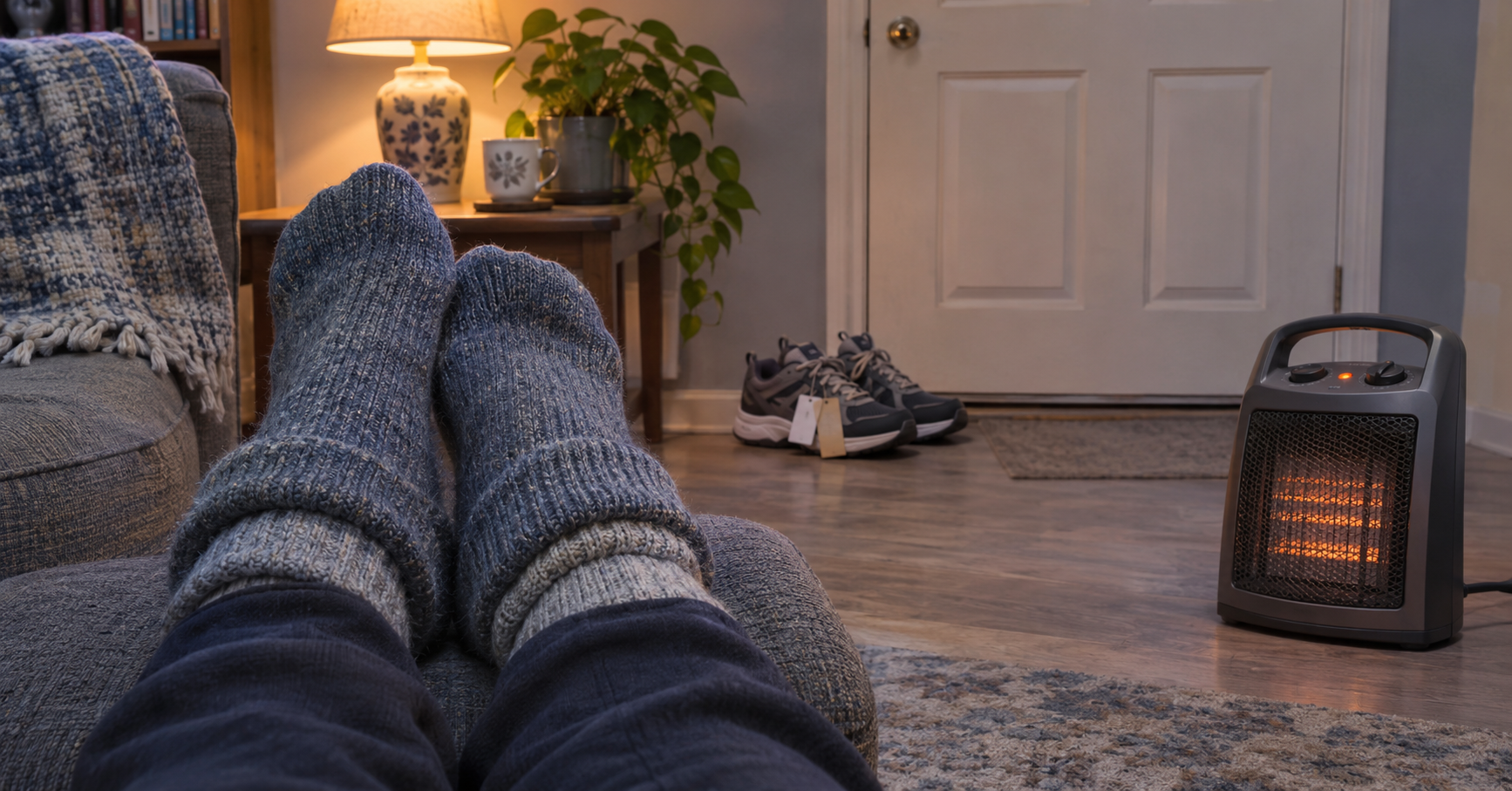
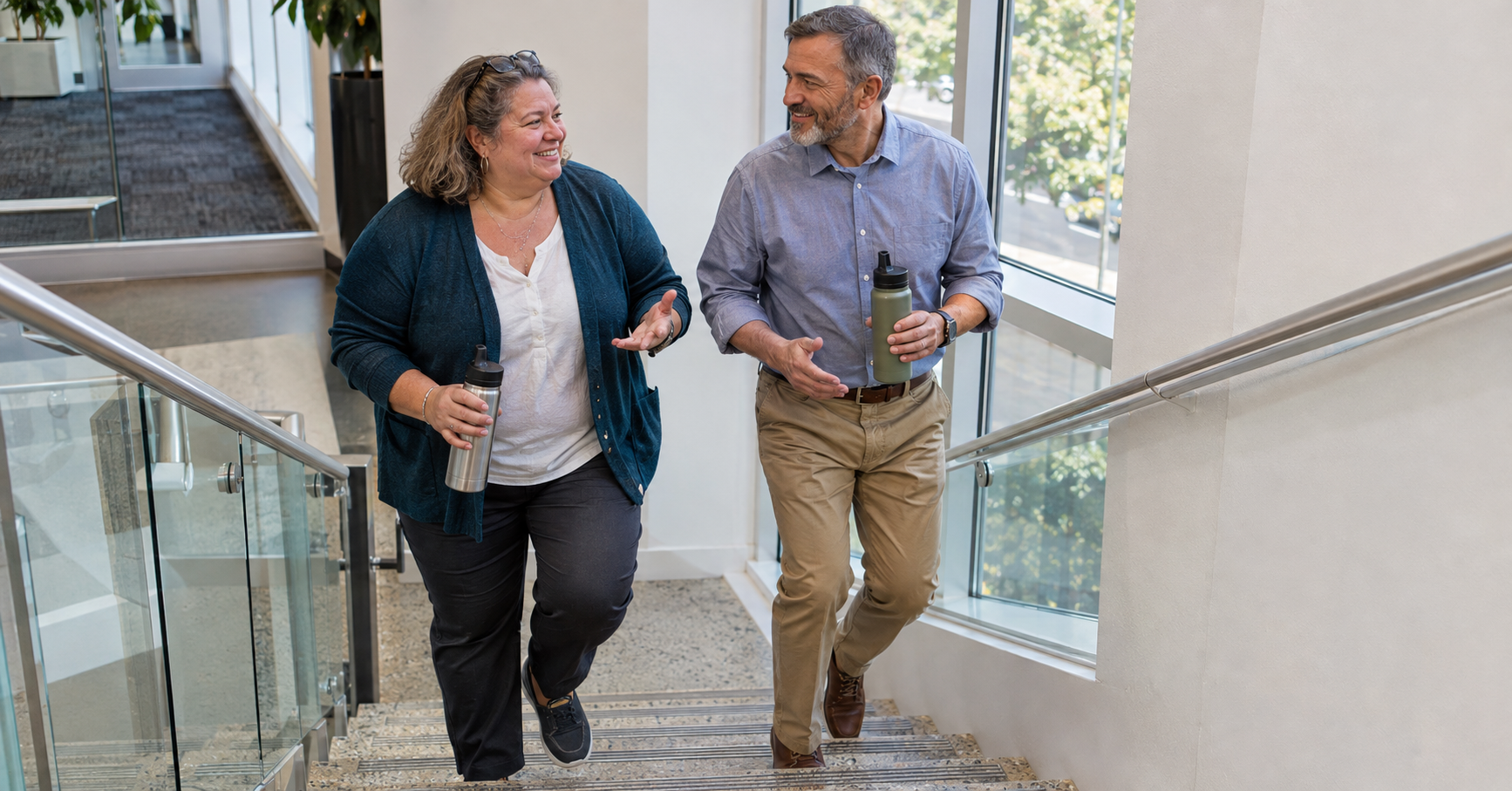
Walking comes first, every time. Your calf muscles act like a second heart. Every step squeezes blood out of your lower legs and back toward your chest. A large review found that prolonged sitting impairs blood vessel function in the legs specifically, and breaking up sitting with short walking breaks helps protect it. I tell desk workers to stand up and walk every 30 to 45 minutes, even if it’s just to refill a water glass.
Regular aerobic exercise matters too. In older adults who had been sedentary, aerobic training improved the skin’s ability to widen its small blood vessels.
Here’s the rest of what I tell patients in the room:
Drink water before you’re thirsty. Your skin sits at the very end of the delivery line.
Quit smoking. Nothing I do in my office outweighs a pack a day of nicotine narrowing the vessels that feed your skin.
Protect your sleep. Your body does most of its repair work at night.
Breathe slower. Many of my patients are shallow chest breathers living in constant low-grade stress. A few minutes of slow nasal breathing, a walk after dinner, or quiet time in prayer isn’t a soft extra. It changes how your body handles stress, and stress affects your blood vessels.
Why Blood Sugar Shows Up in Your Skin
Most skin articles skip this part, and it might be the most important one. When blood sugar runs high for a long time, sugar binds to proteins like collagen in a process called glycation. Researchers now consider advanced glycation end products a meaningful factor in skin aging, and a systematic review found they are linked to shortened, thinned collagen fibers, less elastic skin, and slower wound closure. High blood sugar also strains the lining of small blood vessels over time, which is one reason people with diabetes have to watch their feet so carefully.
Long before someone hears a diagnosis, I often notice the early version: skin tags, darkened patches on the neck, dryness, and slow healing. That’s why I don’t treat metabolic health and skin health as separate conversations.
In my work with GLP THREE, I talk with people about supporting healthy metabolism and blood sugar with real food, daily movement, and nutritional support. I never position it as a skin product, and I don’t promise anyone a specific result. But when your metabolism is in a healthier place, everything your blood touches, including your skin, lives in a better environment.
An Opinion Not Everyone in My Field Shares
I believe much of the anti-aging industry sells people a way around the harder, cheaper answer. Most of what keeps skin looking healthy at 60 is unglamorous: blood flow, blood sugar, sleep, sunscreen, not smoking, and staying strong enough to keep moving. You won’t find a booth for that at a trade show.
I’ll also say something some of my colleagues won’t like. Chiropractors need to stop implying that adjustments fix everything, skin included. Our real value is getting people out of pain and back into motion, and motion supports circulation. That’s enough. We don’t need to overstate it.
I believe God designed the body to repair itself when we give it what it needs. Most of my job is clearing the path and helping people do the unglamorous things consistently.
When to Get Evaluated, and What a First Visit Looks Like
Some signs need a medical doctor right away, not a chiropractor and not a blog post. Mayo Clinic lists leg pain when walking, coldness in one lower leg or foot compared with the other, and leg numbness or weakness among the signs of peripheral artery disease. Add to that a sore on your foot or leg that won’t heal, a limb that turns suddenly pale or blue, or sudden swelling in one leg. Those can point to vascular problems that need proper testing, and I refer those patients out without hesitation.
For everyone else, the people with cold hands and feet, slow healing, stiffness, and a body that feels like it’s running on low, a first visit at Optimal Health Members starts with listening. I want to know how you move, how you sleep, what you eat, what your workday looks like, and what you’ve already tried. Then we examine, and I tell you honestly what I think we can help with and what belongs with another provider. Sometimes the plan is care in our Henderson office. Sometimes it’s mostly habits. Either way, you leave with a clear next step.
If Your Skin Has Been Trying to Tell You Something
If you’ve been treating your skin from the outside and it still isn’t responding, look at what’s feeding it. Start with the walk you’ve been putting off. Take a hard look at how many hours you sit and what your blood sugar has been doing.
If you’re in the Henderson or Las Vegas area and you’re dealing with pain, stiffness, or slow-healing tissue that keeps you from moving, I’d be glad to sit down with you at Optimal Health Members. And if metabolic health is the piece you want to work on, wherever you live, you can learn more about the GLP THREE approach at glpthreevegas.com. Either way, the first step is small, and it’s yours to take.