Can Chiropractic Care Help With Sports Injuries?
If you play any sport, whether that's competitive tennis, weekend pickleball, trail running, or a Sunday round of golf, you've probably dealt with some version of this. A tweaked ankle. A shoulder that never quite feels right after a bad serve. A low back that locks up after eighteen holes. And you've probably been told the same thing every time: rest it, ice it, and give it time.
Sometimes that's genuinely all you need. But I've spent almost 30 years in my Henderson practice watching what happens when rest alone doesn't actually fix the problem, and it's usually because nobody addressed why the injury happened in the first place. Chiropractic care can play a real, meaningful role in sports injury recovery, not as a replacement for orthopedic care or physical therapy, but as the piece that restores proper joint mechanics so the rest of your recovery actually sticks.
Quick Answer: Yes, chiropractic care can help with sports injuries, particularly sprains, strains, and joint restrictions common in active people. Spinal and extremity manipulation has been shown in research to reduce pain, improve range of motion, and support function in conditions like ankle sprains and low back pain. Chiropractic care works best alongside physical therapy and orthopedic care, not as a replacement for either.
Key Takeaways
A systematic review of manual joint mobilization and manipulation found that for acute lateral ankle sprains, these techniques reduced pain and increased range of motion.
Research on manipulative therapy for lower extremity conditions found fair evidence for short-term benefit in ankle inversion sprains, knee conditions, and plantar fasciitis.
A randomized trial on recurrent ankle sprain with functional instability compared manipulative therapy plus rehab to rehab alone to evaluate added benefit.
A systematic review of manipulative therapy following acute ankle sprains found that multiple sessions, rather than a single treatment, reduced pain and improved function.
Chiropractic care is most effective as part of a broader recovery plan that includes rehabilitation, not as a standalone fix for every type of injury.
The Sports Injuries I See Most Often in Henderson
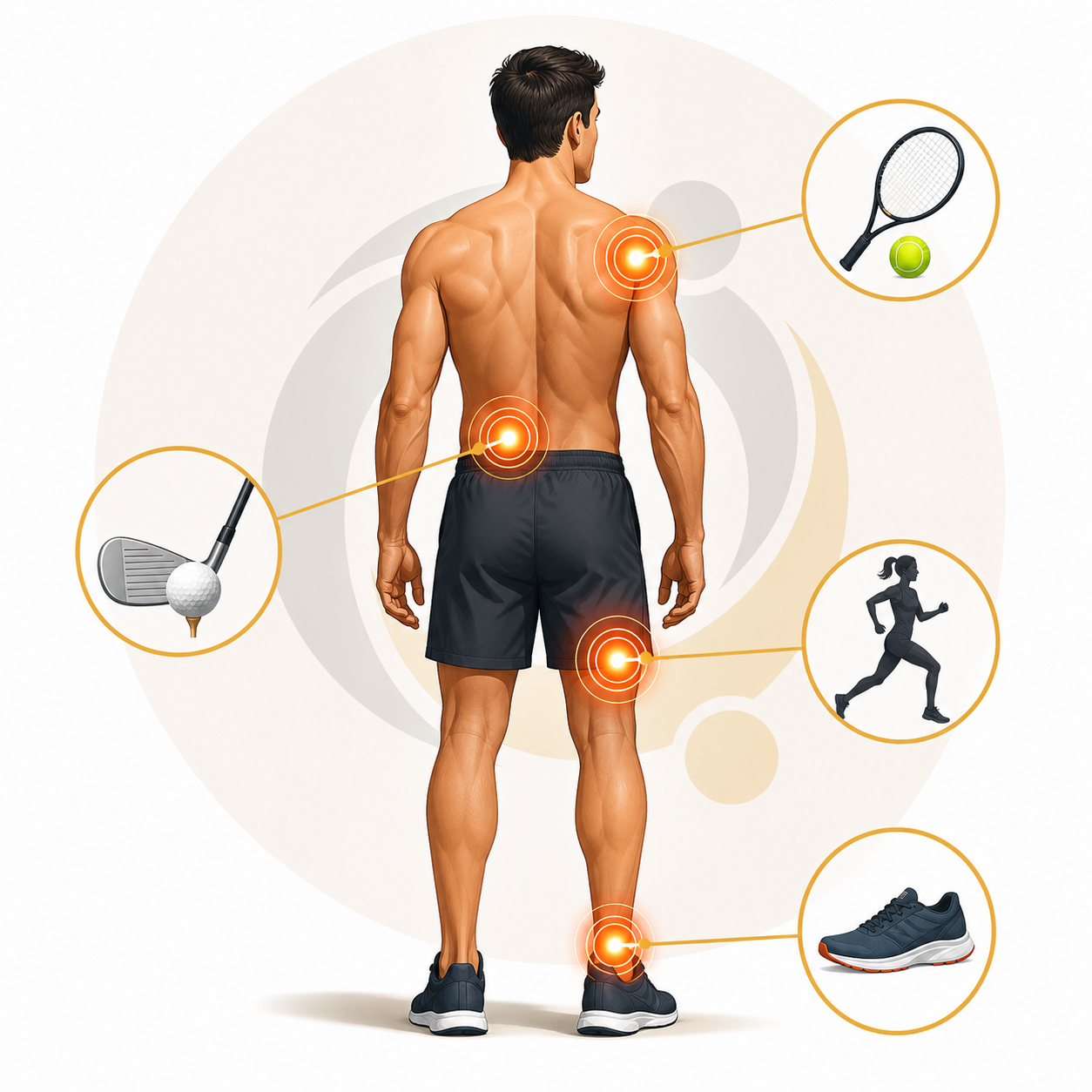
Ankle sprains are probably number one in my practice, especially from basketball, soccer, and trail running. Right behind that are shoulder strains from golf, tennis, and pickleball, which has genuinely exploded in popularity here over the last few years. I see a lot of low back strains from weekend hikers and golfers who don't warm up the way they used to in their twenties, and hamstring and calf strains show up constantly in guys playing in adult leagues while training like they're still 25.
The common denominator isn't the sport. It's someone who wants to move well again, not just manage pain until it fades on its own.
Why Rest Alone Doesn't Always Fix It
Rest addresses tissue damage, but it doesn't restore proper joint mechanics. When you sprain an ankle or jam a shoulder, the surrounding joints often shift out of their normal alignment and movement pattern, even in small ways, and the body compensates around that shift. If nobody corrects it, you can heal the soft tissue and still end up with a joint that doesn't move quite right, which sets you up for the next injury.
Adjustments work to restore proper motion to the joint itself, which takes pressure off the surrounding soft tissue and lets everything heal the way it's supposed to instead of healing around a compensation pattern. Research supports this specifically for ankle sprains, one of the most common sports injuries I treat. A systematic review of manual joint mobilization and manipulation found that for acute lateral ankle sprains, these techniques reduced pain and increased dorsiflexion range of motion, and for subacute or chronic sprains, improved range of motion, decreased pain, and improved overall function.
A Tennis Player Who Was Told to Just Rest It
I had a woman in her forties, a serious recreational tennis player, come in with a shoulder she'd been favoring for months. She'd been told it was just tendinitis and to rest it, ice it, and take anti-inflammatories. Rest never actually fixed it because nobody addressed why her shoulder mechanics were off in the first place.
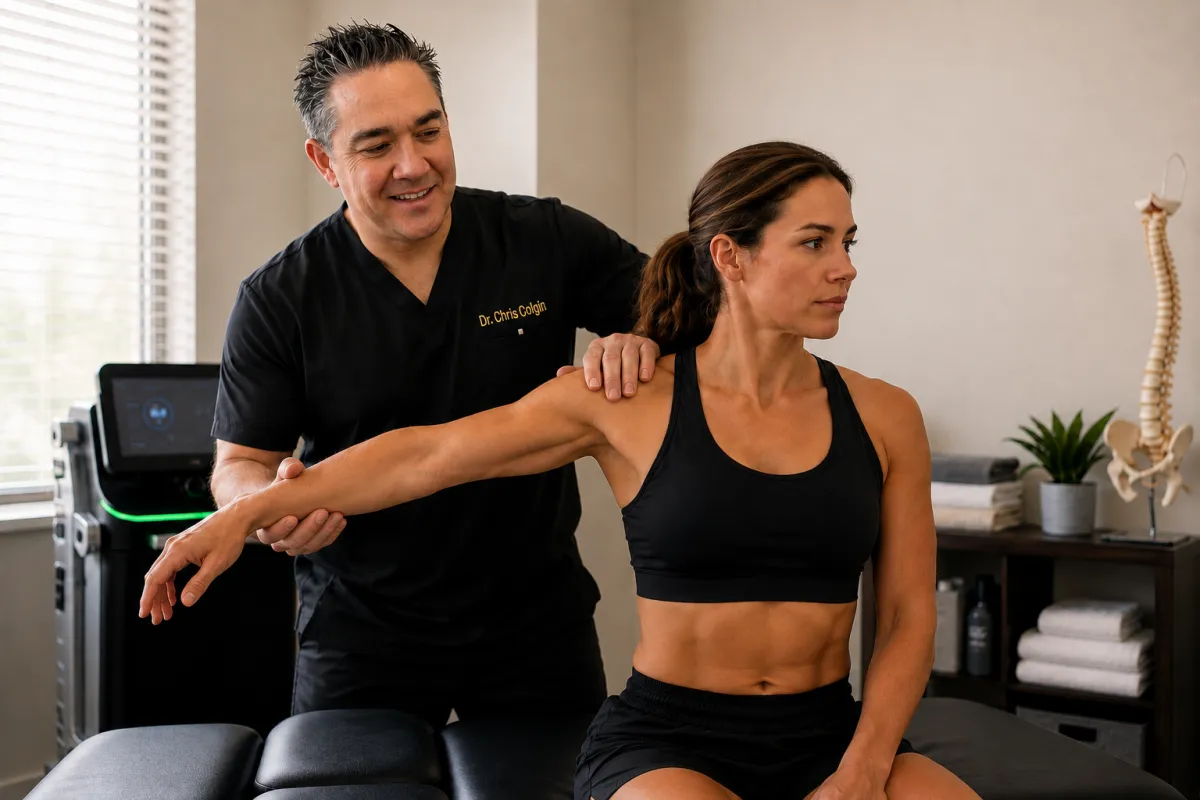
We found restricted motion through her thoracic spine and shoulder joint that was forcing her rotator cuff to overwork on every serve. Once we started adjusting that region and combined it with Class 4 laser for the inflammation, she was back on the court within weeks. More importantly, she wasn't just masking pain anymore. Her mechanics were actually better than before the injury happened, which is really the goal with any sports injury case I take on.
Where Chiropractic Fits Alongside Physical Therapy and Orthopedic Care
I see chiropractic as one piece of a bigger picture, not a replacement for any of it. Physical therapy is fantastic for rebuilding strength and control once the joint is moving correctly. Orthopedic care is essential when there's a fracture, a significant tear, or something that needs imaging and possibly surgery. Athletic trainers are often the first line of defense on the field or court.
My role tends to be restoring joint mechanics and reducing inflammation so the rest of the recovery process, whether that's physical therapy or just getting back to activity, actually sticks instead of fighting against a joint that's still not moving right. A review of manipulative therapy for lower extremity conditions found fair short-term evidence for conditions like ankle inversion sprains, knee osteoarthritis, patellofemoral pain, and plantar fasciitis, which reflects how this fits as part of a broader, multimodal approach rather than a solo treatment.
For deeper tendon and ligament injuries that need extra support healing between visits, some of my patients also use RECOVER by AgeRecode, a peptide based supplement built to support the body's regenerative processes. RECOVER isn't a replacement for hands on care. Adjustments, laser, and SoftWave are what initiate the healing process, and RECOVER simply helps sustain and continue that repair work between office visits.
Laser Therapy and SoftWave Alongside Adjustments
Adjustments handle the mechanical piece, but soft tissue still needs to heal, and that's where laser and SoftWave come in. Class 4 laser reduces inflammation and stimulates cellular repair at the site of a strain or sprain, which speeds up the healing timeline. SoftWave is fantastic for deeper tendon and ligament injuries because it triggers the body's own regenerative response at a cellular level, essentially telling the tissue to start repairing itself.
Used together with adjustments, we're addressing an injury from three angles instead of just one. A systematic review of manipulative therapy following acute ankle sprains found that a single manipulative session wasn't enough to move the needle, but multiple sessions reduced pain and improved both range of motion and function. That's consistent with what I see clinically. Combining modalities and staying consistent is what actually changes the outcome.
The Mistake That Slows Recovery Down
Pushing through pain and assuming it'll just work itself out is the biggest one I see. I understand the instinct, especially with competitive people, but ignoring a nagging ache almost always turns a two week recovery into a two month recovery because the body starts compensating in ways that create new problems.
The other common mistake is going straight back to full intensity the moment pain fades, without addressing whether the underlying mechanics that caused the injury have actually been corrected. Pain going away isn't the same as the problem being fixed. That distinction matters more than almost anything else I tell patients.

Staying Ahead of Injuries Instead of Just Reacting
Most sports injuries don't come out of nowhere. They're usually the result of a mechanical restriction or compensation pattern that's been building quietly for months before it finally shows up as a strain or sprain. Getting checked periodically, the same way you'd get your car's alignment checked, catches those small issues before they turn into something that sidelines you.
If you've been favoring a shoulder, working around a stiff back, or nursing an ankle that never quite feels the same since that last sprain, I'd encourage you not to wait until it forces you to stop. Sooner is almost always better, though if there's significant swelling, an inability to bear weight, visible deformity, or a mechanism of injury that suggests a fracture or serious tear, get imaging first through an orthopedist, urgent care, or ER.
After almost 30 years of doing this, the athletes who stay ahead of it, rather than just reacting once something hurts, are almost always the ones still doing what they love well into their sixties and seventies. If you're in the Henderson or Las Vegas area and want a plan built around your specific sport and injury history, I'd be glad to see you in the office. Learn more about our approach at optimalhealthmembers.com.