Can Red Light Therapy Help With Acne?
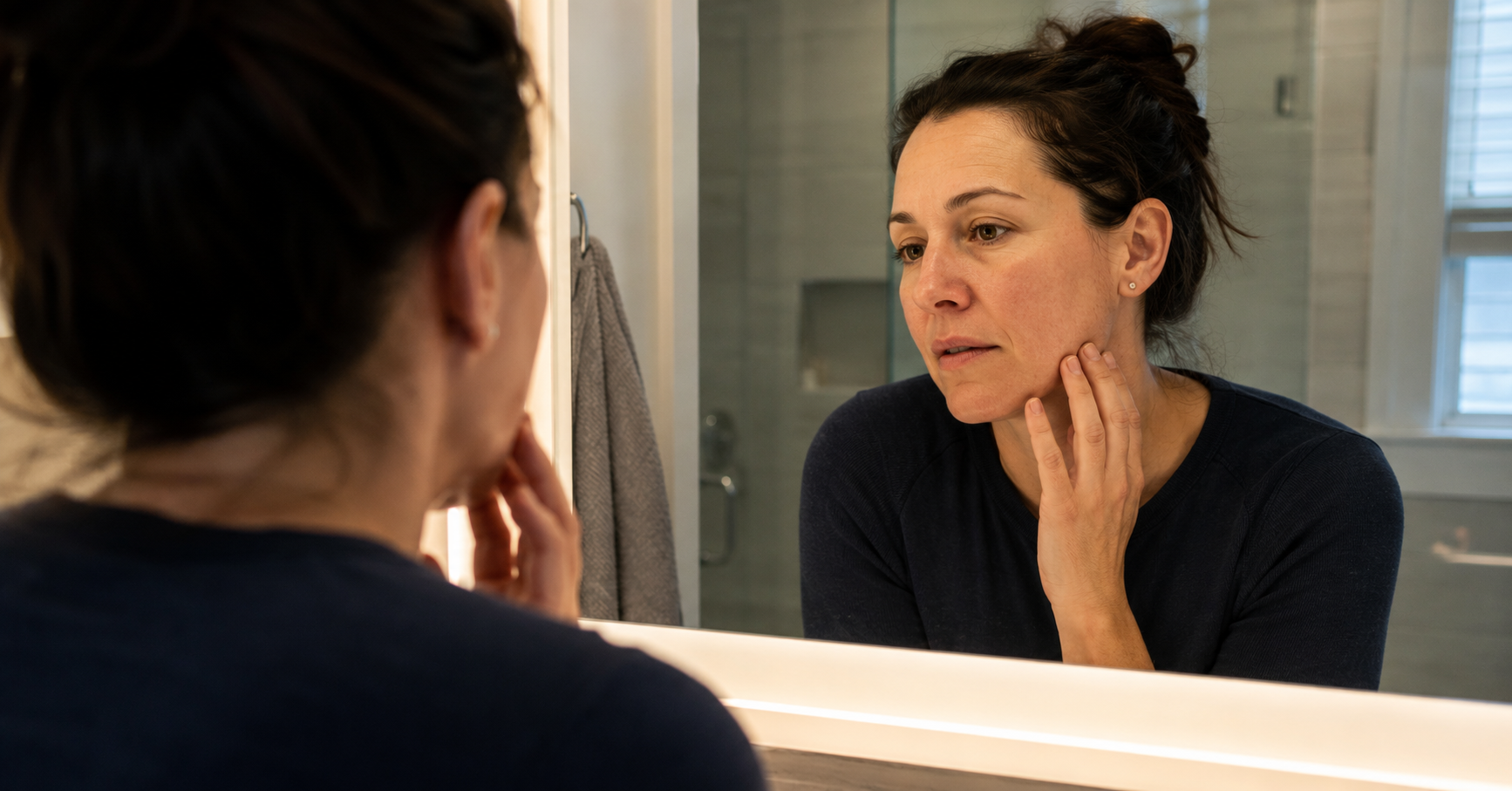
You have tried the cleansers. You have tried the spot treatments. You may have done a round of antibiotics, or two, or three. And the acne keeps coming back. If that sounds familiar, you are not alone, and more importantly, you are not doing anything wrong. The skin is not the problem. The skin is the message.
After nearly 30 years in clinical practice, I have seen a lot of patients who came to me for a shoulder or a back and mentioned almost as an afterthought that their skin had been a mess for years. That offhand comment has led to some of the most meaningful conversations I have had about what is actually driving chronic inflammation in the body and what it takes to turn things around. Red light therapy has become a consistent part of that conversation, and in this post I want to explain why, how I use it at Optimal Health Members, and what I honestly believe it can and cannot do.
The Adult Acne Pattern I See Most Often in My Practice
The presentation I encounter most frequently is hormonal adult acne, primarily in women between the ages of 30 and 45, localized around the jawline and chin. These are people who had clear skin as teenagers and are now breaking out in ways they never expected at this stage of life. They are frustrated in a particular way because they feel like they did everything right and their skin still is not cooperating.
Beyond hormonal acne, I see a significant amount of inflammatory acne that is clearly connected to diet and gut health, post-breakout redness that lingers far longer than it should, residual scarring after the active phase has already resolved, and teenagers dealing with the classic presentation. The adult pattern has become more common in my patient population over the past decade, and I do not think that is a coincidence. Chronic stress, blood sugar dysregulation, sleep debt, and processed food consumption are all acne drivers that the standard skincare conversation almost never addresses.
Why Wavelength Is the First Thing You Need to Understand
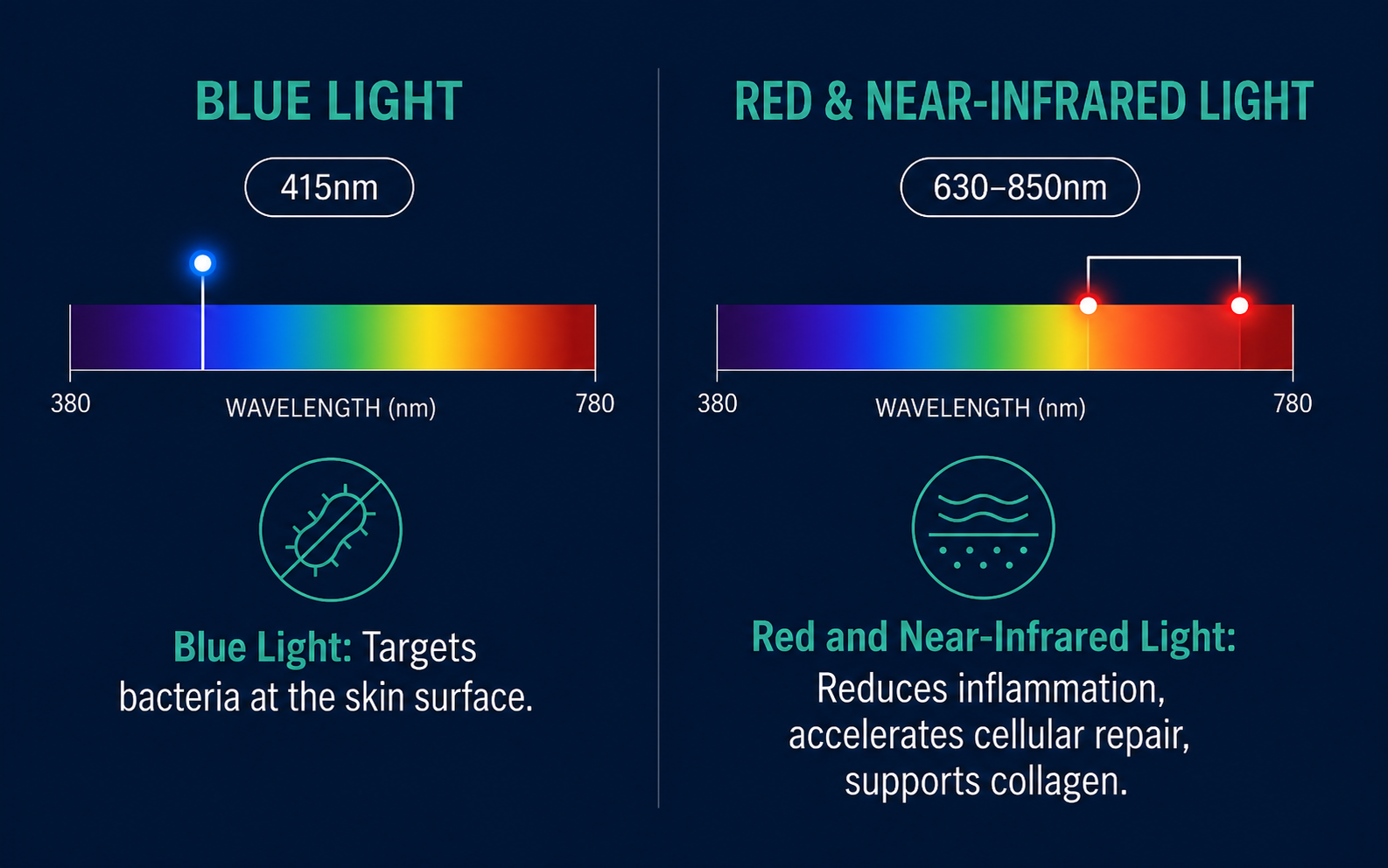
Before we talk about what red light therapy does for acne specifically, I want to clear up a confusion I encounter constantly. Red light and blue light are not the same thing. They do not work the same way. A lot of people use the terms interchangeably, and that misunderstanding leads to real disappointment.
Blue light therapy works primarily by targeting Cutibacterium acnes (formerly known as Propionibacterium acnes), the bacteria responsible for the inflammatory response inside the pore. It is a surface-level antibacterial approach and it has genuine value, particularly for mild to moderate inflammatory acne.
Red and near-infrared light work at a completely different level. They penetrate deeper into tissue and act through a mechanism called photobiomodulation, stimulating mitochondrial activity, reducing inflammatory cytokines, accelerating cellular repair, and supporting collagen synthesis. This is not about killing bacteria. It is about changing the biological environment in which acne develops and heals.
The two approaches can complement each other. But if you buy a device marketed for acne and it only uses blue light, you are getting half the picture. If it only uses red light, you are getting the other half. The clinical panels we use at the practice deliver therapeutic-level red and near-infrared energy across a meaningful surface area, which is a different situation than most consumer devices.
Where Red Light Therapy Actually Fits in an Acne Protocol
I want to be direct about this because I think overpromising does more damage than good. Red light therapy is not going to clear severe cystic acne on its own, and I will never tell a patient otherwise. Cystic acne can scar, and scarring is largely preventable if you treat it aggressively and early enough. That often requires a more comprehensive approach, potentially including dermatology care, and there is no version of this where I would tell someone to skip that path and try a light panel instead.
Where I see red light genuinely earn its place is in three specific scenarios.
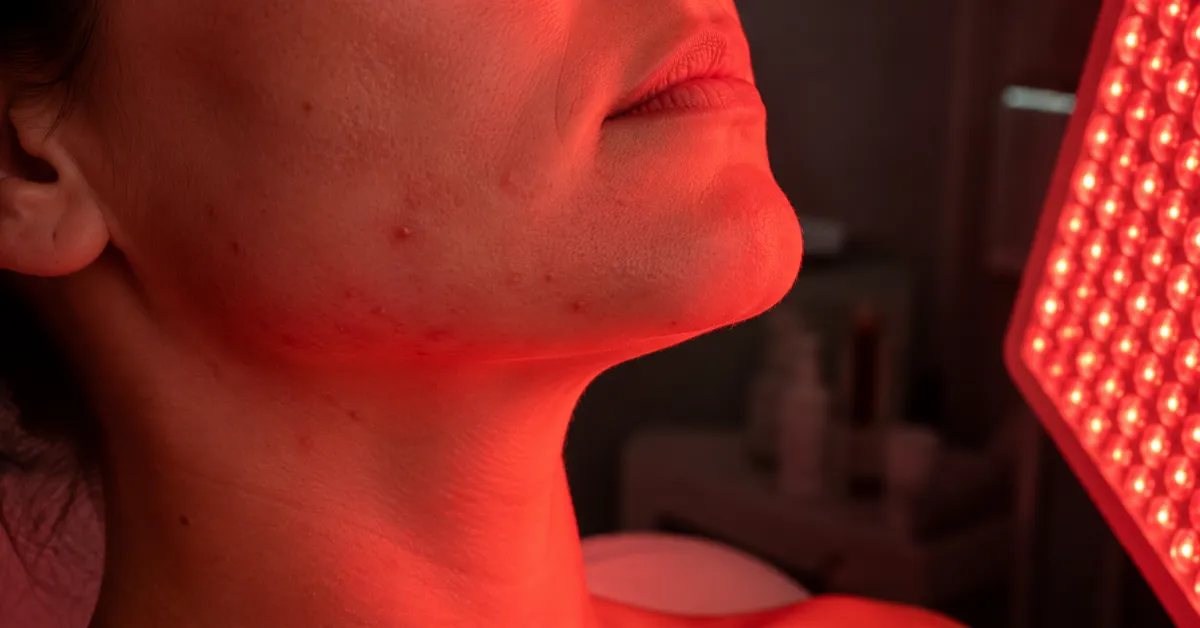
The first is active inflammatory acne. Research published in peer-reviewed literature supports the use of photobiomodulation for reducing the inflammatory cascade that drives breakout severity. It does not eliminate the breakout, but it reduces the redness, calms the tissue response, and shortens the resolution time. In practical terms, a breakout that might have lasted ten days starts resolving in five or six.
The second is post-inflammatory hyperpigmentation, the redness and discoloration that lingers after the active acne has resolved. This is the phase that frustrates people the most because the pimple is gone but the mark stays for weeks. Red light has been shown to accelerate tissue repair and collagen remodeling, which can meaningfully shorten the time it takes for those marks to fade.
The third is maintenance, keeping the skin in a better baseline state between breakouts so they occur less frequently and resolve faster when they do occur. This is where a consistent home protocol, using a quality consumer-grade panel, can provide real long-term value even outside the clinical setting.
A Patient Who Came In for Her Back and Left With Better Skin
A woman in her late 30s came to me for a musculoskeletal issue. During the intake, she mentioned almost as an aside that her skin had been a problem for about two years. Persistent redness, inflammatory acne along her jawline, and post-breakout marks that were slow to fade. She had been dealing with it long enough that she had stopped expecting it to change.
She started doing red light sessions while she was already coming in for her other care. About six weeks in, she brought it up herself. She said her skin felt calmer, the redness between breakouts had noticeably reduced, and the spots were clearing faster than she had ever seen. She had not changed a single thing in her skincare routine. The only new variable was the red light.
I want to be careful about reading too much into a single case, but that kind of unsolicited feedback, from a patient who was not even tracking it as a primary outcome, carries real weight for me clinically. It is a pattern I have seen more than once, and it is consistent with the mechanism the research describes.
What People Get Wrong and Why They Quit Too Early
Two patterns lead to disappointment with red light therapy for skin, and both are avoidable.
The first is the wavelength confusion I described earlier. If you are using a device that does not deliver therapeutic-level red or near-infrared energy to the tissue depth where inflammation lives, you will not see meaningful results. The consumer market is flooded with LED masks and handheld devices that look impressive and do very little. Device quality matters enormously, and irradiance at the skin surface is the number that matters, not wattage or LED count.
The second is the expectation mismatch. Photobiomodulation works through cumulative cellular responses. It is not a drug. It does not work the first time you use it. The people who do four or five sessions and conclude that red light therapy does not work have not given the mechanism enough time to express itself. Eight to twelve weeks of consistent use is the minimum reasonable evaluation window. That might sound long, but compare it to how long most people have already been dealing with their skin issues.
Consistency beats intensity every time with photobiomodulation. Five shorter sessions per week at a proper distance from a quality panel will outperform occasional marathon sessions every time.
What I Would Actually Tell Someone About a Real Red Light Protocol for Acne
For active inflammatory acne, I typically recommend starting with five sessions per week, ten to fifteen minutes per session, at the distance specified by the device manufacturer. If you are coming into the clinic, we handle the setup. If you are building a home protocol, I am happy to walk through device selection and proper use through Optimal Health Members, where I cover this as part of a broader approach to skin and systemic health.
After about four weeks of consistent use, if the skin is responding, you can drop to three sessions per week for maintenance.
The external protocol alone is only part of the picture. Internally, I want patients to look at processed food consumption and blood sugar stability, because insulin dysregulation is one of the documented drivers of androgen-mediated acne. I want to look at sleep, because cortisol-driven hormonal shifts from poor sleep directly influence sebum production and inflammatory tone. And I want to address stress, because cortisol is one of the most underrecognized acne drivers in adult patients and almost no one is talking about it.
Skin is an output. When the internal environment stabilizes, the skin very often follows. Red light therapy works best as one element in a system that addresses both the surface and the source.
When Red Light Therapy Is Not the Right First Step
I want to be clear about the limits here, because being honest about them is more important to me than making anything sound more universally applicable than it is.
Anyone dealing with severe cystic acne needs a comprehensive approach, and that may well include dermatology care. Cystic acne can permanently scar tissue, and that window for prevention is not one I take lightly. If there is any sign of infection, nodular presentation, or rapid spread, that is a situation that warrants more than a light panel.
If there is a suspected hormonal disorder such as PCOS underlying the skin presentation, red light therapy may offer symptomatic support, but treating the surface while the systemic driver remains unaddressed is not a strategy I can get behind. The hormonal picture has to be part of the conversation.
And anyone currently taking photosensitizing medications needs to have a direct conversation with their prescribing provider before starting any light therapy protocol. This is not a theoretical concern. Certain common medications, including some antibiotics, retinoids, and diuretics, increase cutaneous sensitivity to light in ways that require clinical supervision.
Red light is a powerful tool with a clear mechanism and real clinical utility. Like every tool, its value depends entirely on whether it is the right fit for the specific situation in front of you.
Coming In or Starting at Home
If you are in the Henderson or Las Vegas area and you want to try clinical-grade red light therapy as part of a comprehensive skin health protocol, Optimal Health Members is where that happens in person. We use a professional-grade panel system that delivers the irradiance and coverage that consumer devices typically cannot match for active skin issues.
If you are outside the area, I walk through red light protocols, device selection guidance, and the internal factors that drive chronic skin inflammation through my online education platform. The address of your skin problem is not just in the mirror. It is in the broader picture of how your body is functioning, and that is a conversation worth having wherever you are.