Can Daily Walking Really Offset a Day of Sitting?
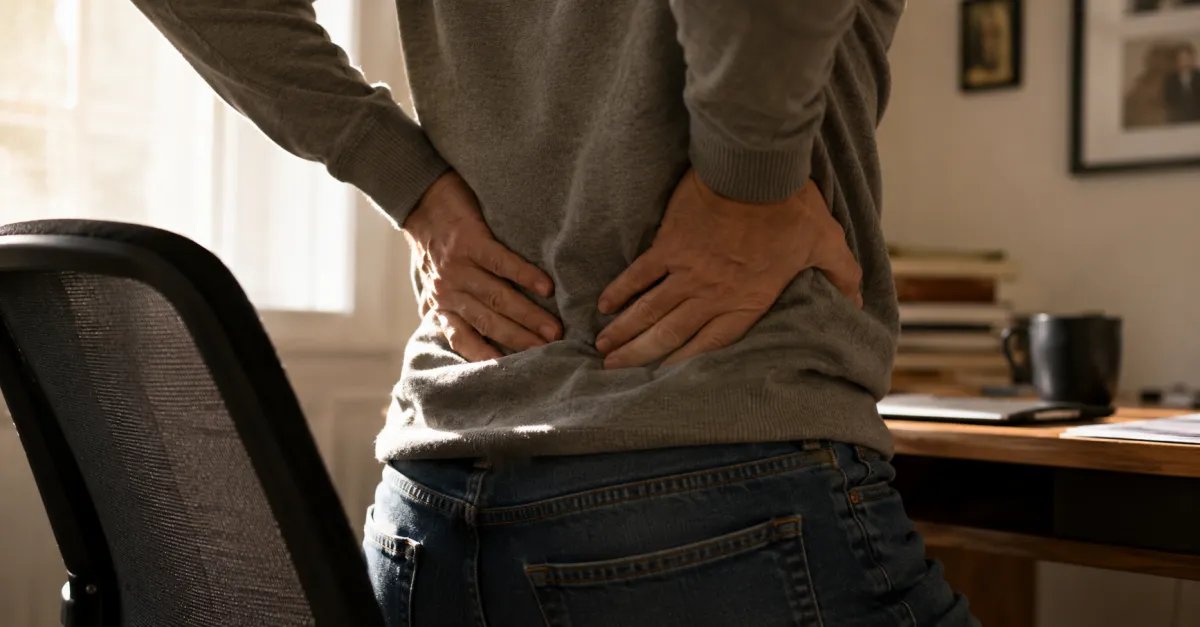
If you sit at a desk most of the day and you've promised yourself that tonight's walk will make up for it, I need to be honest with you before you read another word. It won't. Not fully. I've spent almost thirty years watching patients walk into my Henderson office holding their low back after a decade of nine-to-five sitting, and the ones who tell me "but I walk every night" are usually just as stiff as the ones who don't walk at all. Walking is good for you. It is not a receipt you can hand your spine to cancel out eight hours in a chair.
I want to explain why, in plain language, because this is one of the most common misunderstandings I run into in clinical practice, and it's costing people relief they could otherwise have.
Why Walking Helps but Doesn't Erase the Damage
I wish I could tell my patients that a brisk 30-minute walk wipes out eight hours of sitting. It doesn't work that way. Sitting for prolonged stretches shortens your hip flexors, shuts down your glutes, compresses your discs, and slows circulation in your legs and low back. A walk afterward only partially reverses that. Mayo Clinic has reviewed research on more than a million people and found that prolonged sitting is linked to obesity, metabolic syndrome, and a higher risk of death from heart disease, even in people who exercise regularly. The study found that people sitting more than eight hours a day with no physical activity carried a mortality risk comparable to smoking, and that it took 60 to 75 minutes of moderate activity a day to offset it. That is a lot more than most people are doing.
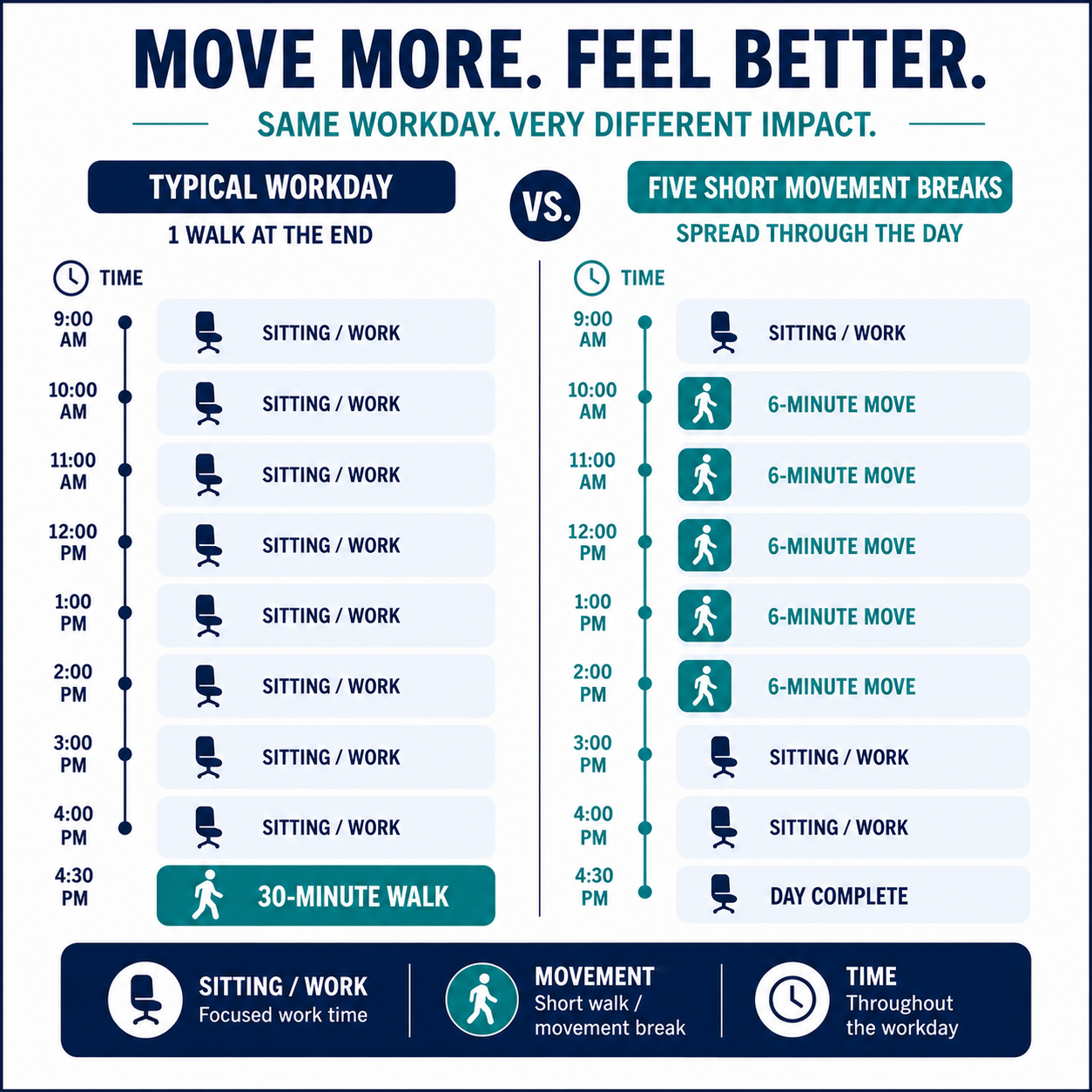
I explain it to patients this way. Walking is like brushing your teeth after eating candy all day. It helps. It's better than nothing. But it doesn't cancel out the candy. Your body needs movement spread throughout the day, not one dose of it after the damage is already done.
What I See Every Week in Patients With Desk Jobs
Honestly, I see all of it. Low back pain is the number one complaint that walks through my door tied to desk jobs. Right behind it is hip tightness, especially in the front of the hip, where people don't realize how locked up they've become until I put them through a simple stretch test. Harvard Health explains that sitting for long periods causes the hip flexors to tighten and shorten, and because those muscles attach to the pelvis and lower back, that tightness makes it harder for the pelvis to rotate properly, which contributes directly to low back pain.
I also see neck and shoulder stiffness from leaning toward a monitor all day, forward head posture, fatigue that patients blame on everything except their chair, and circulation issues in people who sit eight-plus hours with their legs bent at ninety degrees the entire time. None of this is rare. It's the default outcome of a desk job left unmanaged.
A Patient Story: What Changed When We Stopped Saving Movement for the End of the Day
I had a patient, a software engineer, who came in with low back pain that had been building for over a year. He sat at a desk ten hours a day and barely moved. We started chiropractic care to get his spine functioning properly again, and I paired that with a simple plan, short walks every hour instead of one long walk at the end of the day. Within a few weeks his pain had dropped significantly, but what surprised him more was his energy. He told me he stopped hitting that afternoon wall around 2pm. That's what movement spread through the day does that one evening walk simply can't.
How Much Walking You Actually Need if You Sit for a Living
I recommend a combination, and the breaks matter more than the total. Aim for 7,000 to 10,000 steps a day as a general target. Research published through the National Institutes of Health found that adults taking at least 7,000 steps a day had a 50 to 70 percent lower risk of premature death compared to those taking fewer, and that walking beyond 10,000 steps didn't add much further benefit. So the number matters, but not as much as most people assume.
The real key is getting up every 45 to 60 minutes for even just 3 to 5 minutes. That's what resets your hips, gets blood flowing again, and takes pressure off your spine. A single 30-minute walk is good. Five-minute walks spread across the day are better for your body specifically because of how sitting damage accumulates hour by hour, not all at once at 5pm.
The Biggest Mistake People Make When They Think Walking "Fixes" Sitting
The mistake is treating it like a trade, as if minutes of walking can be banked to earn back hours of sitting. That mindset lets people ignore everything else, posture, stretching, strengthening, how their workstation is set up, because they feel like the walk already covers it. It doesn't. Walking is cardiovascular movement. It does not specifically address hip flexor tightness, core weakness, or the spinal restriction that sitting creates.
If you walk 30 minutes every night and tell yourself that means sitting all day at work is fine, I'm glad you're walking, genuinely, keep doing that. But that's not the same as breaking up your sitting. Your spine and hips don't know you're going to walk later tonight. They need relief now, every hour, not saved up and cashed in after the fact. Ask yourself honestly how your low back feels by 3pm most days. That answer usually tells the real story.
Four Habits That Matter Just as Much as Walking
There are four things I tell almost every desk-job patient, beyond the walk itself.
First, hourly movement breaks. Standing up and moving for a few minutes every hour, separate from your daily walk. Second, hip flexor and core work, specific stretches and strengthening, because sitting shuts down your glutes and core stability. Third, workstation setup. Monitor height, chair support, and keyboard position matter more than people think. Fourth, regular chiropractic care to keep your spine moving the way it's designed to, because sitting creates restrictions that stretching and walking alone won't fully resolve.
This is really the core of what I do. Prolonged sitting sets off a chain reaction. Your hip flexors tighten, your glutes and core weaken from disuse, and your pelvis tilts forward. That changes the way your spine is loaded, which is exactly what leads to the chronic low back pain I see every week in my Henderson chiropractic practice. Chiropractic care restores proper motion to the joints that get locked up from sitting, but it works best when it's paired with addressing the hip tightness and core weakness underneath it. You can't just adjust the back and call it done. You have to treat the whole chain, spine, hips, and core, or the problem keeps coming back.
For patients dealing with the chronic inflammation and slow-healing tissue that comes with months or years of postural strain, I also talk to them about RECOVER, a regenerative supplement I recommend alongside hands-on care. It isn't a replacement for chiropractic adjustments, SoftWave therapy, or spinal decompression. It's what helps your body finish the repair work between visits, since those therapies initiate the healing response and RECOVER gives your cells the tools to sustain and accelerate it in the days that follow.

When It's Time to Stop Managing This on Your Own
If you've been stretching, walking, and trying to fix your posture for more than a few weeks and you're still dealing with pain, stiffness, or that dull ache by the end of the workday, that's your sign. Pain that keeps returning even when you're doing the right things usually means there's a joint restriction or muscular imbalance that self-care alone can't reach. That's not a failure on your part. It just means your body needs hands-on help to reset before those habits can actually stick.

A Soft Next Step
If any of this sounds like your workday, you don't have to figure it out through trial and error. I'd be glad to look at what's actually going on in your spine, hips, and core and build a plan around it, whether that starts with a walk break reminder or a full evaluation in the office. You can reach my Henderson practice at 702-541-9060 or learn more about how we approach desk-related pain at optimalhealthmembers.com.